



Stone Garden Lions
Stone garden lions bring immediate classical authority and architectural weight to outdoor spaces, transforming a simple gateway or terrace.
Stone Garden Lions
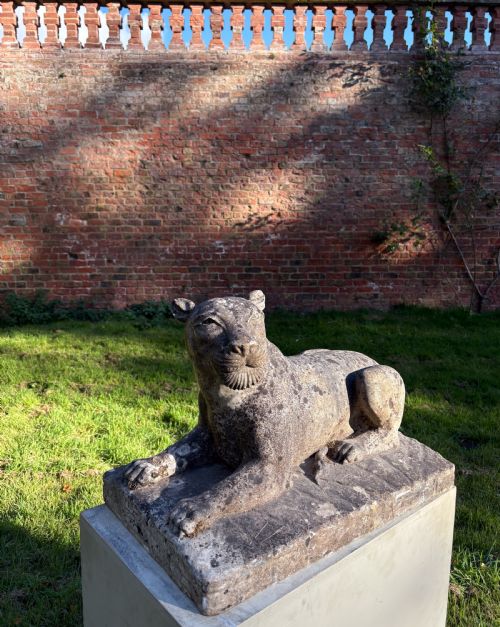
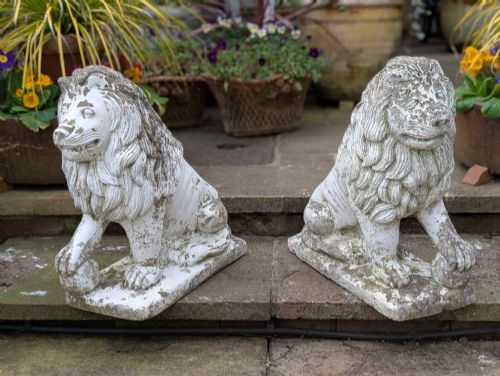
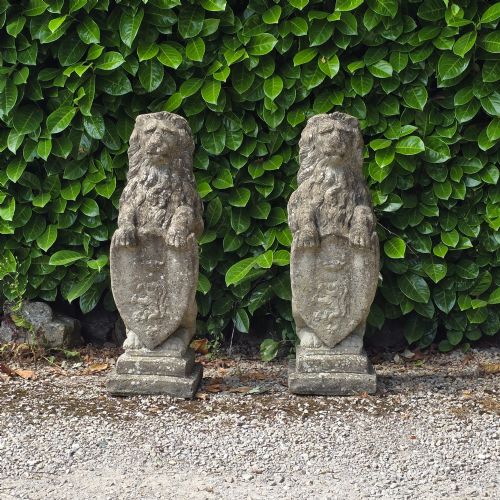
Stone garden lions are sculptural ornaments designed for outdoor placement, frequently guarding gates, walls, or paths in pairs. The selections available encompass grand 19th Century Italian marble sculptures alongside mid-century pairs cast in composite or reconstituted stone.
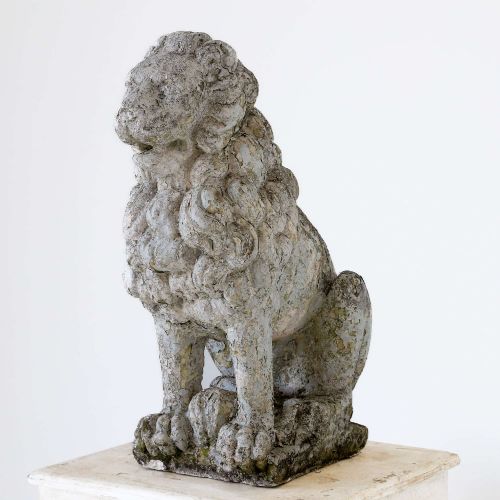
Buyers will encounter various traditional forms ranging from seated and standing guardian beasts to gate finials and terracotta figures. Many examples draw on neoclassical or Victorian aesthetics, echoing English country house traditions.
Origins stretch from domestic workshops to continental yards, including specific regional pieces like salt glazed pottery lions on bases and carved stone examples.
Materials and construction methods
The construction relies heavily on durable materials suited to weathering, principally natural stone, solid marble, terracotta, and various cast stone compositions. Sculptors and artisans shaped these mediums through traditional carving or moulding techniques.
Surface finishes vary from the natural texture of weathered stone and unglazed terracotta to surviving layers of original old paint. Salt glazing also appears on specific pottery garden lions, imparting a distinct protective sheen.
Stone Garden Lions Retail Price Guide 2026
Typical asking prices for stone garden lions among the pieces listed under this phrase on Sellingantiques today, from the lower quarter to the upper quarter. They describe what is for sale here now, not the wider market.
Current listings feature stone garden lions spanning from the seventeenth century through to 1950, utilising materials like white marble and salt glazed pottery.
Distinctions in quality
Proportion and scale dictate visual success in a landscape setting, with well-balanced pairs commanding an architectural presence. The natural weathering process also plays a part, as genuine age softens the material without obscuring the form.
The Stone Garden Lions Glossary
- Reconstituted stone
- A manufactured material made from crushed stone bound with cement and cast in a mould to replicate natural masonry.
- Campana urn
- A bell-shaped garden vessel often associated with classical designs and frequently paired with statuary.
- Finial
- An ornamental architectural detail placed at the apex of a gatepost, wall, or pier.
- Salt glaze
- A vitreous coating formed by throwing common salt into the kiln during the high-temperature firing of pottery.
Stone Garden Lions: Frequently Asked Questions
Where should stone lions be placed?
These figures traditionally anchor significant architectural transition points, making them ideal for flanking entrance gates, driveways, or terrace steps. Their presence defines boundaries and creates a sense of procession.
They also sit effectively at the base of formal garden walls or guarding the approach to a main doorway, where their scale can be properly appreciated.
How do I maintain weathered stone?
Natural stone and reconstituted materials require minimal intervention, as weathering often enhances their character and visual depth. Gentle washing with water removes organic debris without damaging the surface.
Avoid harsh chemical cleaners or pressure washing, which can strip away historic patination or erode softer cast stone compositions.
Are pairs always identical?
Pairs designed for gateposts or formal entrances are typically mirror images or closely matched counterparts intended to create visual symmetry. Hand-carved pieces may exhibit minor individual variations from the carving process.
Even in cast stone production, manual finishing often introduces subtle differences that distinguish genuine period ornaments from modern factory replicas.
How can I tell age in garden lions?
Indicators of age include the depth of natural weathering, lichen growth patterns, and the wear on exposed high points of the stone or terracotta. Tool marks on carved marble or the aggregate texture of older composite stone also offer clues.
Construction methods and base designs frequently align with specific periods, such as Victorian terracotta production techniques or mid-century casting standards.