


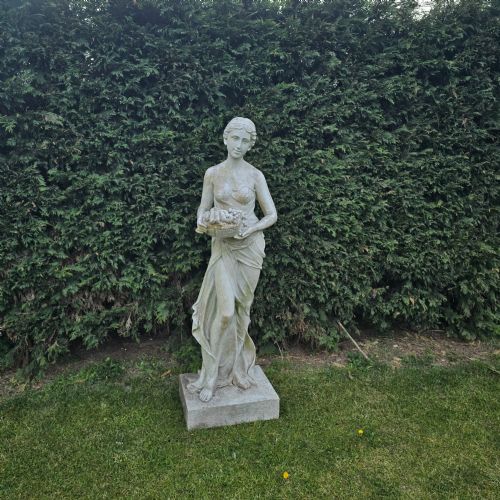


Stone Female Garden Statue
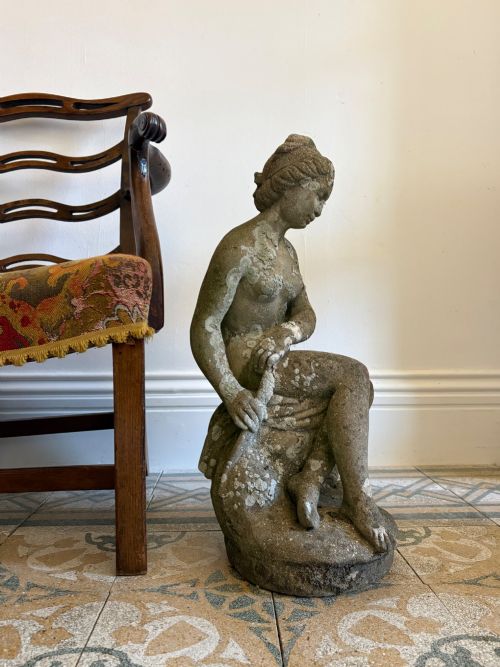
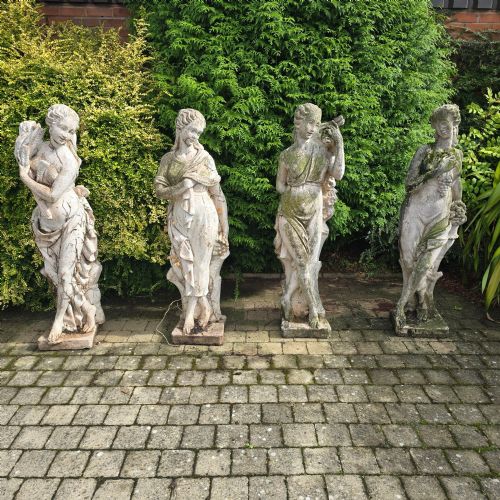
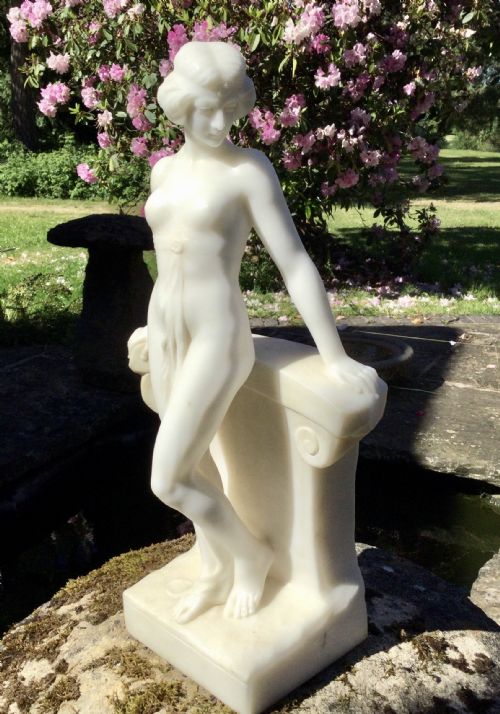
These stone female garden statue pieces bring classical form and weathered charm directly to lawns and terraces.
Stone Female Garden Statue
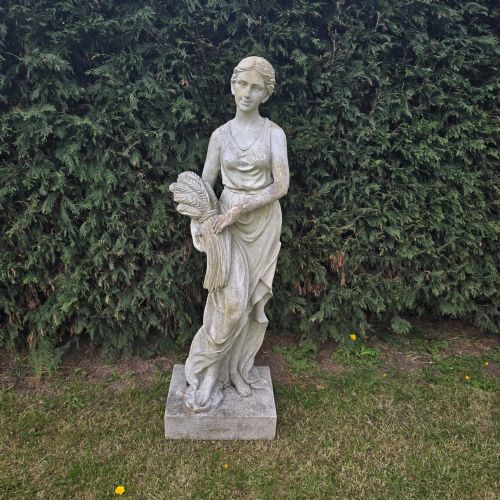
A stone female garden statue draws upon classical antiquity, depicting figures such as Venus, Athena, and allegorical representations of the seasons like Summer and Autumn.
Most examples found here date from the nineteenth century through to the mid-twentieth century, embracing neoclassical revival and classical revival styles.
Forms range from life-sized garden statues and large draped ladies on plinths to carved marble busts of young girls and classical maidens.
Materials and construction methods
Makers utilised reconstituted stone, cast stone, composition stone, and concrete for durable outdoor figures, often allowing them to weather naturally in garden environments.
Higher status pieces employ carved stone, solid marble, and white marble, sometimes mounted on cast iron stands or paired with matching stone plinths.
Stone Female Garden Statue Retail Price Guide 2026
Typical asking prices for stone female garden statue among the pieces listed under this phrase on Sellingantiques today, from the lower quarter to the upper quarter. They describe what is for sale here now, not the wider market.
Athena stands ready on her plinth while Una looks after her lion, proving that ancient mythology makes exceptionally quiet garden companions.
Assessing quality in sculpture
Quality rests in the precision of the carving and the fidelity of the cast, distinguishing a spirited neoclassical rendering from a routine production piece.
The choice of material creates a distinct hierarchy, separating simple cast or reconstituted stone from finely carved Carrara marble.
The Stone Female Garden Statue Glossary
- Neoclassical
- A style originating in the mid-eighteenth century inspired by the classical art and architecture of ancient Greece and Rome. It emphasises proportion, restraint, and classical subject matter.
- Reconstituted stone
- A manufactured material made from crushed stone or aggregates mixed with a binder such as cement, then moulded into form. It provides durability for garden statuary.
- Plinth
- A heavy base or pedestal upon which a statue, bust, or pillar is mounted. It elevates the sculpture and provides architectural stability.
- Carrara marble
- A type of white or blue-grey marble from the city of Carrara in the north of Tuscany, widely used for centuries in notable sculpture.
Stone Female Garden Statue: Frequently Asked Questions
How do I place a stone female garden statue outside?
Position your statue on a stable, level surface such as a stone patio or dedicated plinth to prevent shifting over time. Ensure adequate drainage beneath the base to protect the material from winter frost damage.
Allow weathering to occur naturally outdoors, as moss and lichens enhance the historic appearance of reconstituted and cast stone figures.
Can marble sculptures stay outdoors year-round?
Solid marble and carved stone pieces can withstand outdoor conditions, but severe frost and harsh winters present risks to finer details. Moving delicate carved marble busts indoors during freezing months preserves the surface integrity.
Covering outdoor stone during the coldest periods prevents moisture penetration and subsequent cracking.
What is the difference between cast stone and carved marble?
Cast stone and reconstituted stone are formed using moulds and aggregate mixtures, resulting in durable figures suited for general garden placement. Carved marble is individually worked by hand from a solid block by a sculptor.
Carved marble offers finer detail and a smoother finish, typically reserved for interior or protected architectural settings.