

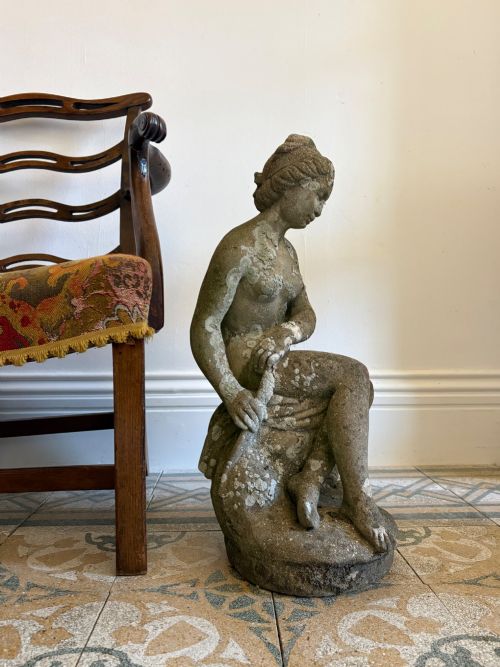
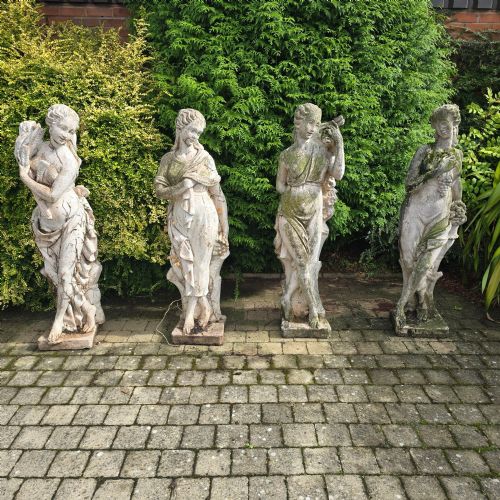

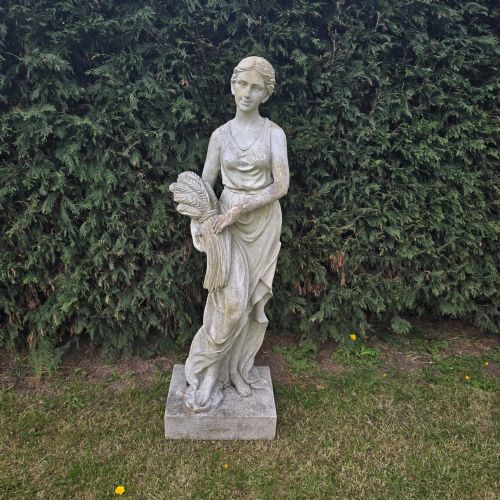
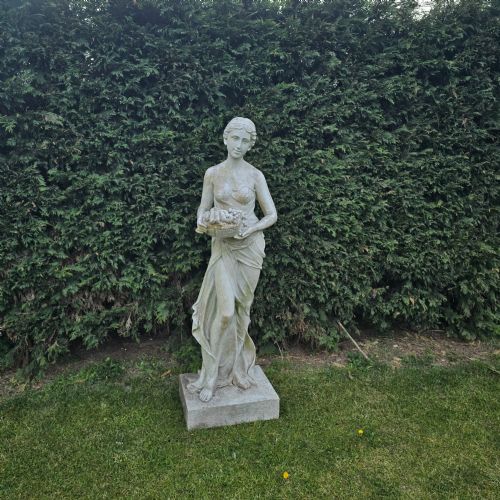


Cast Stone Female Sculpture
A cast stone female sculpture brings classical dignity to a garden, offering the weight and presence of antiquity without the prohibitive cost of carved marble.
Cast Stone Female Sculpture
When you search for a cast stone female sculpture, you are looking at garden statuary, garden statues, and larger sculptures modelled on classical forms. These pieces range from life-sized allegorical figures representing seasonal themes to busts on plinths and classical torsos.
You are most likely to meet twentieth-century examples on this page, specifically from the 1930s and 1950s, alongside nineteenth-century pieces. The forms draw heavily upon neoclassical and classical revival traditions, depicting figures such as Venus, Athena, and draped Grecian ladies.
The objects serve primarily as focal points for garden landscapes, courtyards, or architectural settings. Their scale is often substantial, designed to integrate with stone plinths and natural outdoor surroundings.
How they were made
The pieces on this page are produced using materials such as cast stone, reconstituted stone, composition stone, and concrete. These aggregate mixtures allow makers to mould intricate classical details efficiently while retaining the heavy mass of traditional masonry.
Some works incorporate additional structural elements, such as mounting a stone torso upon a cast iron stand. Plaster and carved stone also appear among the materials used to shape these figurative sculptures.
Cast Stone Female Sculpture Retail Price Guide 2026
Typical asking prices for cast stone female sculpture among the pieces listed under this phrase on Sellingantiques today, from the lower quarter to the upper quarter. They describe what is for sale here now, not the wider market.
The listings on this site span the nineteenth century, 1880, 1930, and 1950, utilising materials including cast stone, concrete, and iron.
What varies in quality
Quality in these sculptures rests upon the fidelity of the neoclassical modelling and the crispness of the drapery folds. Finer pieces capture the proportions and graceful posture of classical prototypes like the Venus de Milo with greater anatomical conviction.
The surface texture and weathering process heavily influence the visual success of the piece. Natural patination developed over decades gives cast and reconstituted stone an authentic aged character that distinguishes superior examples from newer or more uniformly cast items.
The Cast Stone Female Sculpture Glossary
- Cast stone
- A building product manufactured from Portland cement, graded aggregates, and chemical admixtures to simulate natural cut stone. It provides a durable alternative for detailed outdoor statuary.
- Neoclassical
- A style reviving the principles of ancient Greek and Roman art, characterised by noble simplicity and calm grandeur. Figures from this tradition often feature flowing classical drapery.
- Plinth
- A heavy base or pedestal supporting a statue, bust, or urn. Many garden statues are elevated on these structural blocks to improve their sightlines in a landscape.
- Allegorical figure
- A symbolic representation of an abstract idea, such as the seasons. Figures embodying Summer or Autumn are common subjects within nineteenth and twentieth-century garden statuary.
Cast Stone Female Sculpture: Frequently Asked Questions
Can I leave these sculptures outside?
These pieces are designed specifically for outdoor display as garden statuary. The materials used, including cast stone and concrete, withstand normal weather conditions well.
Over time, exposure to the elements develops a natural weathering patination. This weathering process enhances the classical appearance of figures like Venus and Athena.
How do I date a piece?
Dating relies on stylistic clues and material composition records. Pieces on this page span from the nineteenth century through the 1930s and 1950s.
Twentieth-century works often reflect neoclassical revival trends. Examining the surface texture and the specific casting technique helps narrow down the era of manufacture.
Where should I place a bust?
A stone bust on a plinth works best where it commands a clear view or terminates a garden pathway. Positioning it against a backdrop of hedging provides a strong visual contrast.
Elevating the sculpture on a proper architectural base ensures correct proportions within an outdoor setting.
Are these figures solid stone?
The objects are made from moulded aggregate materials such as cast stone, reconstituted stone, and concrete rather than single blocks of quarried rock. These composition materials replicate the appearance and weight of solid stone.
This method enabled makers to produce complex figurative sculptures like draped ladies and seasonal figures reliably.