

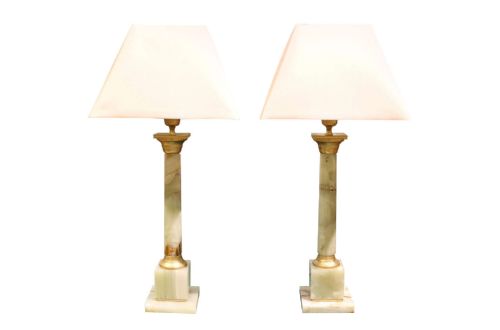
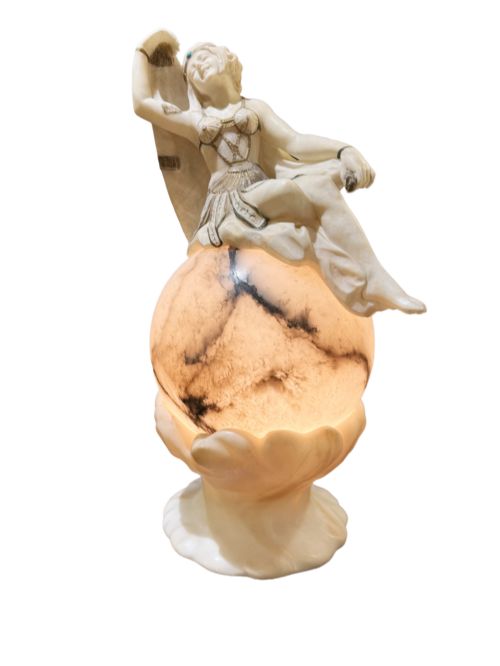
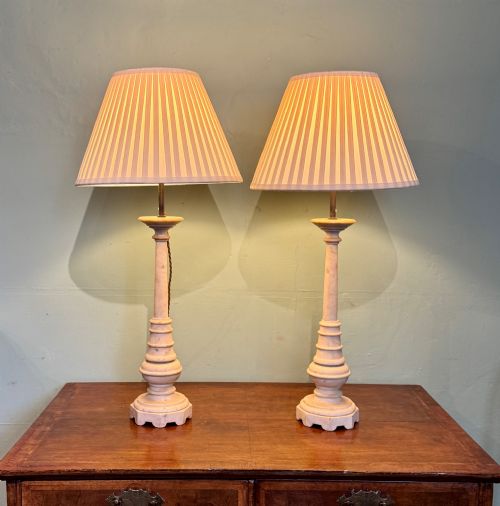
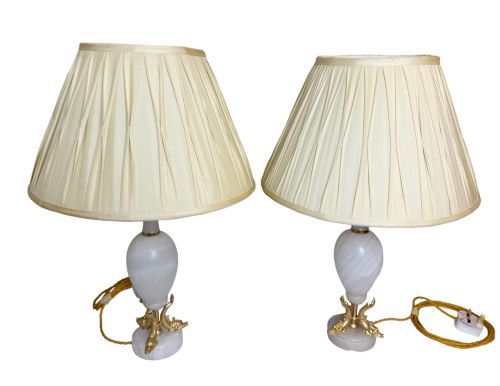



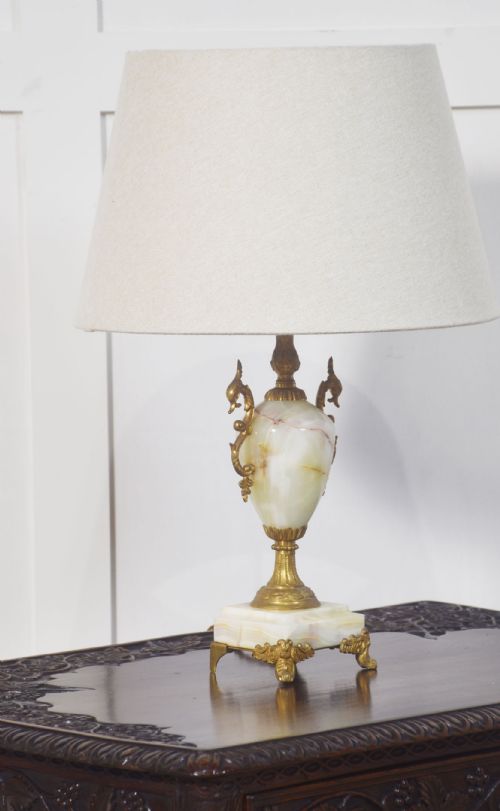


Stone Bedside Lamp
A stone bedside lamp brings natural weight and period character to a room, spanning from nineteenth century marble to Art Deco alabaster.
Stone Bedside Lamp
A stone bedside lamp unites functional bedroom lighting with geological variety, drawing from periods like the nineteenth century, Edwardian era and 1930s. Buyers searching for a stone bedside lamp encounter table lamps formed from marble, onyx and alabaster.
The selection ranges from single large columns to matched pairs, often enhanced with brass or gilt bronze mounts. French influences appear frequently alongside Italian pieces and domestic Edwardian designs.
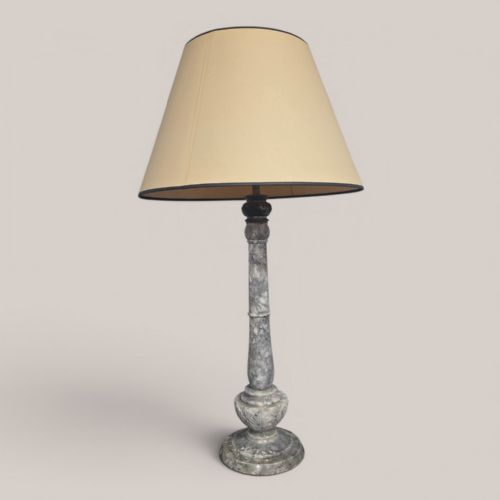
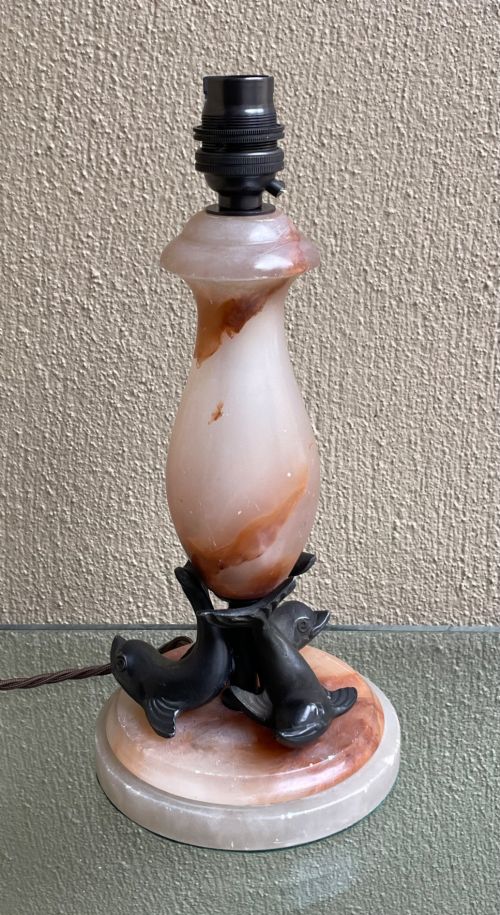
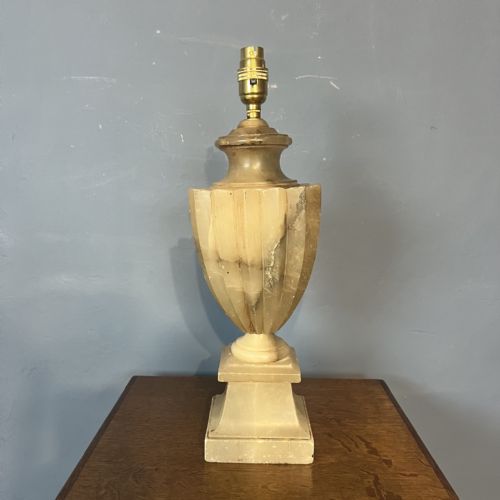
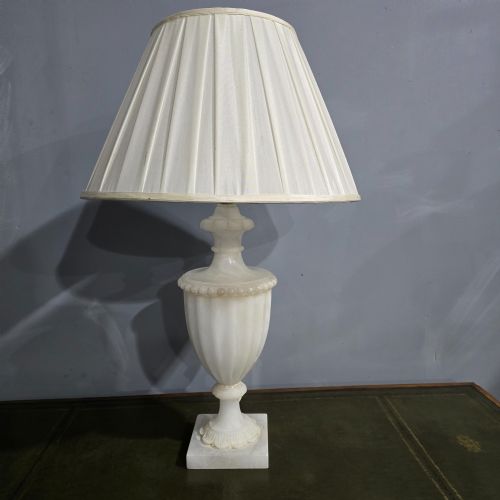
Forms stretch from simple classical revival columns to sculptural Art Deco dolphin figures and cassolette shapes. These pieces turn heavy mineral blocks into domestic lights designed to sit beside a bed.
How they were made
Makers shaped blocks of marble, onyx and alabaster into columns, urns and figurative bodies using turning lathes and hand chiselling. These translucent and opaque stones were selected for their natural veining and dense weight.
Metal components such as brass, gilt bronze and patinated metal were cast and finished to mount the stone elements securely. Fabric shades completed the construction, paired with internal wiring appropriate to the period.
Stone Bedside Lamp Retail Price Guide 2026
Typical asking prices for stone bedside lamp among the pieces listed under this phrase on Sellingantiques today, from the lower quarter to the upper quarter. They describe what is for sale here now, not the wider market.
What varies in quality
Quality rests in the natural figuring of the mineral block and the crispness of any applied metal mount. A piece carved from solid white onyx or finely veined marble displays depth that plain grey stone lacks.
The integration of brass or gilt bronze trim dictates the refinement of the object. Heavy, well-fitted mounts indicate a higher standard of workshop production than loose or hastily joined fittings.
The Stone Bedside Lamp Glossary
- Alabaster
- A fine-grained mineral that ranges from opaque white to translucent yellow, often carved into Edwardian and Art Deco lamps. It diffuses light gently through its surface.
- Onyx
- A banded variety of chalcedony prized for its layered patterns and warm honey tones. It appears frequently in French and Italian pieces from the early twentieth century.
- Neoclassical
- A design style drawing on classical Greek and Roman motifs, visible in the columnar forms of many marble and alabaster lamps. It emphasises symmetry and proportion.
- Gilt Bronze
- Bronze metal coated with a thin layer of gold, used for decorative mounts and trims on stone lamps. It provides a bright contrast to dark marble or onyx.
Stone Bedside Lamp: Frequently Asked Questions
How do I clean a stone bedside lamp?
Use a soft, dry cloth to remove dust from the marble, onyx or alabaster surface without applying moisture or harsh cleaning agents.
Avoid chemical sprays that can penetrate porous stone and alter the polished finish over time.
Are these lamps heavy enough for a bedside table?
Solid stone construction gives these pieces substantial weight, preventing them from tipping over easily during evening use.
This density anchors the lamp firmly beside a bed, even when fitted with larger fabric shades.
Can I replace the lampshade safely?
Modern standard fittings allow you to swap fabric shades to match your bedroom colour scheme and light diffusion needs.
Ensure the replacement shade suits the scale of the stone base and uses appropriate bulb wattages.
How do I tell marble from alabaster?
Marble presents a hard, crystalline surface with distinct mineral veining, while alabaster feels softer and transmits light through its body.
Alabaster often shows a warm, milky translucency when illuminated, whereas marble remains more opaque.