

Still Life with Fruit
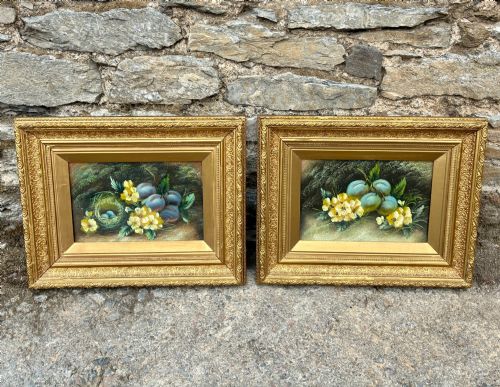
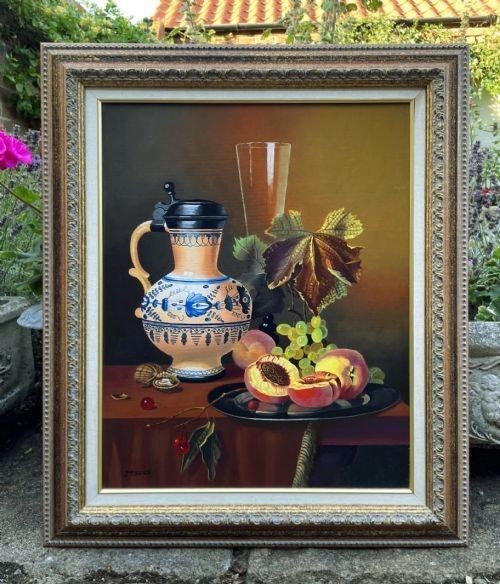
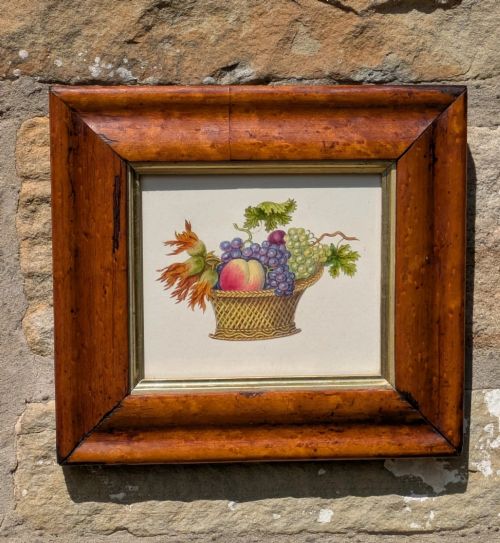
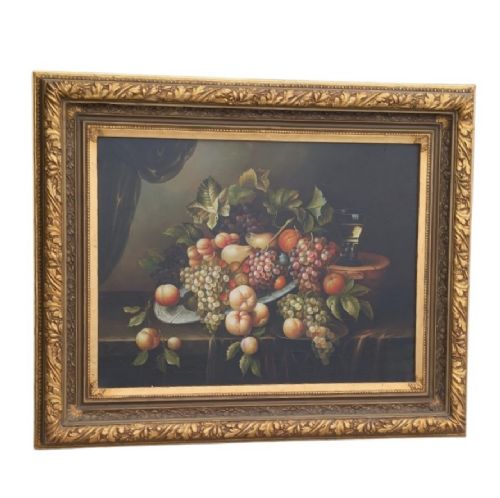
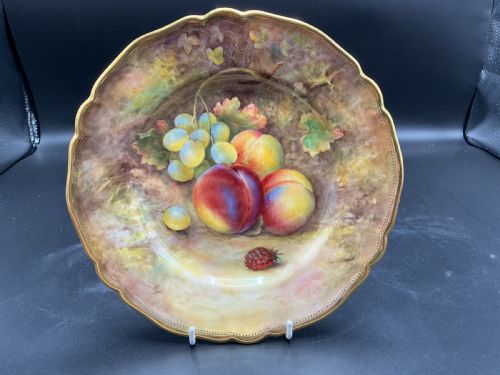
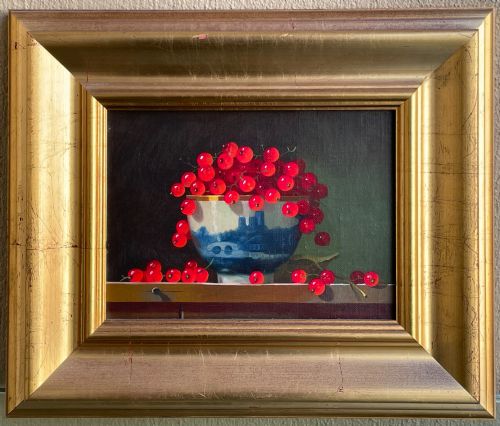
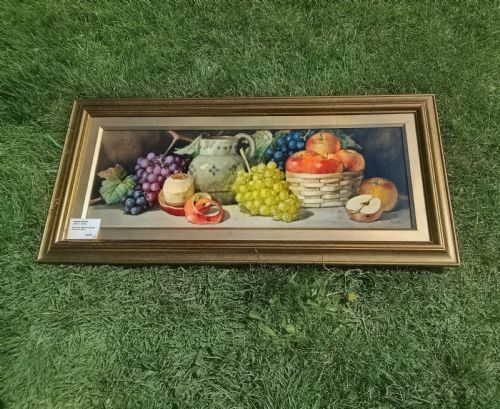
These still life with fruit compositions capture rich arrangements of produce on canvas and paper, bringing timeless texture and colour into a room.
Still Life with Fruit
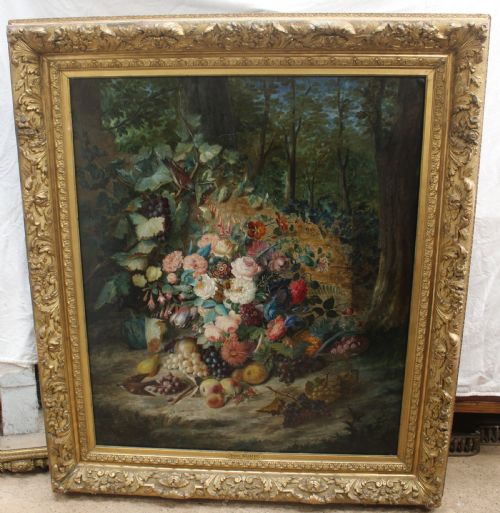
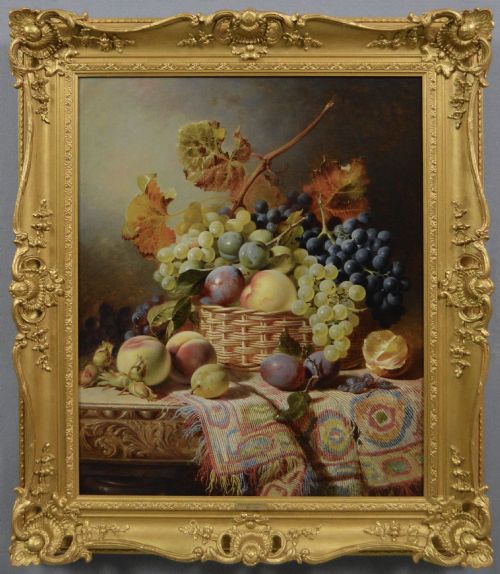
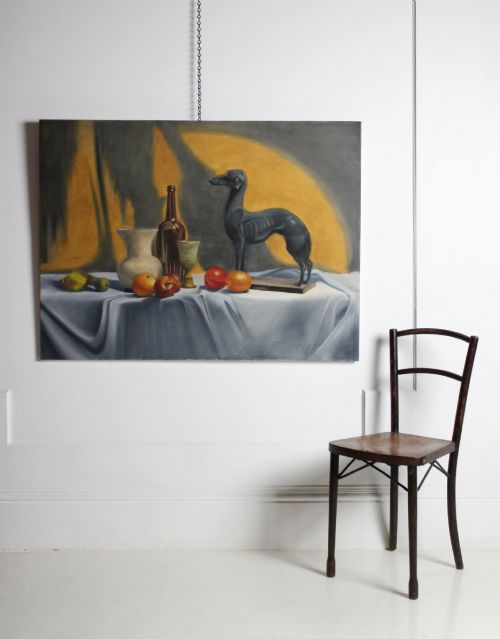
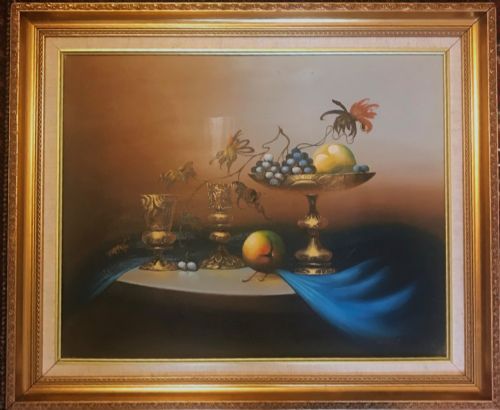
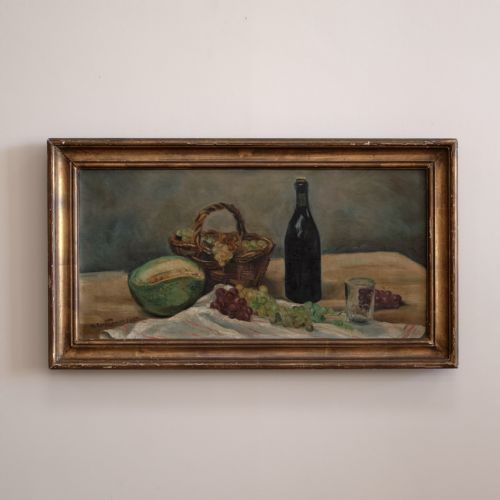
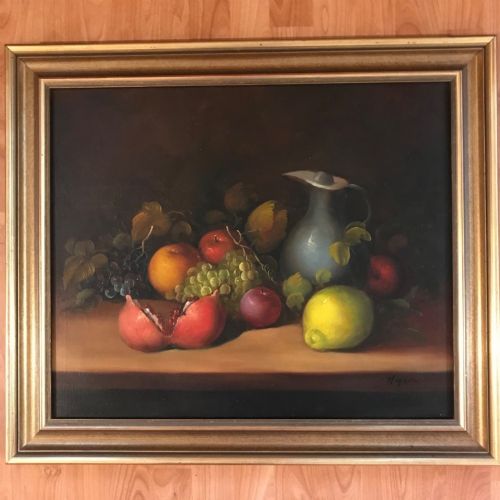
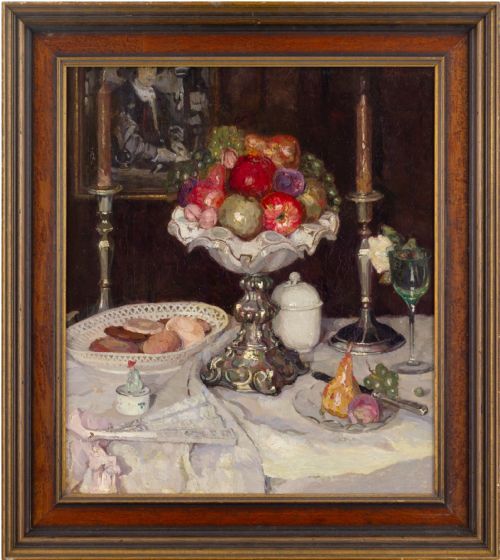
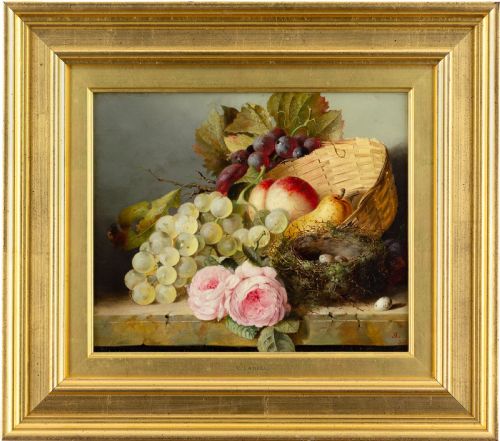
A still life with fruit presents carefully arranged compositions of apples, grapes, melons, and baskets, recorded primarily through oil paint on canvas and occasionally watercolour on paper. These works span from the nineteenth century through the mid-twentieth century, encompassing Victorian realism, impressionism, post-impressionism, and French modernist interpretations.
The nineteenth-century examples lean towards academic and Victorian realism, often featuring detailed baskets, birds' nests, or exotic birds alongside laden tables. Mid-century pieces shift towards French modernist and post-impressionist approaches, employing simplified forms and expressive brushwork to render everyday tablescapes.
Buyers encountering this selection will find everything from traditional Victorian oil paintings in giltwood frames to modernist canvases dated through the 1920s, 1930s, 1940s, and 1950s. The common thread across all periods remains the central focus on fruit, paired with domestic objects such as candlesticks, jugs, and bread.
How they were made
The majority of these works utilise oil paint applied to stretched canvas, a combination that allows for deep layering, rich colour saturation, and subtle shifts in light across organic surfaces. Selected pieces employ watercolour and ink on paper, offering a lighter touch often seen in wartime or mid-century studies.
Support structures typically involve wooden stretchers and frames, with period pieces frequently housed in giltwood surrounds that complement the tonal weight of the painted compositions. Pigments are handled with varying degrees of academic precision or modernist abstraction, depending on whether the artist pursued realistic detail or expressive brushwork.
Still Life with Fruit Retail Price Guide 2026
Typical asking prices for still life with fruit among the pieces listed under this phrase on Sellingantiques today, from the lower quarter to the upper quarter. They describe what is for sale here now, not the wider market.
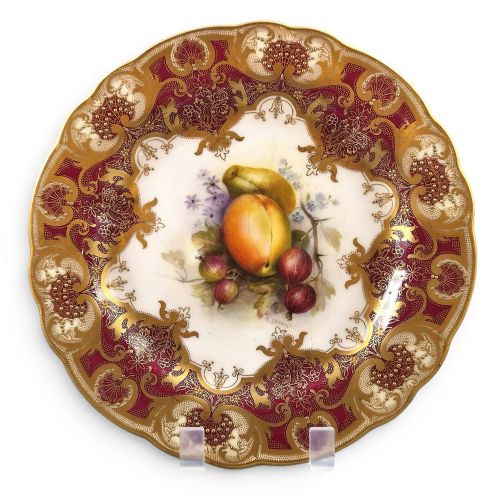
Academic realism and French modernism appear side by side, demonstrating how different decades interpreted simple arrangements of fruit and vessels.
What varies in quality
Quality rests in the handling of light, shadow, and texture across the fruit and surrounding objects, distinguishing masterly rendered surfaces from stiffer, formulaic renderings. Academic and Victorian pieces rely on precise delineation of textures such as peach fuzz, melon rinds, and woven wicker.
In modernist and impressionist works, quality is measured through the confidence of brushstrokes and the balance of composition, where form and colour take precedence over minute detail. The integration of the framing, particularly original giltwood surrounds, also contributes to the overall integrity of the piece.
Edward Ladell·Else Preußner·James Tower·Henri Joseph Pauwels·George Lance
The Still Life with Fruit Glossary
- Academic Realism
- A style of painting governed by the rules of formal art academies, emphasising accurate anatomy, precise detail, and smooth brushwork. It produces highly lifelike representations of fruit and everyday items.
- Canvas
- A heavy woven fabric, usually linen or cotton, stretched tightly across a wooden frame to serve as the primary support surface for oil paintings. It provides a durable and textured ground for layered pigments.
- Giltwood
- Wood, often carved moulding or framing, that has been coated with a thin layer of gold leaf or gilt powder. It is frequently found surrounding nineteenth-century oil paintings.
- Post-Impressionism
- An art movement developing roughly from the late nineteenth century that extended impressionism while rejecting its limitations. Artists concentrated on geometric forms and expressive use of colour.
- Watercolour
- A painting method in which the paints are made of pigments suspended in a water-based solution. It is typically applied to paper supports for a translucent effect.
Still Life with Fruit: Frequently Asked Questions
How do I date a still life painting?
Dating relies on stylistic clues, framing methods, and the canvas support materials used during specific eras. Victorian works lean towards high realism, while 1920s and 1950s pieces often show modernist influences.
Signatures, inscriptions on the reverse, and the type of stretcher frame also provide reliable chronological markers for these paintings.
Where should I hang a fruit still life?
These works traditionally suit dining rooms, kitchens, or living spaces where their rich organic subjects complement domestic environments. Their varied scales allow them to anchor a wall gallery or serve as a single focal point.
Consider placing them in rooms with controlled natural light to prevent glare on the oil varnish while maintaining clear visibility of the brushwork.
What is the difference between academic and modernist styles?
Academic works prioritise meticulous detail, realistic textures, and precise lighting to mimic physical reality closely. Modernist pieces simplify forms and use expressive colour to capture an impression rather than a literal transcription.
Both approaches focus on fruit arrangements, but the visual language shifts from nineteenth-century illusionism to twentieth-century abstraction.
Are these paintings supplied with frames?
Many listings include period frames, such as giltwood surrounds that match the era of the canvas. These frames contribute to the overall presentation and historical context of the artwork.
Checking individual descriptions clarifies whether a specific piece retains its original framing or is sold unmounted.