


Stick Back Windsor Armchair
When you search for a stick back windsor armchair, you enter a tradition of British country seating shaped by centuries of regional craftsmanship.
Stick Back Windsor Armchair
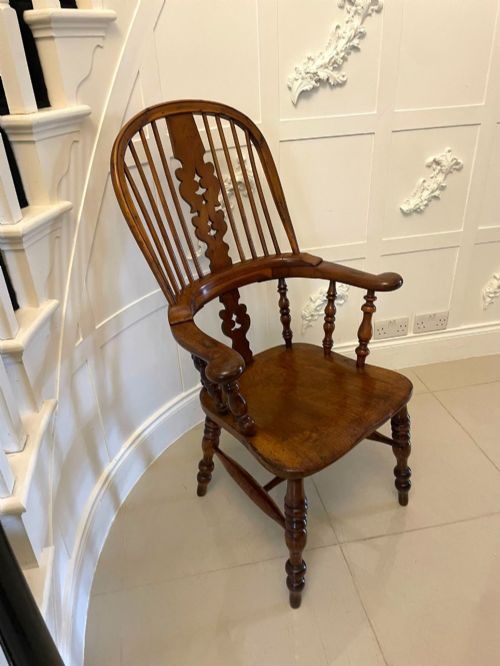
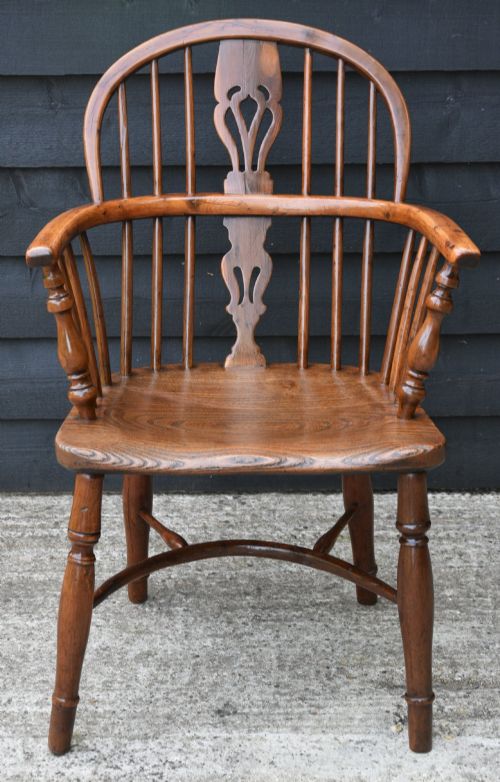
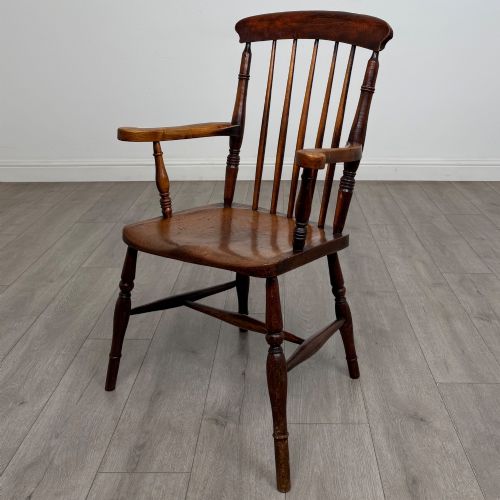
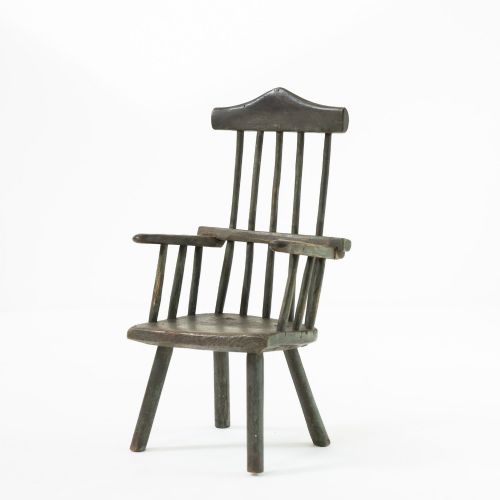
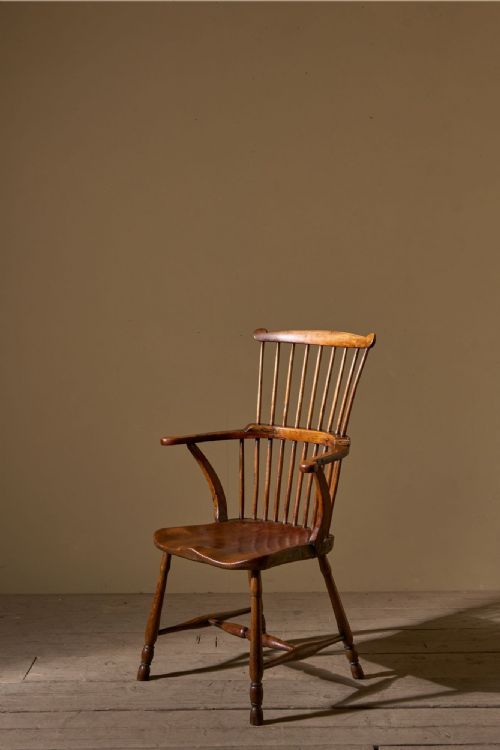
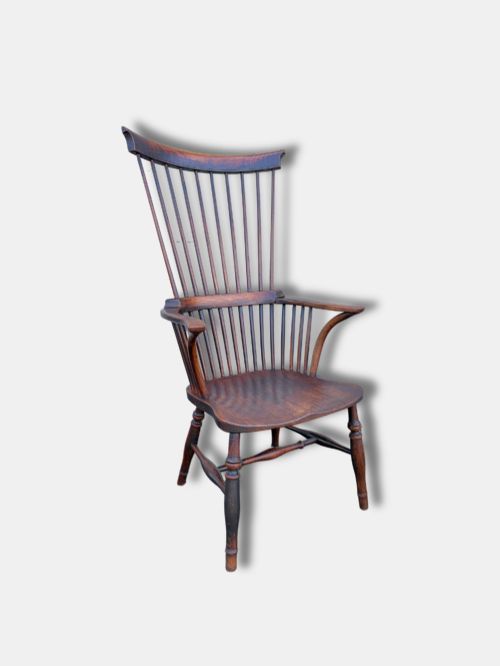
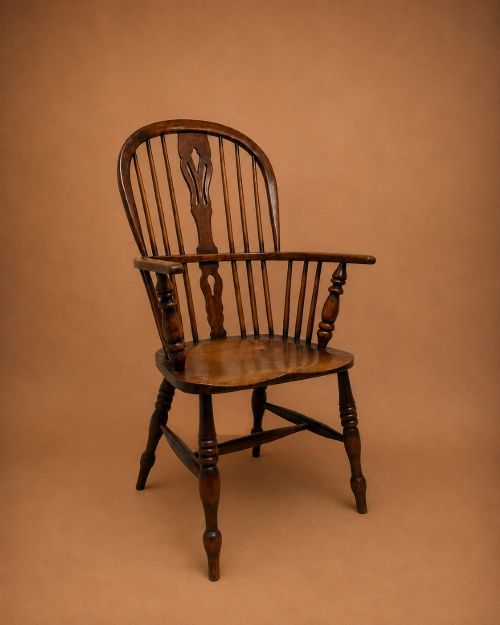
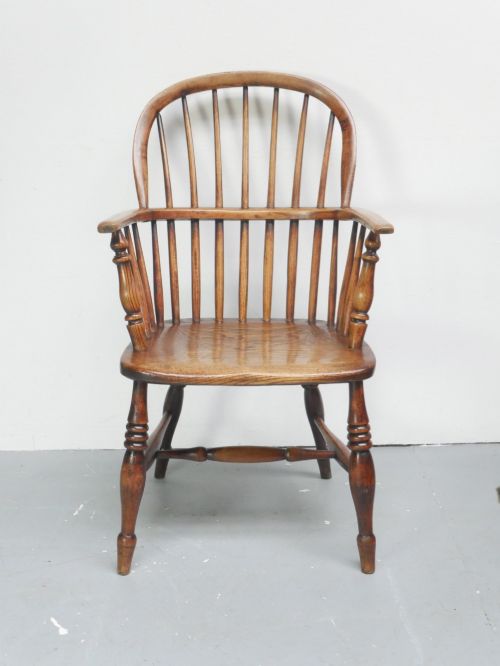
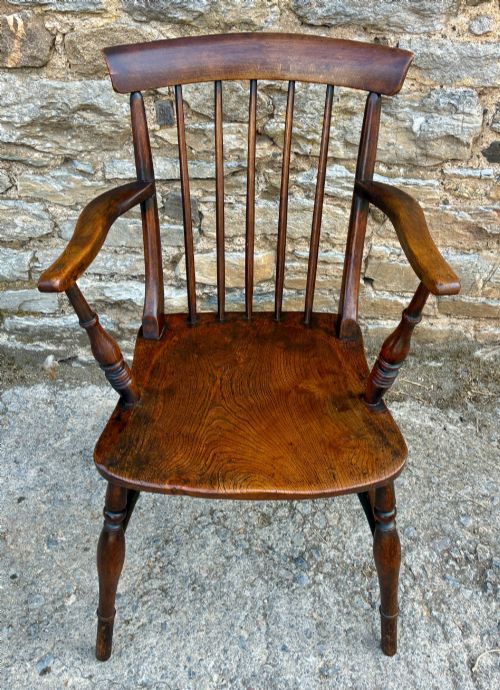
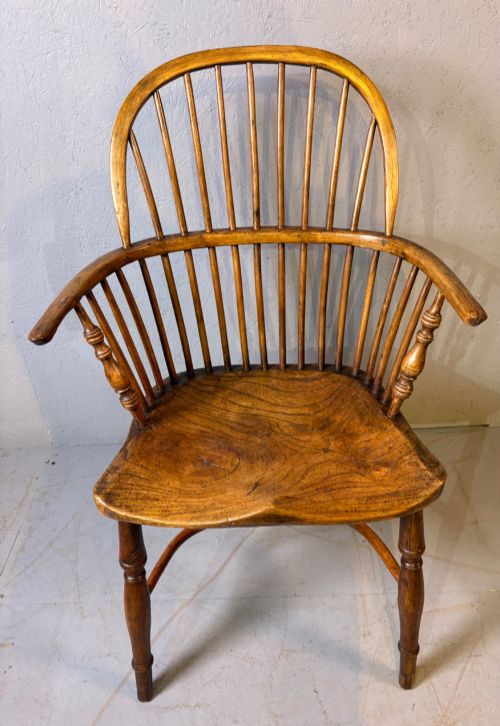
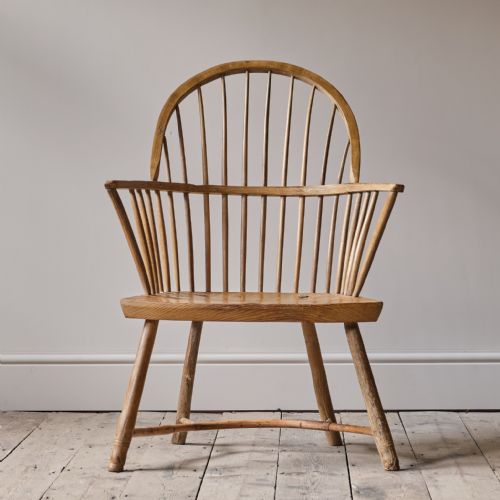
A stick back windsor armchair is a traditional wooden seat featuring spindles inserted directly into a solid wooden saddle-shaped seat, often framed by a bentwood bow or comb.
The versions most commonly met on this page span the 18th century through the Victorian era, originating from regional workshops in Wales, the Thames Valley, and the West Country.
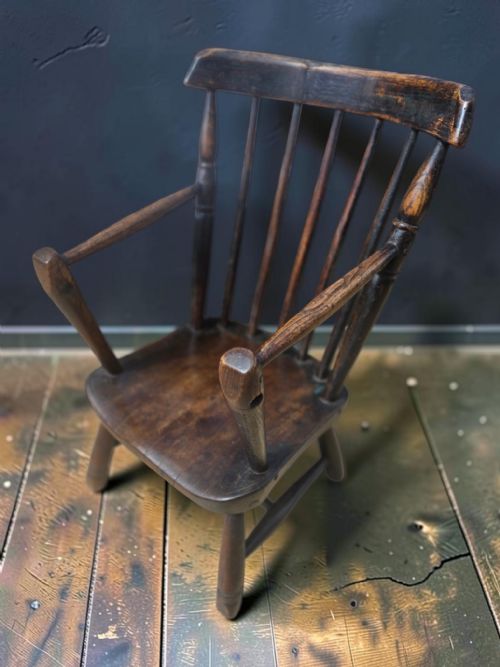
Makers produced adult armchairs alongside smaller children's armchairs and dining variants, utilising local timber traditions that defined each geographic district.
Materials and Construction
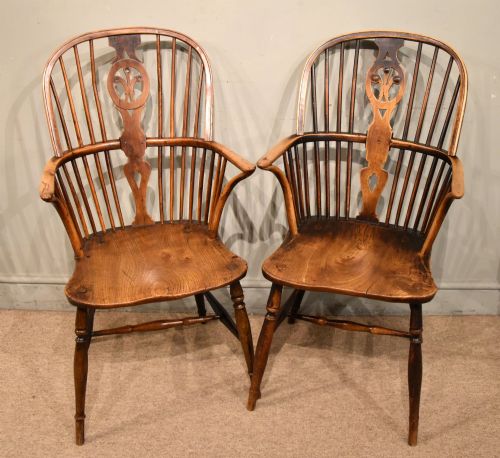
Craftsmen built these chairs by combining woods with distinct structural properties, typically pairing a durable elm seat with ash for the bent hoops and spindles.
Additional timbers such as yew, fruitwood, beech, and oak appear across regional examples, providing varied grain patterns and natural tones.
The components relied on wedged tenon joints and steam-bending techniques to create resilient, rigid frames without relying on metal fixings.
Assessing Quality
Quality rests upon the subtlety of the turner's work in the arm supports and legs, and the proportional sweep of the bentwood back.
Examples featuring dense, figured timber like yew or retaining early painted surfaces command greater interest from collectors than plain utility variants.
The depth of the saddle shaping and the integrity of the wedged joints determine the structural success of each individual piece.
John Brand of Sleaford
The Stick Back Windsor Armchair Glossary
- Comb back
- A Windsor chair variation where the vertical spindles extend upward to support a horizontal headrest piece resembling the teeth of a comb.
- Hoop back
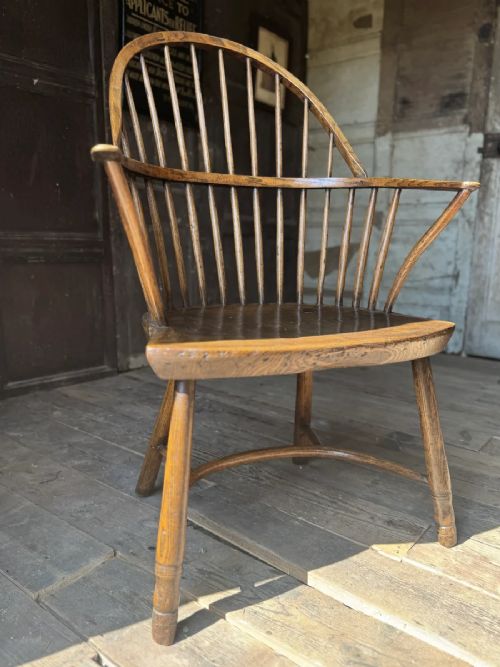
- A continuous steam-bent piece of wood forming the backrest and arm rail in a single sweeping curve.
- Crinoline stretcher
- An arched underframe connecting the legs of a Windsor chair to provide lateral stability.
- Saddle seat
- A thick plank of timber scooped and carved into a contoured depression for seating comfort.
Stick Back Windsor Armchair: Frequently Asked Questions
How do I identify a regional stick back windsor armchair?
Regional attribution relies on timber choices and structural quirks. Thames Valley chairs often feature yew wood and refined turnings, while Welsh and West Country examples tend to use ash and elm with heavier vernacular forms.
Examining the undercarriage construction and the profile of the comb or hoop helps connect a piece to its specific geographic workshop tradition.
Were these chairs used outdoors?
Windsor chairs were primarily designed for interior domestic use in kitchens, farmhouses, and vernacular parlours. Their sturdy construction allowed them to withstand daily household demands.
While robust enough for heavy use, they were kept inside to protect the timber and glued joints from moisture and extreme temperature shifts.
How should I care for an antique wooden armchair?
Maintain the wood by keeping the chair away from direct heat sources and sudden humidity changes. Applying occasional quality wax preserves the natural finish and protects the dry timber.
Avoid harsh chemical cleaners or excessive polishing, which can strip away the aged patina accumulated over generations of use.
What is the difference between a low back and high back Windsor?
Low back models feature a shorter arm rail that terminates below shoulder height, often offering a compact silhouette suited for smaller spaces. High back and comb back versions extend significantly higher to support the upper back and head.
Both forms utilise the same underlying saddle seat construction but serve different comfort requirements within the historic domestic interior.