

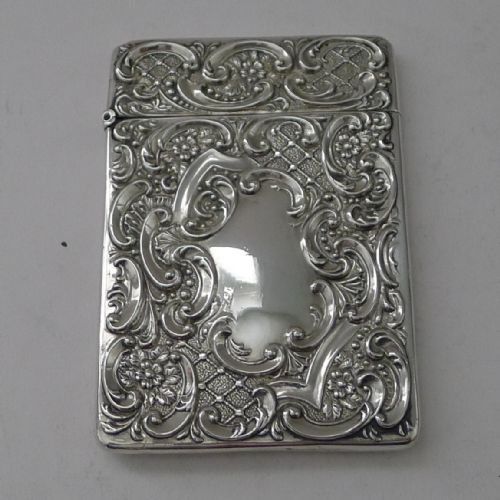

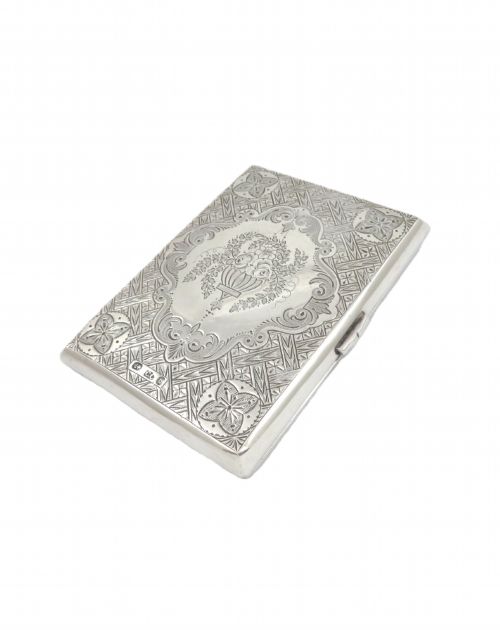


Sterling Visiting Card Case
A sterling visiting card case is a compact pocket accessory designed for social calls, crafted to hold delicate pasteboard cards with elegance.
Sterling Visiting Card Case
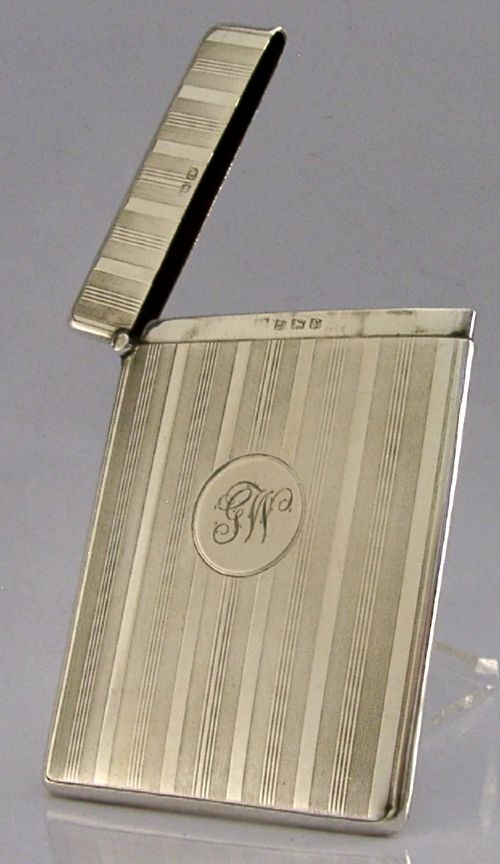
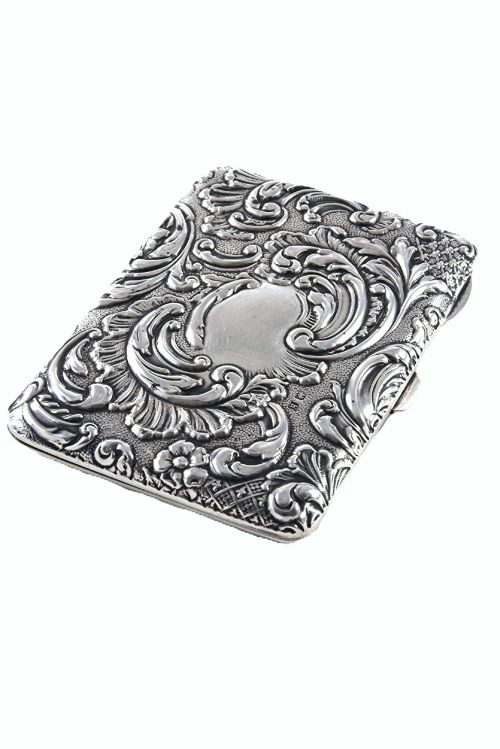
A sterling visiting card case is a small pocket receptacle designed for holding calling cards during social exchanges. These pieces appear primarily in Victorian and Edwardian forms, spanning decades from the mid-nineteenth century into the early twentieth century. Card cases and aide memoires represent the primary object types encountered within this selection.
The most common examples on this page date from the Victorian and Edwardian periods, utilising sterling silver alongside leather, velvet, and Connemara marble. Certain items incorporate internal compartments or writing tablets to function as aide memoires, merging card storage with practical notes.
How they were made
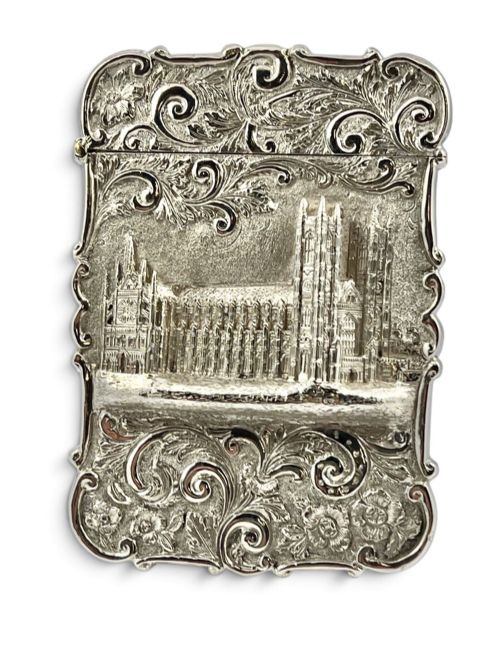
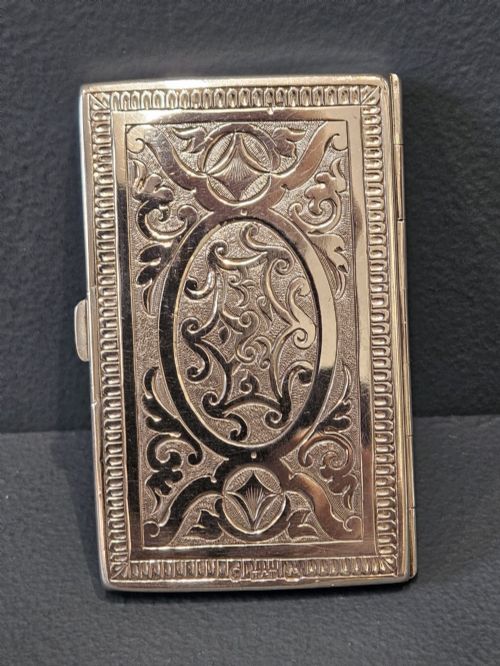
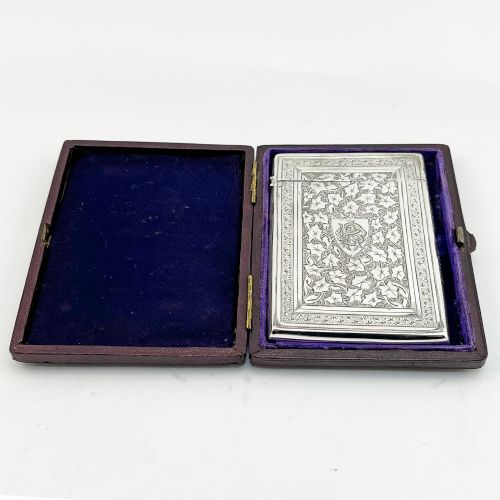
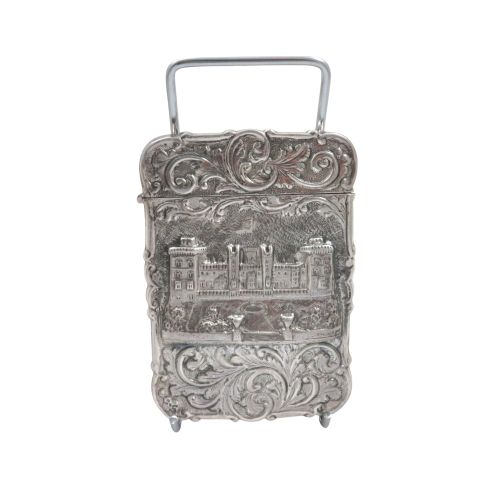
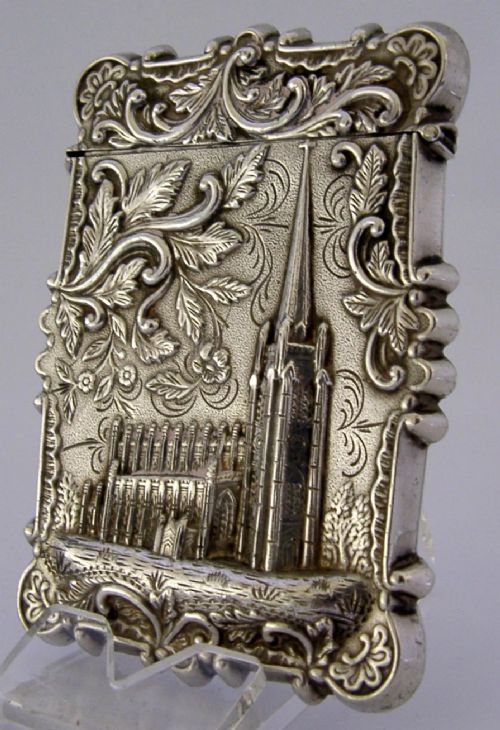
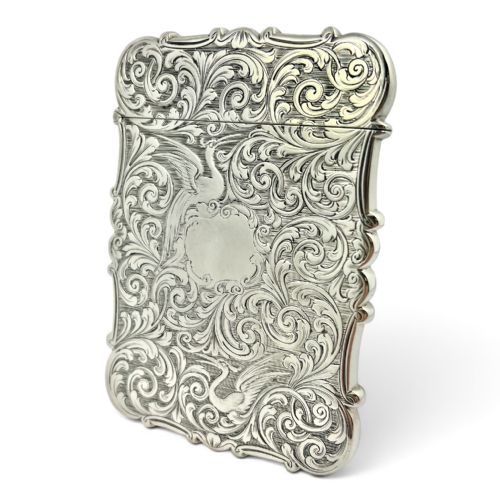
Construction relies upon sterling silver formed into rigid shells, frequently enhanced with intricate hand engraving depicting architectural landmarks, natural scenes, or foliate motifs. Pieces identified as castle top items display high-relief topographical facades stamped or chased with notable buildings such as Windsor Castle, Trinity Church, and St Paul's Cathedral.
Makers combine traditional metalworking techniques with fitted internal linings made from materials like velvet and leather to protect the delicate paper cards held within. Birmingham emerges as a notable centre of production, yielding fully hallmarked silver objects alongside unmarked specimens.
Sterling Visiting Card Case Retail Price Guide 2026
Typical asking prices for sterling visiting card case among the pieces listed under this phrase on Sellingantiques today, from the lower quarter to the upper quarter. They describe what is for sale here now, not the wider market.
Certain Victorian cases feature fierce engraved stags and dogs staring outward, ensuring your calling cards travelled with adequate canine protection.
What varies in quality
Quality separates standard stamped metalwork from master craftsmanship through the depth and clarity of the engraved surface details. Architectural castle top panels executed by renowned makers exhibit superior definition in comparison to generic foliate patterns.
The integration of secondary materials such as Connemara marble or fitted internal leather writing components influences the overall refinement of an object. The crispness of hallmarks and the structural integrity of the hinged closure further distinguish superior examples.
Nathaniel Mills·George Unite
The Sterling Visiting Card Case Glossary
- Castle top
- A descriptive term for a card case featuring a high-relief depiction of a famous building or landmark on the exterior lid. These architectural panels represent some of the most sought-after examples of nineteenth-century silversmithing.
- Aide memoire
- A pocket notebook or memorandum pad combined with a card case, often featuring an internal leaf and pencil. This hybrid form allowed Victorians to record engagements alongside distributing calling cards.
- Sterling silver
- A silver alloy containing 92.5 percent pure silver and 7.5 percent other metals, usually copper, to add durability. Most British examples bear official assay office hallmarks confirming this standard.
- Calling card
- A small paper rectangle inscribed with a person's name, utilised for formal social visits. Cases were specifically engineered to protect these thin cards from bending inside pockets.
Sterling Visiting Card Case: Frequently Asked Questions
What is a sterling visiting card case used for?
These pocket containers held engraved paper calling cards used during formal nineteenth and twentieth-century social visits.
They protected delicate pasteboards from bending while carried in pockets or handbags.
How do I date a silver card case?
Assay office hallmarks stamped on the metal surface indicate the specific year of manufacture and the town where testing occurred.
Stylistic cues such as Gothic Revival motifs or pictorial engravings also point towards specific decades like the eighteen-fifties.
How do I clean antique silver?
Gentle dusting with a soft cloth preserves the historic surface without stripping away the original patination.
Harsh chemical dips damage delicate engravings and integrated materials like velvet or leather.