



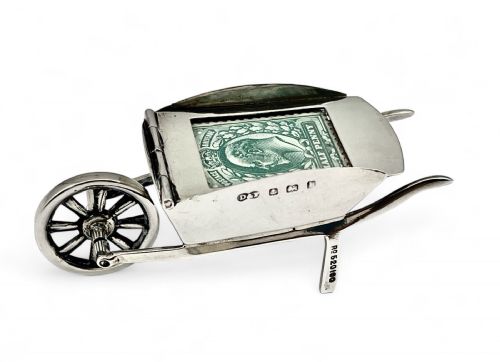
Sterling Stamp Case
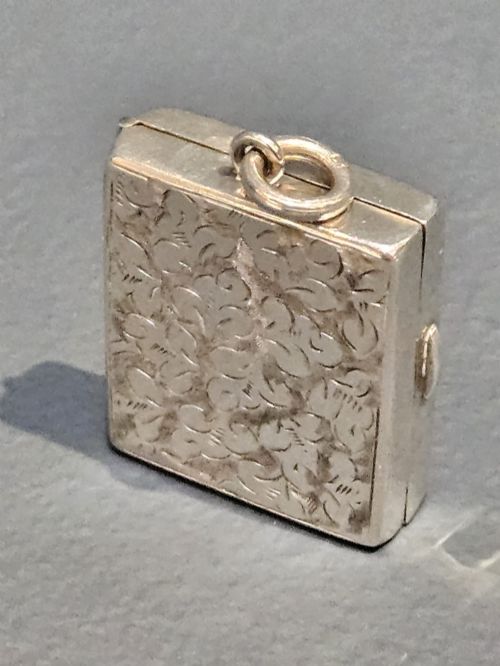
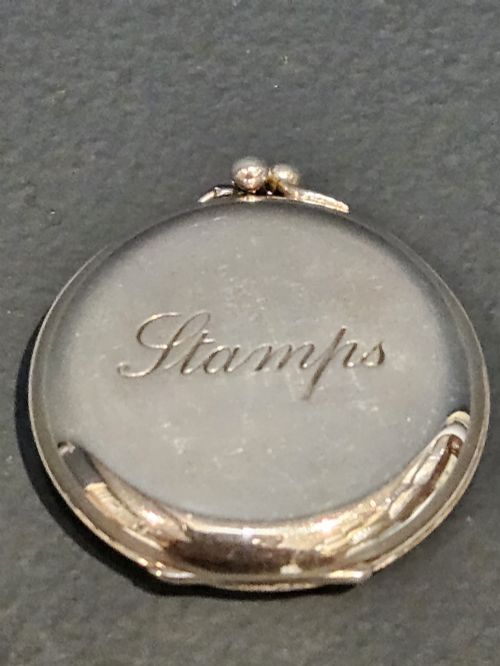
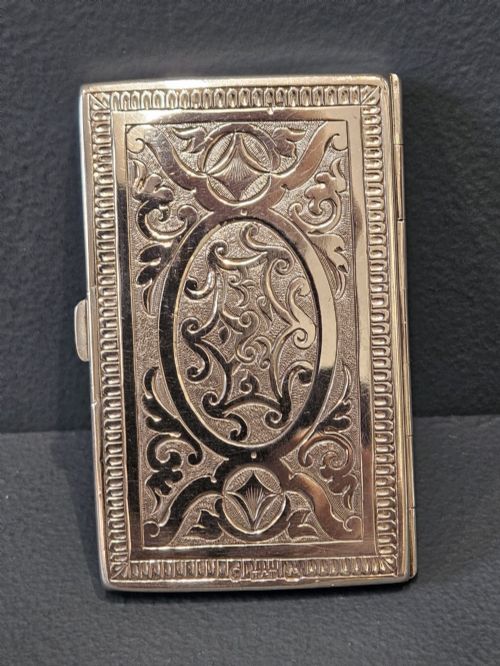
These sterling stamp case items are pocket and desk accessories designed to hold postage stamps, offering a glimpse into Edwardian and Victorian correspondence habits.
Sterling Stamp Case
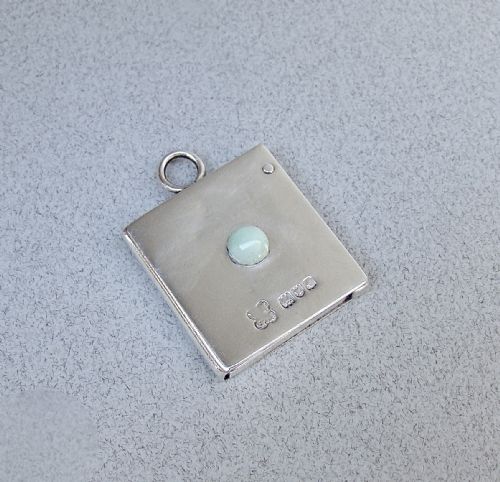
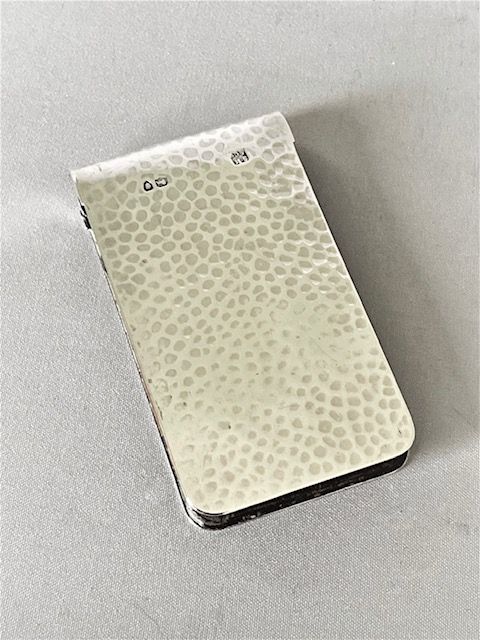
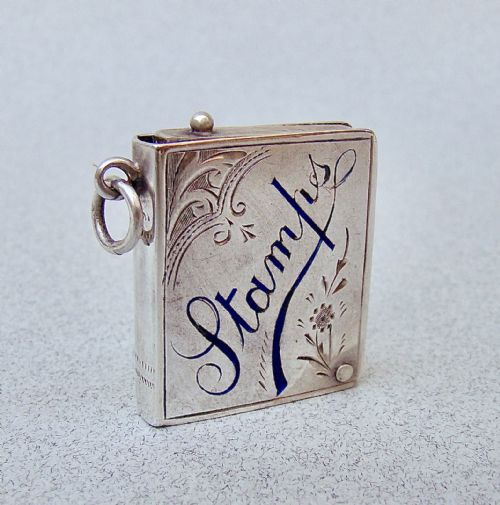
A sterling stamp case is a portable or desktop item created to protect and organise postage stamps before the widespread use of self-adhesive stamps. These pieces emerge predominantly from the Victorian and Edwardian periods, reflecting an era when letter writing was an essential daily activity.
Variations include multi-compartment boxes designed for different stamp denominations as well as combination pieces that pair a stamp holder with a card case or vesta. Each form serves the practical need of keeping gummed paper dry and flat in transit or on a writing desk.
Materials and construction
Makers utilised sterling silver and silver mounts, frequently pairing the precious metal with leather wallets or glass inserts to create functional containers. Enamel and stone also appear as decorative accents, adding colour and texture to the exterior surfaces.
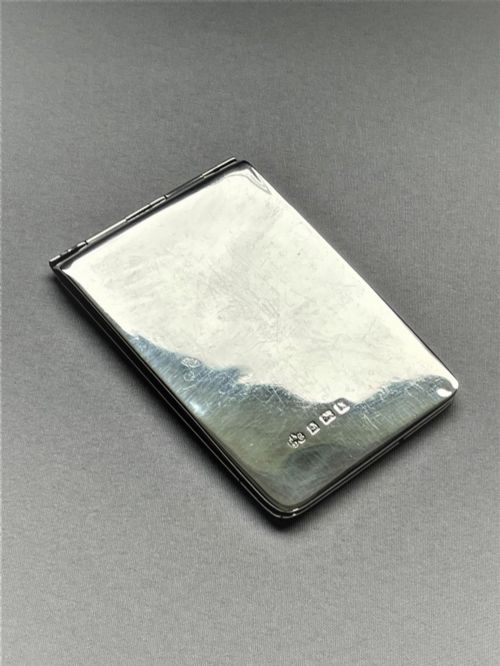
Techniques relied upon traditional silversmithing methods such as engraving, stamping, and hallmarking to finish the metal bodies. Hinges, swivels, and slide mechanisms require precise engineering to ensure tight closures that protect the delicate paper contents inside.
Sterling Stamp Case Retail Price Guide 2026
Typical asking prices for sterling stamp case among the pieces listed under this phrase on Sellingantiques today, from the lower quarter to the upper quarter. They describe what is for sale here now, not the wider market.
Listings feature items from the Victorian, Edwardian, and George V periods, incorporating materials such as sterling silver, leather, enamel, and glass.
Judging quality and craftsmanship
Quality rests upon the crispness of the engraved decoration and the structural integrity of the moving parts, such as swivels and hinges. Superior pieces exhibit precise maker marks and clear hallmarks alongside balanced proportions that feel substantial in the hand.
Novelty forms and pieces associated with known makers demonstrate a higher level of design ambition and finishing skill. Simpler utility boxes rely purely on the gauge of the silver and the neatness of the interior fit to distinguish themselves.
Sampson Morden·Crisford and Norris·W and G Neal·Albert Ernest Jenkins·Levi and Salaman
The Sterling Stamp Case Glossary
- Sterling silver
- A silver alloy containing 92.5 percent pure silver and 7.5 percent other metals, usually copper, chosen for durability. This standard is indicated by the lion passant mark on British items.
- Hallmark
- An official stamp applied to precious metals indicating the standard of purity, the assay office, and the date letter. These marks allow collectors to date pieces accurately.
- Vesta case
- A small box or pocket container used to hold matches, occasionally found combined with stamp compartments in desk accessories. They feature a striated panel on the base for striking safety matches.
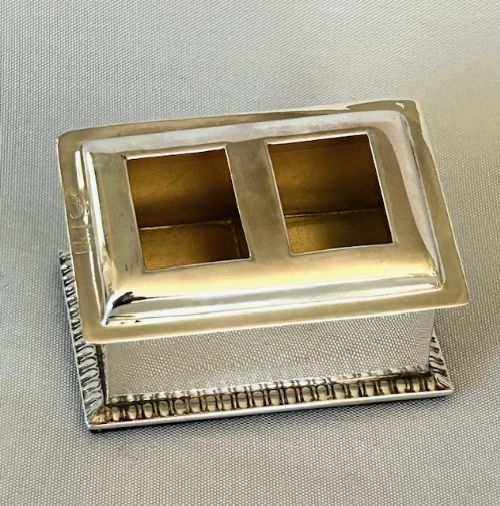
- Double stamp box
- A desk or table box featuring two internal compartments to hold different denominations of postage stamps. They often incorporate hinged lids with glass panels or sloped trough designs.
Sterling Stamp Case: Frequently Asked Questions
What are sterling stamp cases?
These are small silver containers made to hold and protect postage stamps in the pocket or on a desk.
They date primarily from the Victorian and Edwardian eras when sending letters required separate adhesive stamps.
How were stamp cases used?
People carried them in pockets or handbags, or kept them on writing desks to prevent stamps from sticking together.
Different sections held various stamp values needed for domestic or foreign postage.
How do I date a silver stamp case?
You look at the hallmarks stamped into the metal, which show the assay office and a specific date letter.
Stylistic clues like Art and Crafts motifs or Victorian engraving also help narrow down the period.
How should I clean my stamp case?
Dust gently with a soft cloth and avoid harsh chemical dips that strip away the aged patina.
If the piece includes leather or enamel elements, keep moisture away from those areas during cleaning.