


Sterling Silver Trophy Cup
A sterling silver trophy cup marks a victory or a gathering, cast in sterling silver, silver gilt, and vermeil across Georgian, Victorian, and Art Deco periods.
Sterling Silver Trophy Cup
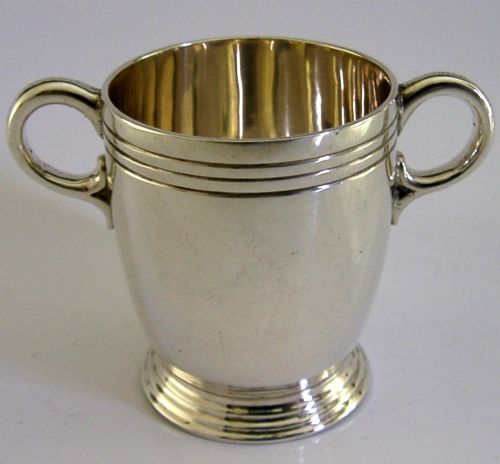
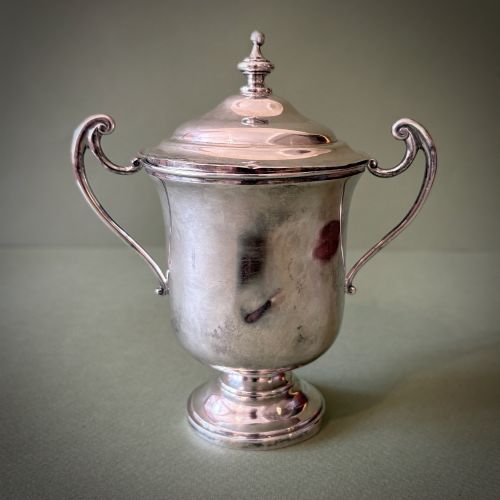
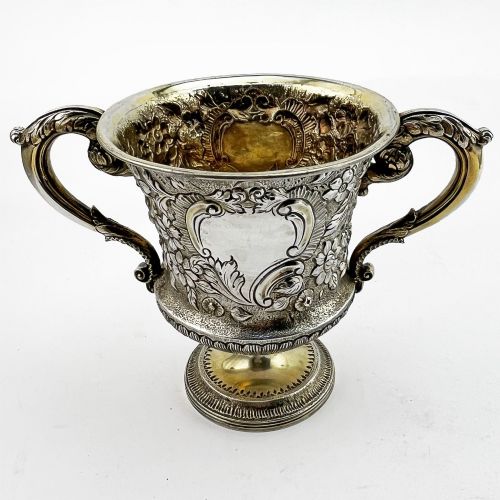
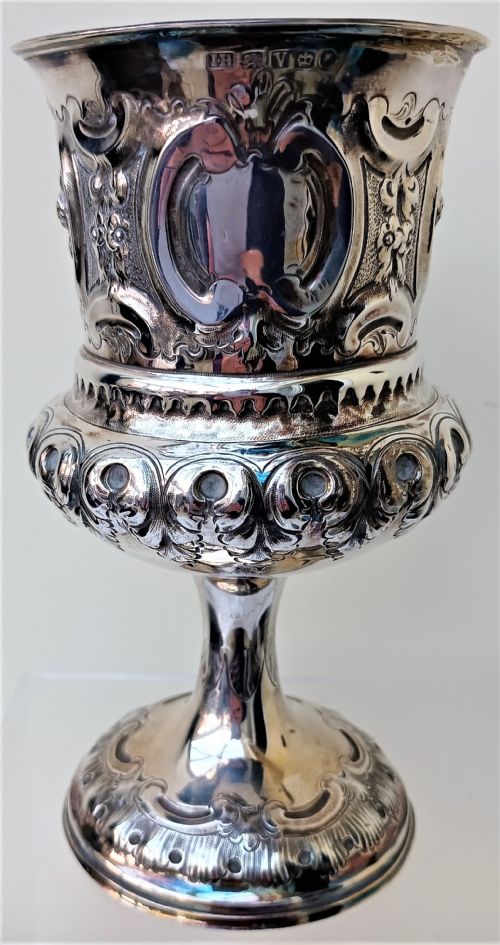
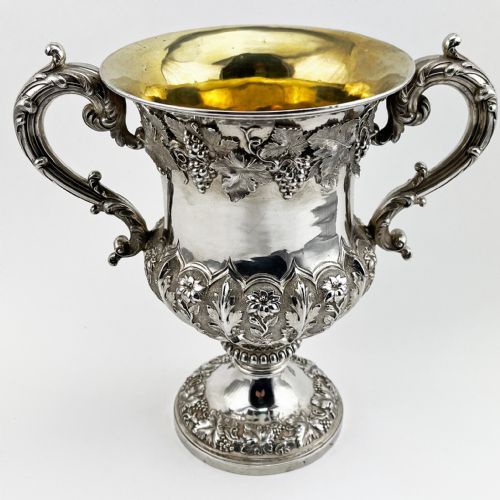
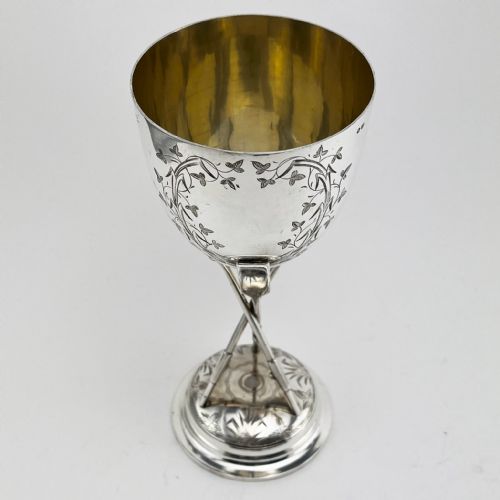
A sterling silver trophy cup takes forms ranging from two-handled campana shapes and loving cups to simple beakers, chalices, and pedestal goblets. Buyers encounter pieces spanning the eighteenth century, the Victorian era, and the Art Deco period of the 1930s.
Origin and context vary widely across the surviving pieces, with English, Irish, American, German, and Chinese Export examples appearing. These vessels served equestrian events, rowing regattas, cricket matches, and golf tournaments.
The versions most commonly met on this page include Victorian presentation cups with elaborate engraving alongside clean-lined Art Deco barware and hunting trophies. Many retain their original function as civic or sporting awards.
Materials and construction
Makers utilised sterling silver and solid silver as the primary body material, frequently applying silver gilt, vermeil, or gold gilt to the interior or exterior surfaces. Ebonised wood and bakelite appear in fitted bases for taller presentation pieces.
Techniques combine traditional hammering, casting, and repoussé work with intricate hand engraving to record names, dates, and sporting clubs. Liners occasionally accompany eighteenth-century Irish examples to protect the silver.
Several sporting trophies include unexpected accompanying items, such as a matching cricket tie pin set ready for the winner's clubhouse dinner.
Craftsmanship and weight
Substantial metal weight and gauge separate sturdy presentation vessels from lighter commemorative items, with heavier pieces maintaining structural integrity across centuries. The crispness of hand chasing and repoussé relief work dictates visual clarity.
Proportion and balance define the superior campana and lidded cup forms, where handles and feet integrate seamlessly into the body design. Maker signatures and complete hallmarking provide reliable markers of workshop standard.
James Deakin & Sons·Henry Tatton & Son·Richard Gurney·Joseph Rodgers & Sons·Thomas Sutton·William Hutton·William Neale
The Sterling Silver Trophy Cup Glossary
- Campana
- A bell-shaped vessel with a flared rim and footed base, common in Georgian silver. These often feature two scrolling handles.
- Vermeil
- Sterling silver coated with a thin layer of gold, providing a rich yellow surface finish. It appears frequently on the interiors of trophy cups.
- Tyg
- A large drinking vessel fitted with three or more handles, designed for communal passing at feasts and club gatherings. Victorian iterations often function as sporting trophies.
- Parcel Gilt
- An object made of silver where selected areas are gilded while other portions retain the natural silver finish. This creates contrast in heraldic engraving and decorative motifs.
- Repoussé
- A metalworking technique where the artisan hammers the design from the reverse side to form raised relief on the front. This creates deep ornamentation on Victorian and Georgian presentation pieces.
Sterling Silver Trophy Cup: Frequently Asked Questions
What were sterling silver trophy cups used for?
These vessels commemorated sporting victories, club memberships, and civic events, ranging from horse races and coursing to golf tournaments and pigeon clubs.
Winners displayed them proudly in homes and clubhouses as symbols of achievement and social standing.
How do I clean my silver trophy cup?
Use a soft microfiber cloth and a mild, reputable silver polish to maintain the shine without removing the underlying patina.
Avoid abrasive brushes and harsh chemical dips, especially on pieces with parcel gilt or delicate hand engraving.
Can I use an antique cup for drinking?
Many of these pieces were designed for functional use as goblets, beakers, and loving cups during banquets and club dinners.
Check for interior gilt or liners which protect the silver from acidic beverages before serving drinks.
How do I identify the date of a cup?
Examine the hallmarks stamped into the metal, which typically include assay office marks, date letters, and maker initials.
Engraved presentation inscriptions often record the exact year of the sporting event or award ceremony.