

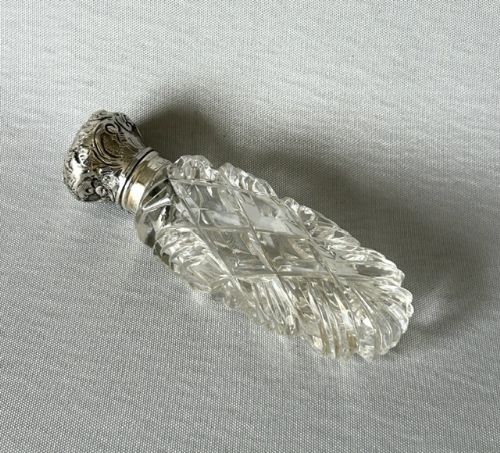

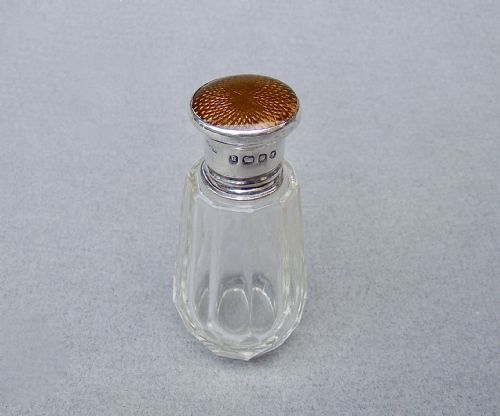


Sterling Silver Top Scent Bottle
A sterling silver top scent bottle combines precious metal with coloured or cut glass, offering a dressing table accessory designed for carrying perfume.
Sterling Silver Top Scent Bottle
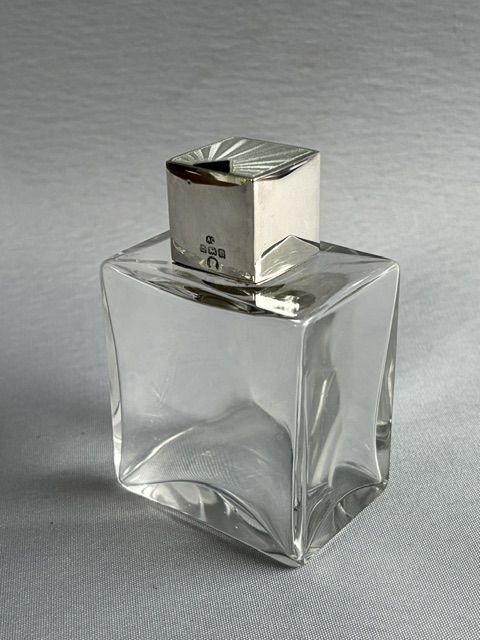
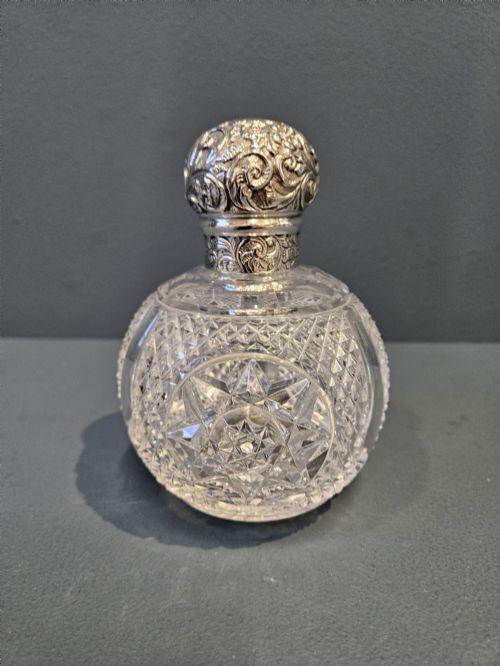
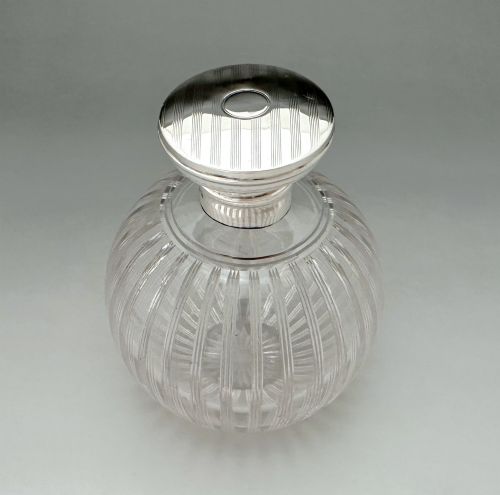
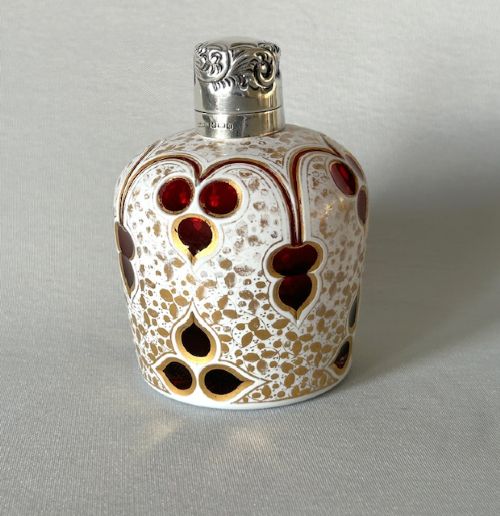
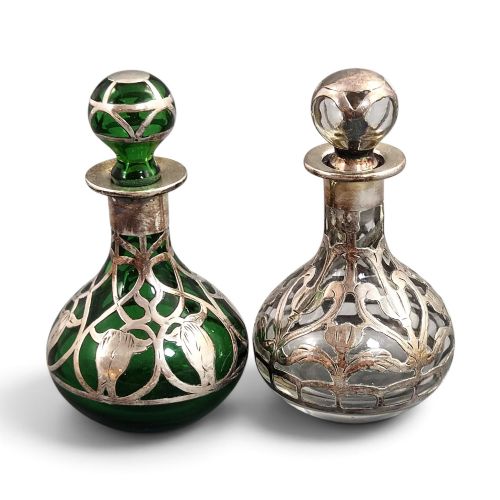
A sterling silver top scent bottle is a small vessel designed to hold perfume, combining a glass body with a metal stopper or collar. The selection draws primarily from Victorian, Edwardian, and Art Deco periods, spanning the late nineteenth century into the 1930s. Buyers will find globular bottles, cylindrical flasks, and dressing table accessories.
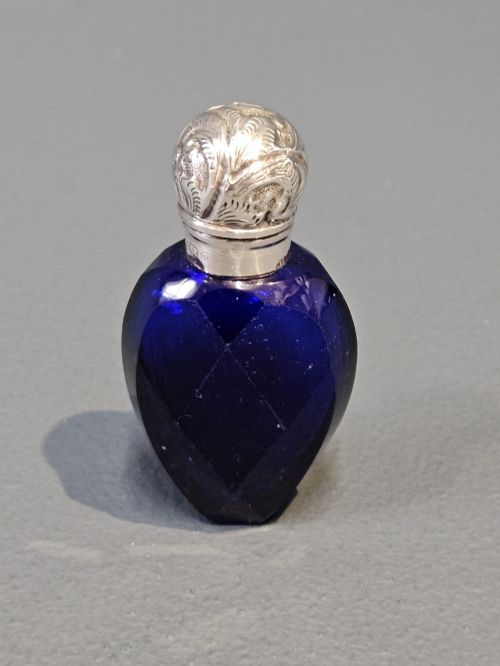
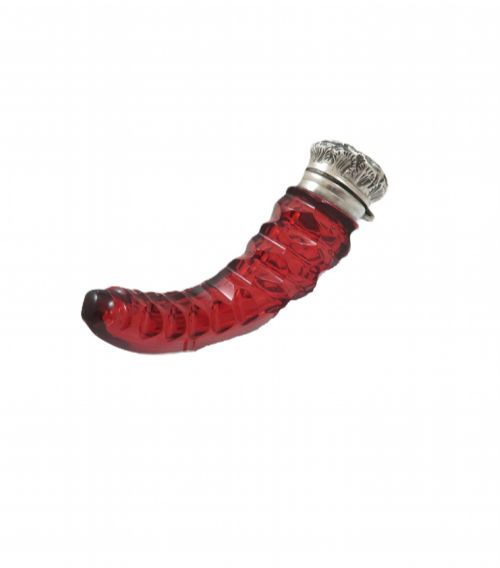
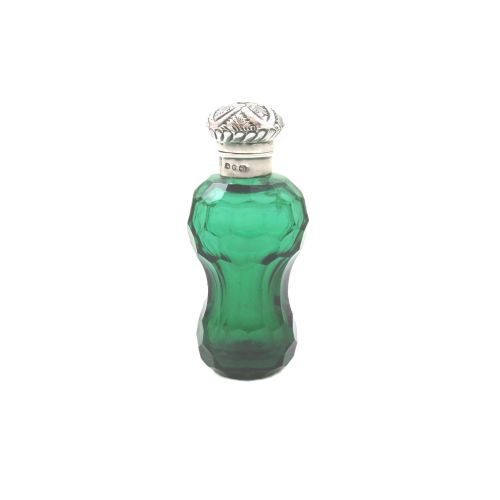
Victorian examples frequently showcase coloured glass bodies such as Bristol blue, green, ruby, cranberry, and opaline glass paired with embossed sterling silver caps. Edwardian and later pieces often utilise heavy cut crystal and glass with smooth or engine-turned silver lids. Art Deco iterations introduce vibrant enamelling and geometric forms.
Makers and assay offices across Birmingham and London produced the vast majority of these silver mounts. Surviving pieces range from simple single bottles to matched pairs intended for travel or display on a dressing tray.
How they were made
The bodies of these scent bottles were formed from blown glass, crystal, or opaline, sometimes shaped into deep moulds or faceted through wheel-cutting. Bristol blue, cranberry, ruby, and green glass achieved their rich hues through mineral oxides added during the molten stage. Artisans then fitted these glass reservoirs with hallmarked sterling silver collars, hinged lids, or screw caps.
Metalwork techniques included repoussé embossing, chased floral motifs, and precise guilloché enamel applied over engine-turned silver bases. The silver components were stamped with assay marks indicating the city of testing, the maker's mark, and the year of production. Internal glass stoppers frequently accompanied the outer metal lid to prevent evaporation.
Sterling Silver Top Scent Bottle Retail Price Guide 2026
Typical asking prices for sterling silver top scent bottle among the pieces listed under this phrase on Sellingantiques today, from the lower quarter to the upper quarter. They describe what is for sale here now, not the wider market.
Listings feature sterling silver top scent bottles spanning multiple decades, from the Victorian era through to the Art Deco period of the 1930s.
What varies in quality
The distinction between standard production items and superior examples lies in the depth of glass cutting and the complexity of the silver work. Heavy cut crystal and unusual coloured glass bodies, such as opal-toned or layered Bohemian glass, indicate finer manufacture. Elaborate silver overlay or translucent guilloché enamel work elevates a piece above plain stamped collars.
The preservation of the interior glass stopper and the crispness of the hallmark stamps also determine the standard of a piece. Well-preserved hinge mechanisms on the silver caps and intact enamel surfaces without chipping represent the upper tier of surviving dressing table items.
Gorham·Henry Perkins·Barnsley and Co·Adie Brothers Ltd
The Sterling Silver Top Scent Bottle Glossary
- Guilloché enamel
- A decorative technique where an intricate geometric pattern is mechanically engraved onto metal beneath a translucent layer of coloured enamel.
- Bristol blue glass
- A deep, vivid cobalt blue glass historically produced in the English port city during the eighteenth and nineteenth centuries.
- Assay mark
- A stamp or series of stamps applied to precious metals to certify their purity and indicate the testing office and year.
- Repoussé
- A metalworking technique where the artisan hammers the silver from the reverse side to form raised relief designs on the front.
- Opaline glass
- An opaque or semi-translucent art glass, often tinted in pale pastel shades, popular for Victorian ornamental wares.
Sterling Silver Top Scent Bottle: Frequently Asked Questions
What are sterling silver top scent bottles?
These items are small glass containers fitted with hallmarked silver lids or collars, made to hold liquid perfume. They were essential dressing table accessories from the Victorian era through the Art Deco period.
Craftsmen combined blown or cut glass bodies with precious metal mounts, creating functional objects that doubled as decorative vanity items.
How do I date a silver scent bottle?
Dating relies heavily on the assay marks stamped into the sterling silver collar or lid, which indicate the exact year of testing. Stylistic clues such as floral repoussé work point to the Victorian period, while geometric enamelling signals the 1930s.
The colour and cut of the glass body also help place the piece within its specific decade of manufacture.
Did these bottles have inner stoppers?
Many original scent bottles included a small ground glass stopper hidden beneath the outer silver cap. This inner seal prevented volatile perfumes from leaking or evaporating during travel.
When present, the matching inner stopper adds to the completeness and authenticity of the piece.
How should I clean the silver tops?
Silver mounts require gentle cleaning with a soft cloth to preserve the patina and avoid damaging any surrounding glass or enamel. Proprietary silver polishes should be used sparingly and kept away from the glass body and internal corks or seals.
Regular dusting and careful handling help maintain the bright finish of the historical metalwork.