



Sterling Silver Swan
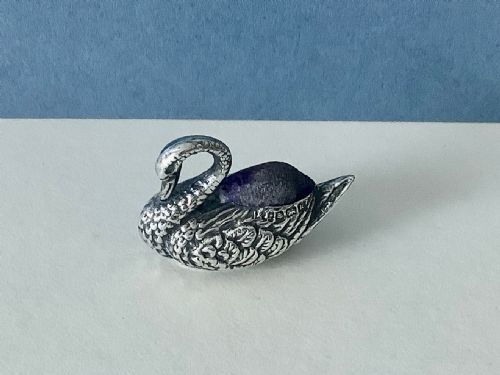
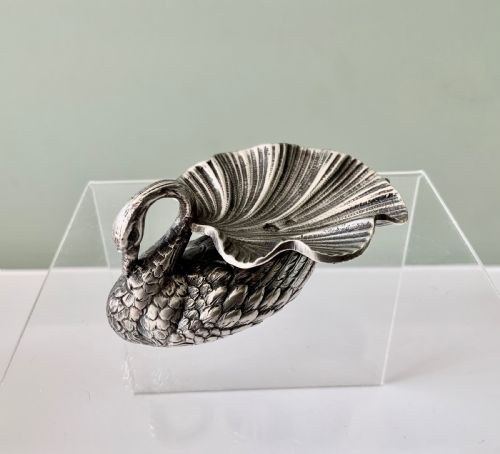
These sterling silver swan pieces range from tactile Edwardian pin cushions to Victorian table salts, combining animal form with functional silverwork.
Sterling Silver Swan
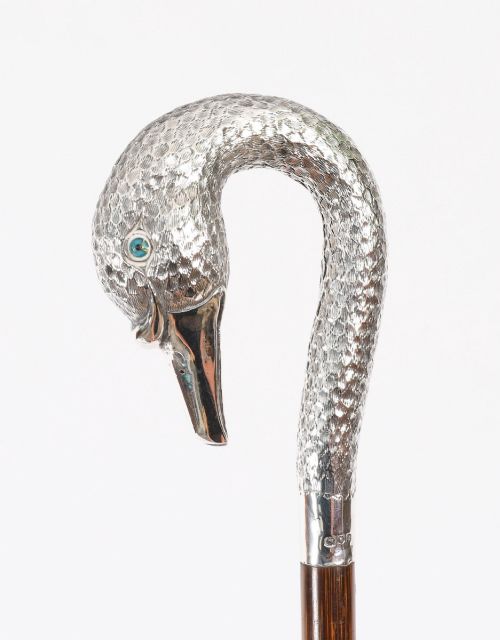
When searching for a sterling silver swan, collectors encounter a diverse array of decorative and functional objects spanning the Victorian and Edwardian eras. These figural pieces most frequently manifest as novelty pin cushions, table salts, toast racks, and walking stick handles.
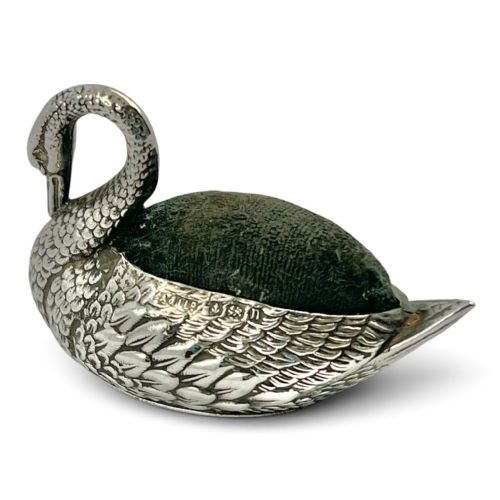
The Edwardian period heavily favoured novelty silver pin cushions modelled as birds, and these make up the bulk of the smaller items found on this page. Larger domestic silver such as centrepiece bowls, menu holders, and salt cellars incorporate the swan motif into traditional European and Rococo Revival designs.
How they were made
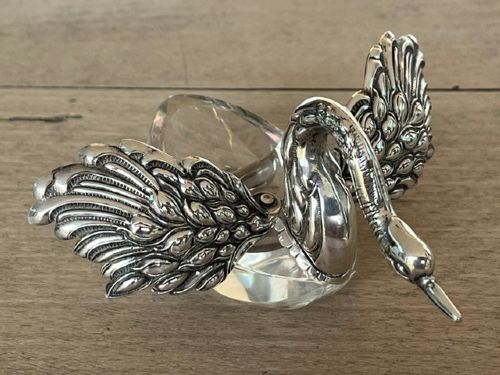
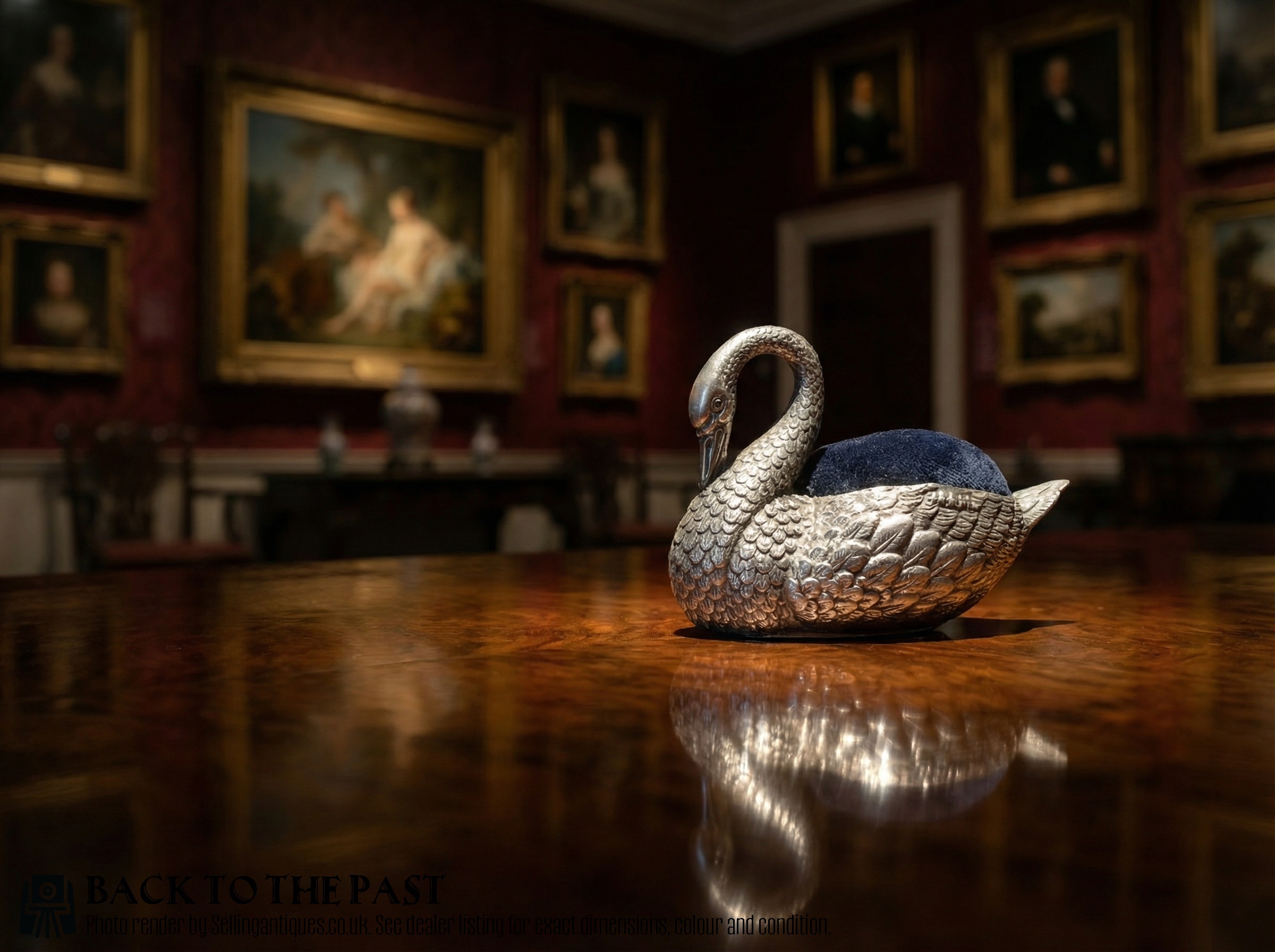
Figural pin cushions often utilised hollow-cast silver bodies fitted with upholstered velvet inserts to hold pins and needles securely. Tableware combined cast silver swan figures with blown or moulded crystal glass liners for functional utility.
Listings feature items from the Victorian, Edwardian, and mid-twentieth-century periods, incorporating materials like crystal, velvet, and sterling silver.
What varies in quality
Quality in these figural silver pieces depends heavily on the crispness of the chasing and the anatomical accuracy of the bird's form. Superior examples display fine feather detail and clear hallmarks, whereas lesser items show softened textures from excessive polishing or wear.
The integration of secondary materials also dictates standard, such as the intactness of original velvet pads in pin cushions or undamaged crystal and glass liners in salt cellars and bowls.
Nathaniel Mills·Adie & Lovekin
The Sterling Silver Swan Glossary
- Pin Cushion
- A small domestic accessory, frequently modelled as an animal or bird, designed to hold pins on a dressing table. Edwardian silversmiths specialised in figural silver versions of these.
- Salt Cellar
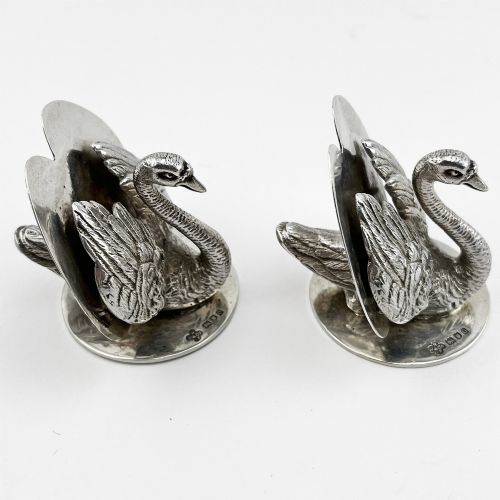
- A small open vessel or dish placed on the dining table to hold salt. These often appear in pairs shaped as double-headed swans or paired birds.
- Rococo Revival
- A design style popular in the nineteenth century characterised by elaborate scrollwork, asymmetry, and naturalistic motifs. This aesthetic often influences the decorative bases of swan dishes and bowls.
- Toast Rack
- A tableware frame designed to hold slices of toast upright. Victorian examples occasionally incorporate swan figures into the framework.
Sterling Silver Swan: Frequently Asked Questions
What are sterling silver swan pin cushions?
These are small, hollow-cast silver figures of swans fitted with velvet pads designed to hold pins. They were immensely popular during the Edwardian period as dressing table accessories.
Silversmiths produced them in various sizes, ranging from miniature novelties to larger double-swan designs, often stamped with regional English assay office marks.
How were swan salt cellars used?
Salt cellars held loose salt for diners at the table before modern salt shakers became common. Swan-shaped salt cellars often feature movable wings or glass liners.
Victorian and Edwardian dining tables frequently utilised pairs of these figural salts placed symmetrically across the setting.
How do I identify an Edwardian silver swan?
Examination of the hallmarks stamped on the silver provides the exact year of manufacture and the assay office. Edwardian pieces typically date from the early twentieth century.
Stylistic cues such as naturalistic feather chasing and the presence of velvet inserts or crystal liners also point towards Edwardian and late Victorian production periods.
Are these silver swans English?
Many pieces originate from English workshops in Birmingham, London, and Sheffield, bearing traditional lion passants and date letters. However, the category also includes continental silver and Spanish silver items.
Foreign imports often feature distinct continental hallmarks or lack the standard British assay marks found on domestic Victorian and Edwardian output.