




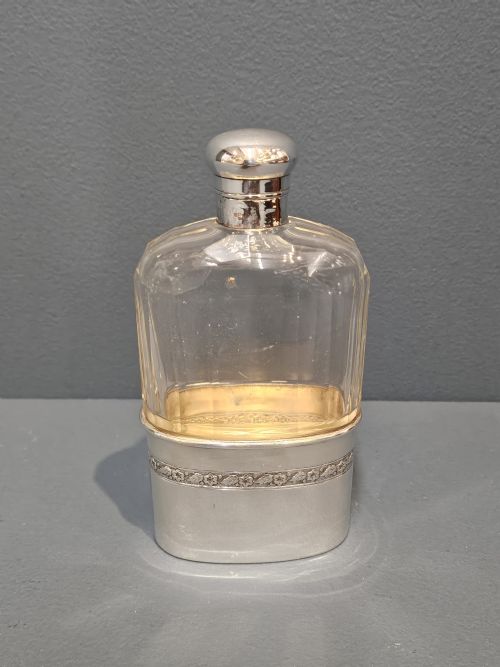
Sterling Silver Spirit Flask
When you search for a sterling silver spirit flask, you discover pocket companions built for the field and the dining room from the late nineteenth century onwards.
Sterling Silver Spirit Flask
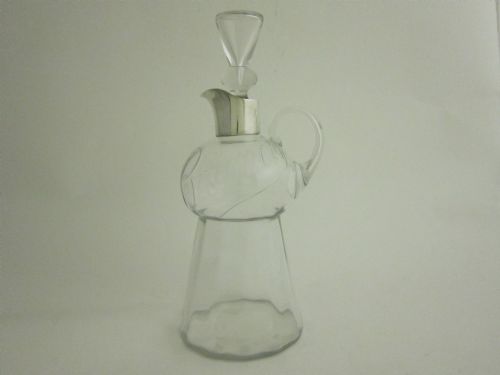
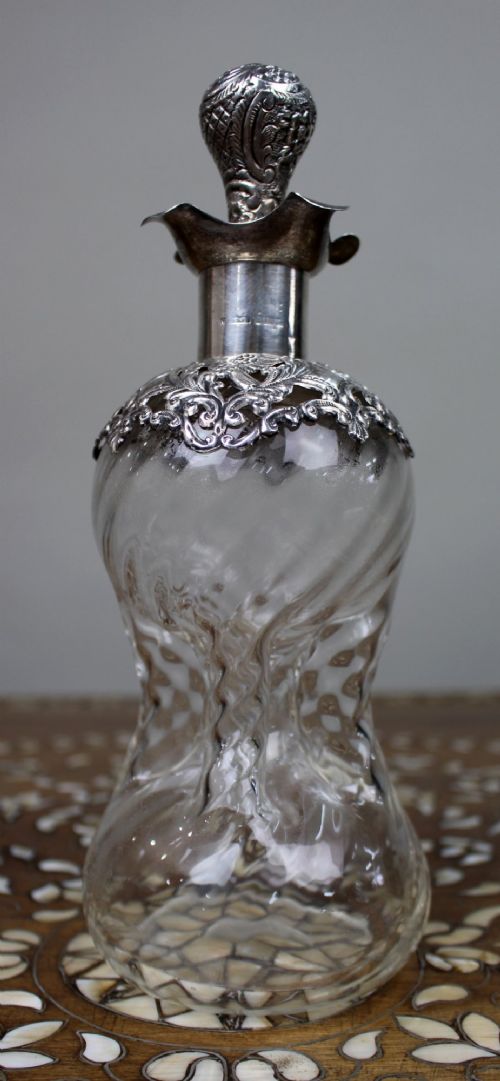
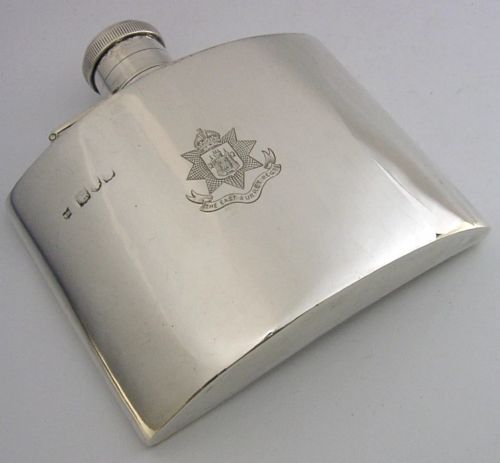
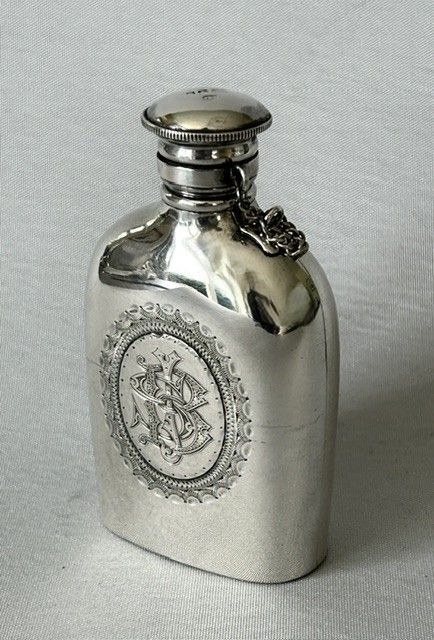
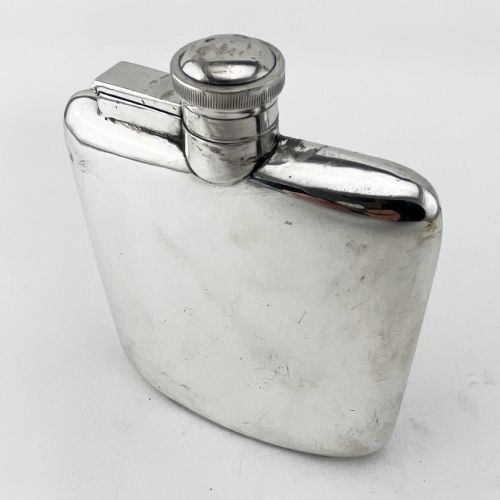
A sterling silver spirit flask is a portable vessel designed to carry liquor, commonly taking the form of a curved hip flask or a glass body encased in silver mounts. These pieces emerge frequently from the Victorian and Edwardian eras, as well as the later George V and Art Deco periods, reflecting a long tradition of outdoor pursuits like hunting and shooting.
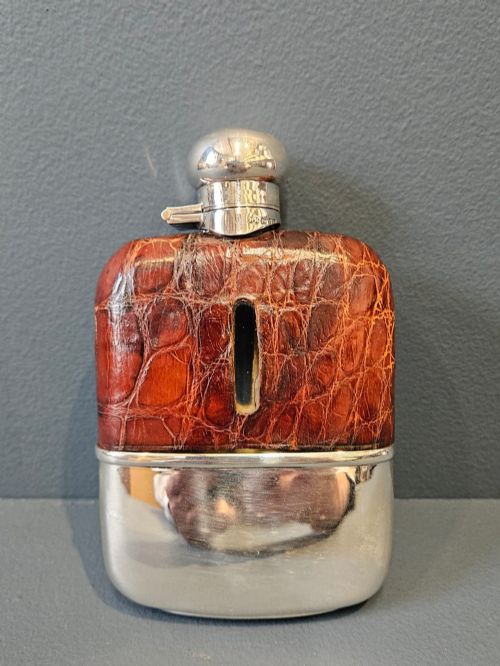
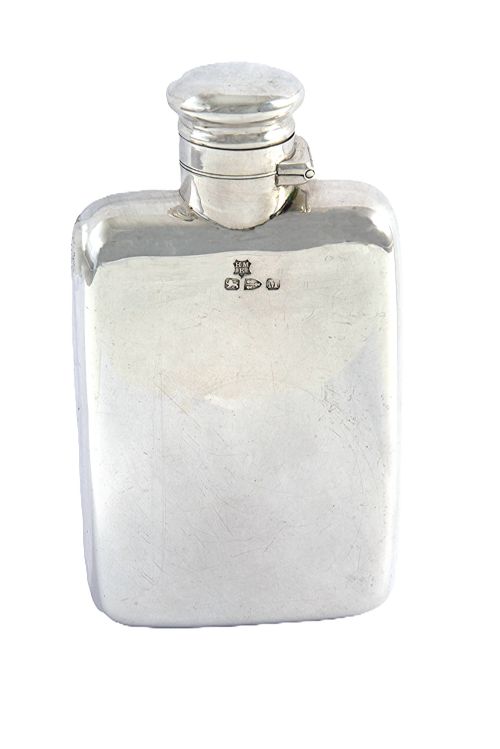
The selections span simple plain metal bodies to complex combinations featuring removable cups at the base, hinged caps, and glass or crystal reservoirs wrapped in crocodile leather. Many examples bear hallmarks from assay offices in London, Birmingham, Sheffield, Chester, and Glasgow, anchoring them to specific years between the late 1800s and the mid-twentieth century.
How They Were Made
Makers formed the metal bodies from sterling silver, occasionally applying a layer of gilt interior or pairing the silver with cut glass, green glass, and crystal. For combination pieces, craftsmen stitched crocodile leather tightly around glass or crystal inserts, securing them with threaded or hinged silver caps.
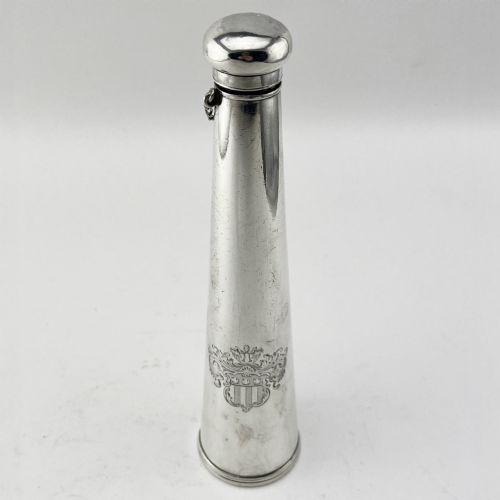
Surface decoration required specialised techniques, resulting in hammered finishes, floral patterns, or engraved family crests and military insignia. Cork stoppers and secure screw caps provided leak-proof seals for portable use in the field.
Listings span the late Victorian era through the 1940s, uniting sterling silver, cut glass, and crocodile leather forms.
What Varies In Quality
Distinction across these vessels rests in the weight of the silver and the precision of the mechanics, particularly how smoothly the captive cap or flip top operates and closes. Pieces featuring fully removable lower cups or integrated collapsible cups require sophisticated engineering to maintain a flush, seamless fit against the body.
The caliber of the ancillary materials also separates standard output from superior items, seen in the clarity of cut crystal, the precision of hand-hammered texturing, and the tight, uniform stitching of genuine crocodile leather sleeves.
Hukin & Heath·Asprey London·William Neale·JB Chatterley & Sons·Mappin & Webb·James Dixon & Sons·S Mordan·W A Ellwick Ltd
The Sterling Silver Spirit Flask Glossary
- Hallmark
- A series of official marks stamped onto precious metals indicating the assay office, metal standard, and date letter. These symbols provide the definitive record of a flask's origin.
- Sterling silver
- An alloy consisting of 92.5 percent silver and 7.5 percent other metals, usually copper, chosen for durability while maintaining a bright lustre. This standard forms the primary body material for these items.
- Gilt
- A thin layer of gold applied to the interior surface of a silver vessel to prevent the spirit from reacting with the metal. This treatment preserves the taste of the liquor.
- Captive cap
- A bottle lid attached to the flask by a small hinged arm so it cannot be misplaced while pouring in the field. This mechanical detail is typical of better-quality sporting designs.
- Removable cup
- A small drinking vessel fitted snugly to the base of the flask that slides off for use. It often matches the hallmarks and engraving of the main body.
Sterling Silver Spirit Flask: Frequently Asked Questions
What is a spirit flask?
A spirit flask is a small, portable container shaped to fit against the body in a pocket or bag, used for carrying alcoholic beverages during travel or outdoor sports.
Most historic examples feature secure screw or flip caps to prevent leaks, and many include built-in cups for drinking in the field.
How do I date a silver flask?
You can date a silver flask by examining the stamped hallmarks, which include specific letters and symbols corresponding to the year and assay office of manufacture.
Stylistic cues such as Art Deco geometric lines or Victorian chased floral patterns also help narrow down the decade.
Why do some flasks have leather?
Leather wrapping, particularly crocodile skin, provided a secure, non-slip grip for cold or gloved hands during shooting and hunting expeditions.
It also protected the glass body beneath from knocks and scratches while being carried in a pocket or saddlebag.
How do I clean a silver flask?
You should clean the exterior sterling silver with a soft cloth and a specialised silver polish, taking care to avoid harsh abrasives on engraved details or leather wraps.
For the interior, warm water and mild dish soap suffice, followed by thorough drying with the cap left open.