

Sterling Silver Place Cards
Sterling silver place cards bring dining tables to life with miniature figural sculpture and chased metalwork.
Sterling Silver Place Cards
Sterling silver place cards and menu holders serve formal dining tables by holding handwritten cards or menus upright next to each setting. The selections seen here span the Victorian, Edwardian, and Art Deco periods, extending through the reigns of George V and George VI.
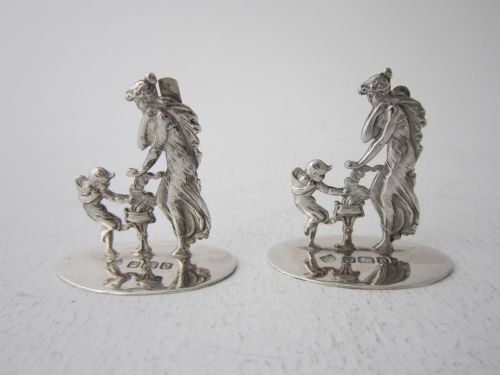
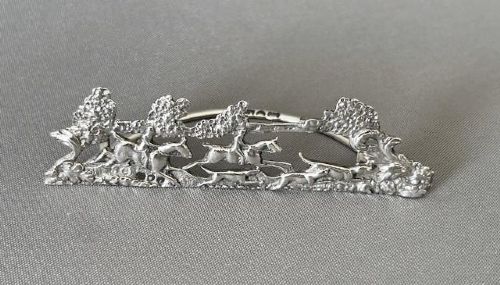
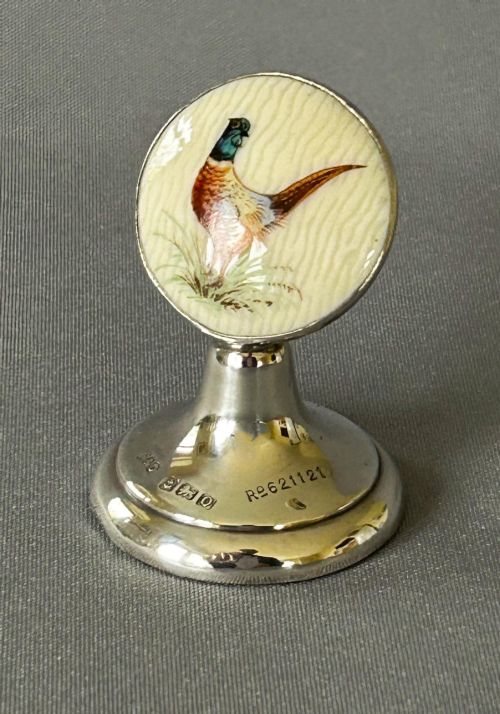
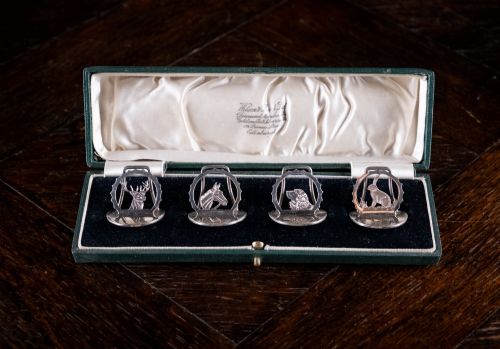
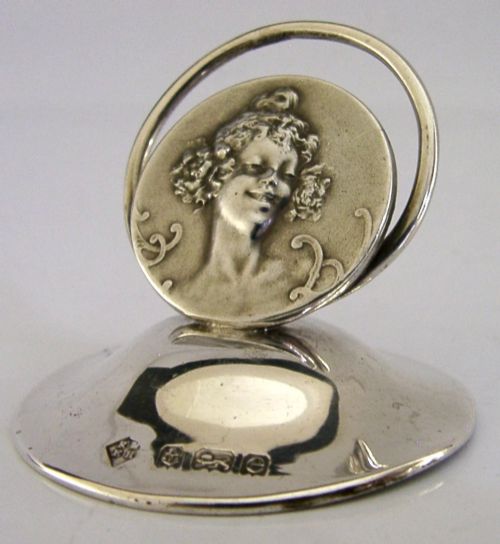
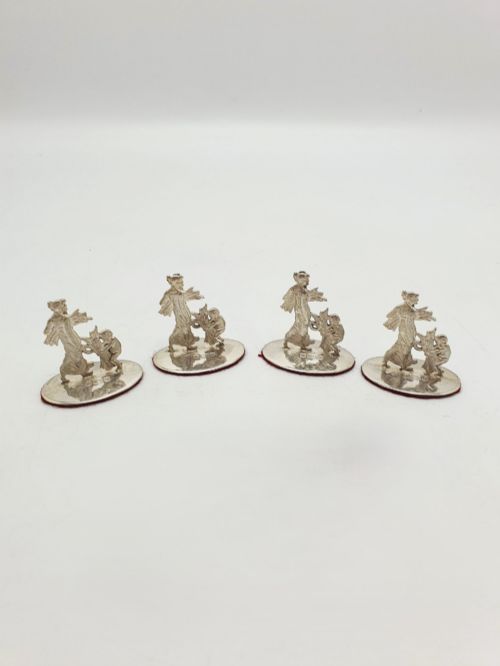
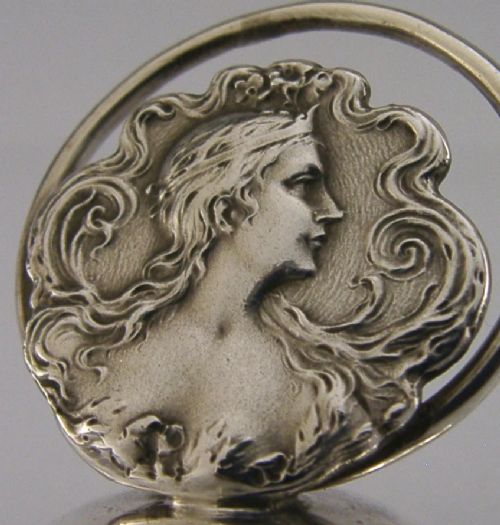
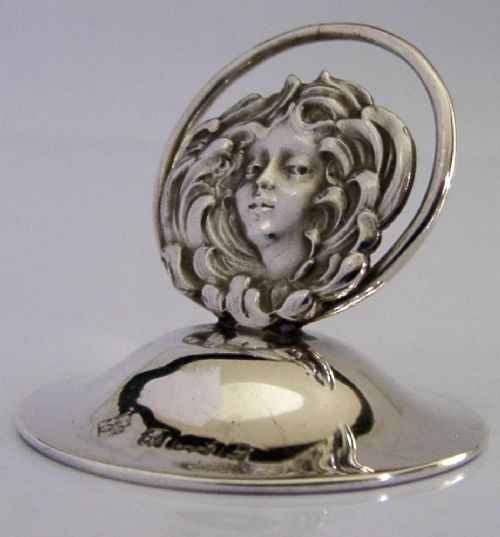
Makers produced these functional ornaments in diverse motifs, including animals, birds, military subjects, literary figures such as Alice in Wonderland and Robin Hood, and flowing Art Nouveau maidens. Many examples combine sterling silver with materials like glass, leather, silk, velvet, feathers, and guilloche enamel.
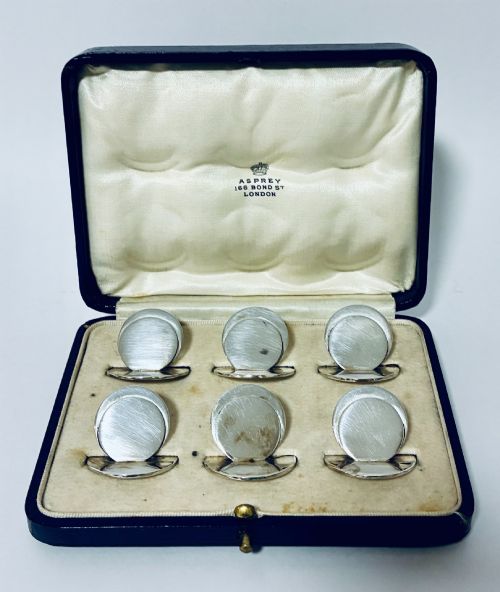
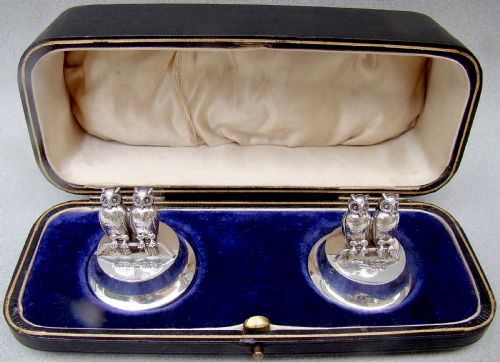
Pairs and sets of four or more appear frequently alongside individual pieces, sometimes housed in fitted presentation boxes. Collectors encounter menu card holders and table accessories that double as photo clips or place markers.
Materials and Craftsmanship
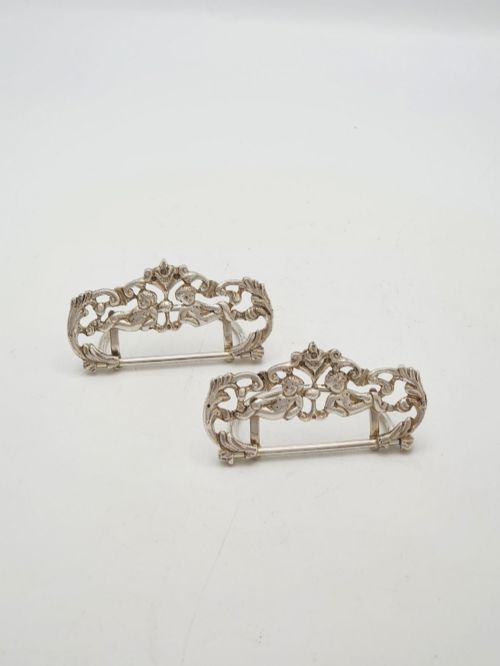
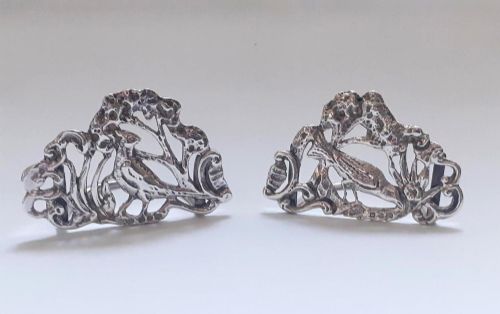
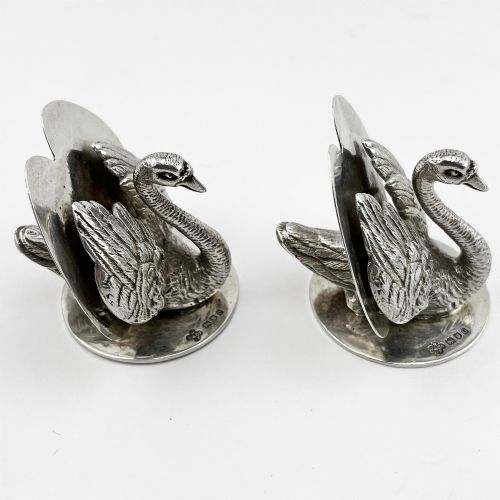
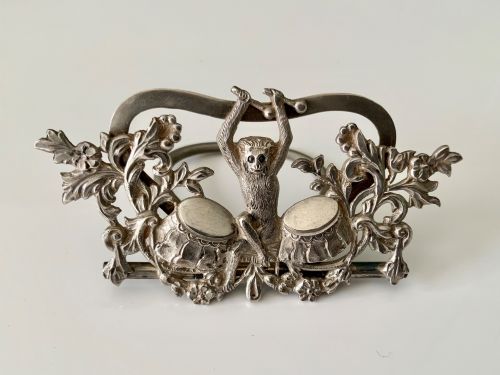
Silversmiths constructed these table accessories primarily from sterling silver, utilising casting, chasing, and embossing techniques to create detailed figural subjects such as owls, foxes, swans, monkeys, and cherubs. Enamel specialists applied guilloche work to add colour and texture to specific designs.
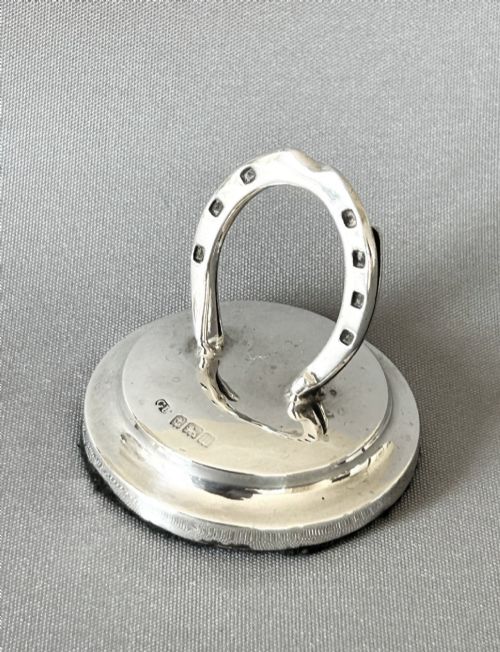
Makers incorporated supporting elements from secondary materials, attaching velvet, silk, leather, glass, and feathers to structured frames or backing plates. Hallmarks stamped into the silver record the assay office, date letter, and maker's mark.
Sterling Silver Place Cards Retail Price Guide 2026
Typical asking prices for sterling silver place cards among the pieces listed under this phrase on Sellingantiques today, from the lower quarter to the upper quarter. They describe what is for sale here now, not the wider market.
Listings feature sterling silver combined with velvet, silk, glass, leather, feathers, and guilloche enamel across Edwardian and Victorian periods.
Distinctions in Quality
The refinement of the casting and hand-chasing separates standard production pieces from superior works. Highly detailed figural models, such as naturalistic birds, primates, and literary characters, demonstrate greater sculptural depth and precision in the metalwork.
The complexity of the design, whether incorporating enamel panels or unusual multi-part assemblies, influences the character of the piece. Complete matched sets and original fitted presentation boxes also distinguish finer examples from single items.
Sampson Mordan·Levi & Salaman·Grey & Co.·Asprey·Liberty
The Sterling Silver Place Cards Glossary
- Sterling silver
- An alloy containing 925 parts of pure silver per 1000 parts, used for durability in tableware and decorative objects. British pieces carry hallmarks to verify this standard.
- Guilloche enamel
- A decorative technique where transparent enamel is layered over engine-turned metal. This process creates geometric patterns visible beneath the coloured glass surface.
- Menu holder
- A table accessory designed to stand upright and support a printed menu card. Many designs double as place card holders for naming dinner guests.
- Assay office
- An official body responsible for testing the purity of precious metals and stamping them with hallmarks. Towns like Birmingham, Chester, and London operated major offices.
Sterling Silver Place Cards: Frequently Asked Questions
How do I identify the period of a silver menu holder?
Hallmarks stamped on the silver provide the exact year of assay and the location where it was tested. Date letters and maker's marks help link the piece to specific eras like the Edwardian period or the reign of George V.
Stylistic cues such as Art Nouveau curves or Art Deco lines also indicate the date of manufacture.
Were these pieces made in sets?
Silversmiths produced these items individually, in pairs, or in larger sets of four, twelve, or more to match the scale of a dinner party. Matched sets often came housed in fitted presentation boxes.
Single pieces and small pairs appear frequently alongside these larger groupings.
What motifs appear on antique menu holders?
Makers employed a wide range of subjects, including animals such as owls, foxes, swans, and monkeys playing drums. Literary themes, military insignia, and Art Nouveau maidens also feature prominently.
Some designs incorporate materials like enamel, glass, or feathers to enhance the sculptural subject.