




Sterling Silver Link Necklace
A sterling silver link necklace offers an enduring metal chain structure, spanning periods from the Victorian era to the mid-century modern movement.
Sterling Silver Link Necklace
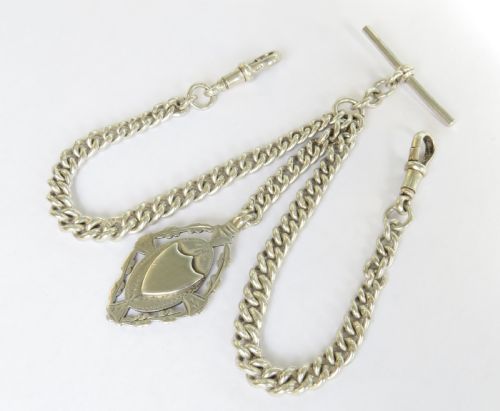
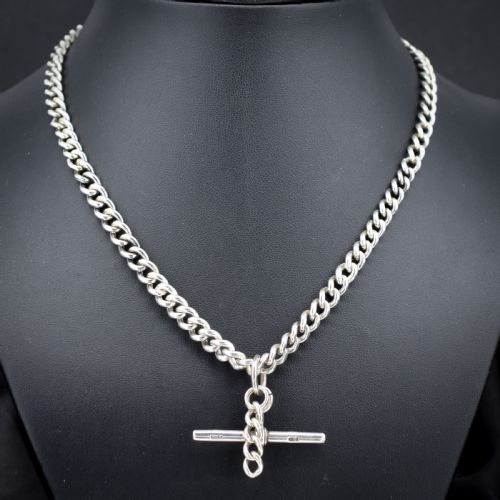
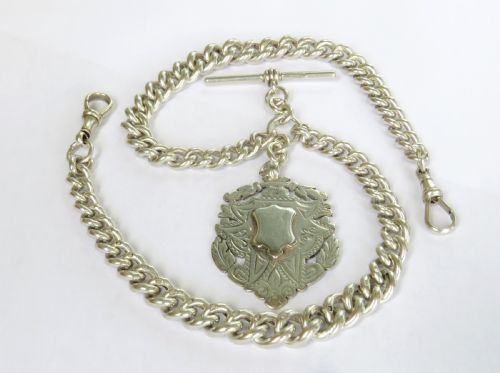
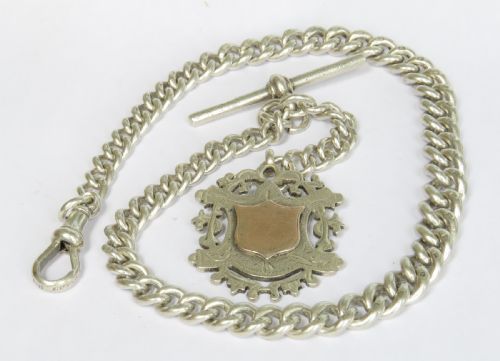
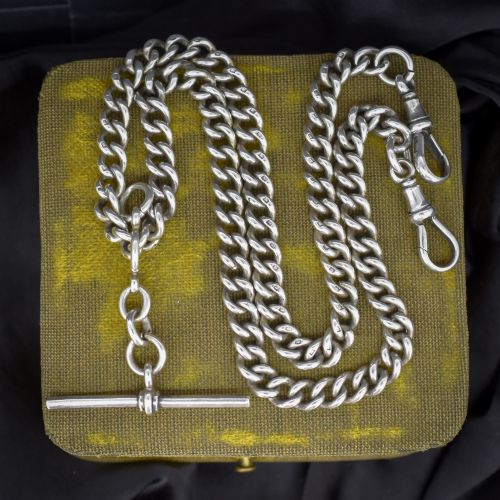
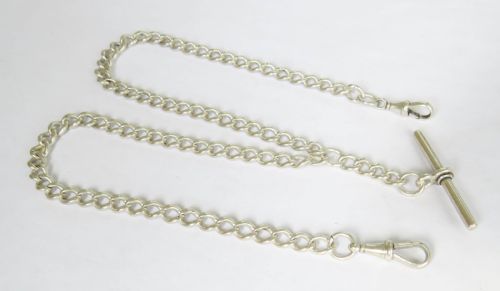
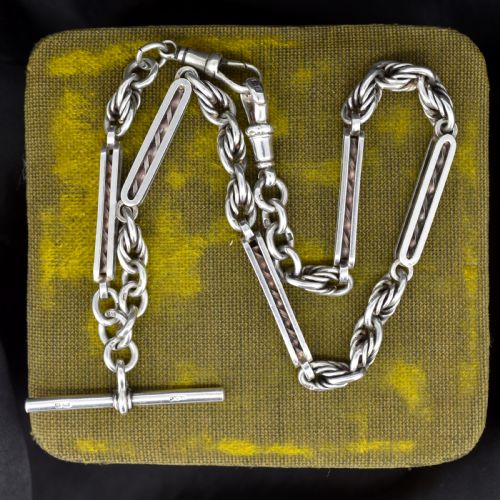
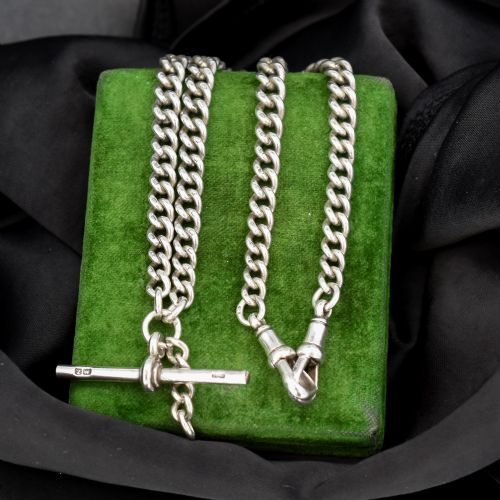
When searching for a sterling silver link necklace, buyers encounter a diverse selection ranging from converted pocket watch chains to dedicated collars and necklaces. The most common examples on this page are Albert watch chains, originally made to secure pocket watches and now worn as necklaces.
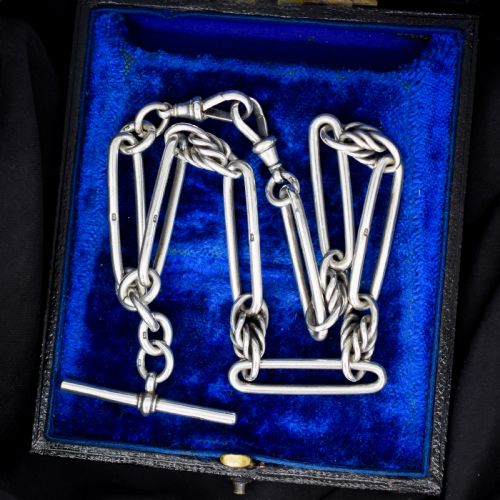
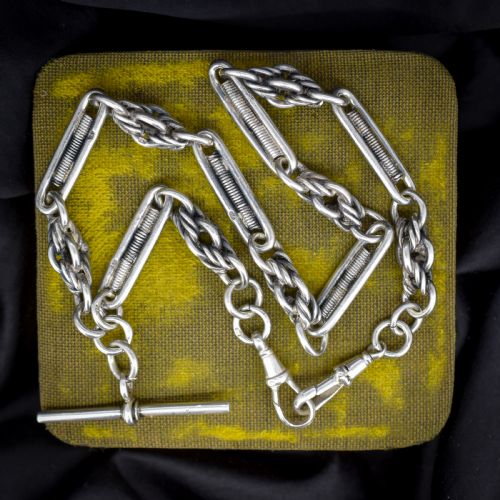
The material origins stretch from the nineteenth century through the Edwardian period and the 1920s into the 1960s. Forms include curb links, trombone links, love knots, and collar fringes featuring pierced hearts and floral box links.
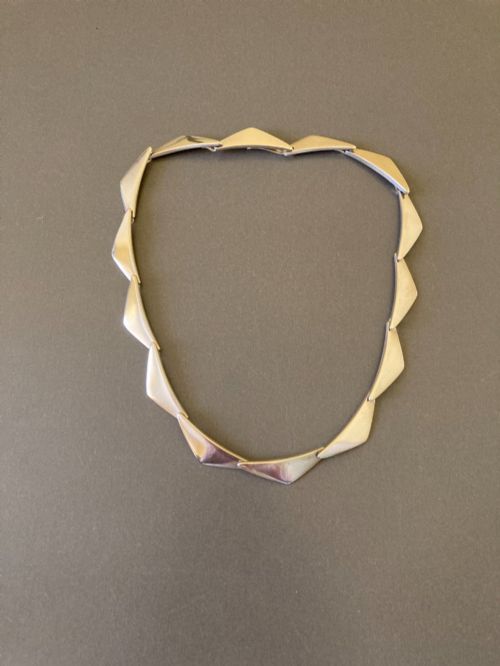
Makers and origins span English workshops, Continental European silversmiths, and Danish modern design houses such as Georg Jensen. Pieces frequently incorporate functional hardware like dog clips, T-bars, and swivels as integral parts of the design.
Materials and construction methods
Construction relies heavily on solid sterling silver and silver components, shaped into distinct link patterns such as uniform curbs, chunky links, and alternating bar segments. Metalwork techniques involve hand-assembled links, pierced metal collars, and engraved box links.
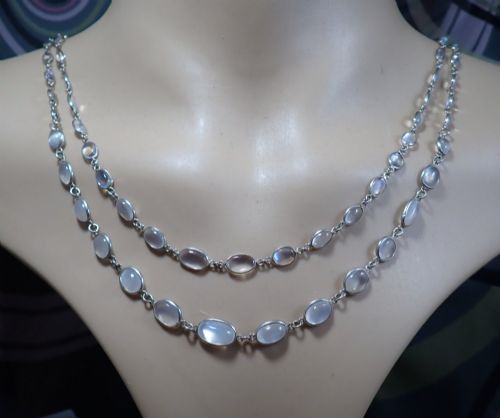
Certain designs incorporate accent materials alongside the silver, notably moonstone, rose gold details, and gemstones like bloodstone on swivel fobs. Fastenings and terminals include specialised hardware like dog clips, spring rings, and bead clasps.
Many pieces started life anchoring gentlemen's timepieces before finding a second career draped gracefully around the neck.
Distinguishing quality in silver link necklaces
Quality rests on the weight and integrity of the silver links, with heavier chunky chains demonstrating substantial metal content compared to lighter collar fringes. The complexity of the link formation, such as intricate trombone and love knot patterns, indicates superior craftsmanship.
Original hardware integrity also dictates distinction, where fully intact components like dog clips, T-bars, and dated hallmarks enhance the piece. The presence of secondary materials like moonstone or detailed hand-engraving separates standard chains from exceptional examples.
Georg Jensen
The Sterling Silver Link Necklace Glossary
- Albert chain
- A heavy chain originally designed to secure a pocket watch to a waistcoat, now widely worn as a necklace. These typically feature solid silver links and often retain a T-bar.
- Dog clip
- A spring-loaded swivel clasp attached to the end of a watch chain, used originally to secure a watch and now functioning as a versatile necklace clasp.
- T-bar
- A short metal bar attached to the centre of an Albert chain, originally slid through a buttonhole to anchor a pocket watch.
- Trombone link
- A specific chain link design composed of elongated rectangular links connected by smaller circular or oval links.
- Collar fringe
- A wide Victorian necklace style featuring a rigid or semi-rigid collar base with dangling elements, drops, or pierced silver fringe components.
Sterling Silver Link Necklace: Frequently Asked Questions
How do I wear a pocket watch chain as a necklace?
Pocket watch chains are worn by securing the dog clip to a jump ring or directly to an opposing link, allowing the T-bar to dangle as a decorative pendant feature at the front or side.
Many wearers choose to remove dangling fobs or keep them attached depending on the desired look and weight distribution around the neck.
What is the difference between a curb link and a trombone link?
A curb link consists of uniformly interconnected flat links that lie relatively flat against the skin when worn. Trombone links feature elongated, rectangular tubular links joined by smaller circular connectors, creating an open architectural pattern.
Both styles appear frequently across nineteenth-century and early twentieth-century silver chains.
Are these necklaces made of solid silver?
The listings comprise solid sterling silver and silver pieces, spanning various British and Continental standards from the Victorian era onward. Hallmarks and stamps often verify the metal composition on individual links, dog clips, or T-bars.
Makers such as Georg Jensen also utilise high-grade Danish silver within mid-century modern designs.
How can I date an antique silver chain?
Dating relies on stamped hallmarks, assay office marks, and specific date letters found on the metal components of nineteenth and early twentieth-century pieces. Stylistic markers such as Arts and Crafts handcrafting, Edwardian pierced work, or Art Deco geometries also provide clear chronological placement.
Original owner inscriptions or dated fobs sometimes offer direct historical reference points for the year of creation.