


Sterling Silver Insect Brooch
These sterling silver insect brooches bring together winged creatures and polished metal from the Edwardian era through the mid-century.
Sterling Silver Insect Brooch
A sterling silver insect brooch captures natural forms in precious metal, spanning butterflies, dragonflies, frogs, scorpions, and moths across multiple decades.
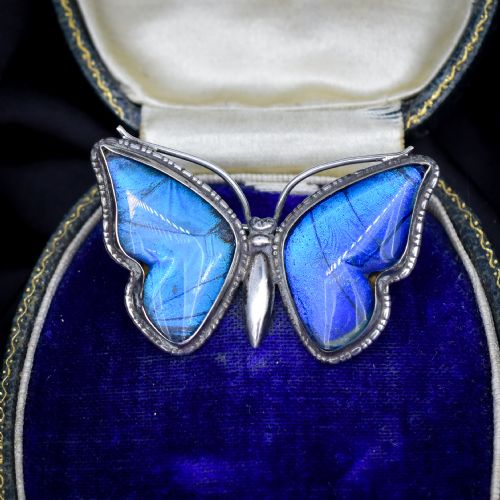
You are most likely to meet butterfly and dragonfly designs on this page, often rendered in sterling silver with colourful enamel or natural butterfly wing panels.
The selections range from early Edwardian moonstone scorpion pins to Art Deco pieces and mid-century Scandinavian enamels.
How they were made
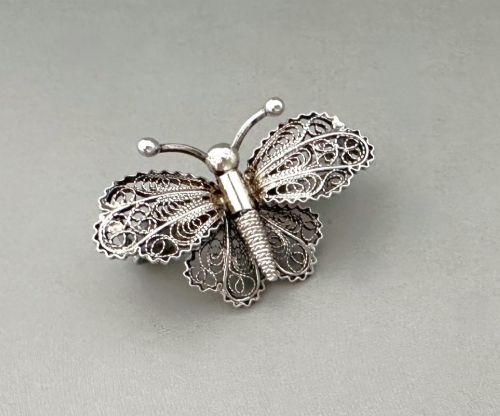
Maker techniques combine sterling silver fabrication with detailed surface treatments such as vitreous enamel, silver gilt, and intricate filigree wirework.
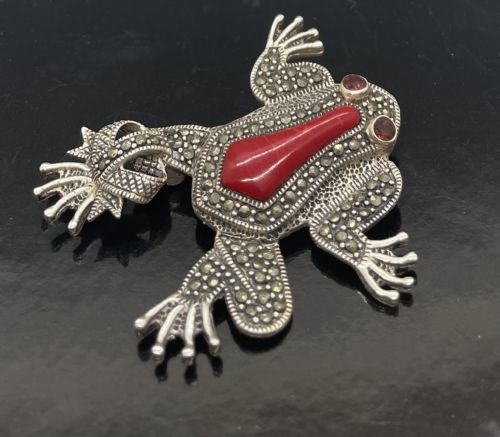
Many examples incorporate glass, marcasite stones, or preserved butterfly wing sections beneath glass to build vibrant colour and texture into the small scale.
A tiny silver frog sits patiently among the butterflies and dragonflies, waiting for his next fly.
What varies in quality
Quality separates through the crispness of the silver casting, the precision of the filigree work, and the condition of delicate enamel or wing panels.
A stronger piece shows careful attention to anatomical detail in the insect form and secure, even stone-setting or enamelling without loss.
The Sterling Silver Insect Brooch Glossary
- Marcasite
- Small faceted pyrite stones set into silver to provide a dark sparkle. These are typical of mid-century and earlier decorative jewellery.
- Silver Gilt
- Silver that has been coated with a thin layer of gold. This technique adds warmth and richness to the metal surface.
- Filigree
- Delicate openwork created by twisting and soldering fine silver wire into intricate patterns. It creates a lace-like effect on wings and bodies.
- Butterfly Wing
- Iridescent wings preserved beneath bevelled glass panels, popular in early twentieth-century souvenir and decorative pieces.
- Edwardian
- The period spanning the reign of King Edward VII, noted for refined and delicate jewellery design.
Sterling Silver Insect Brooch: Frequently Asked Questions
How do I date a silver insect brooch?
Dating relies on stylistic clues, materials, and construction methods. Edwardian pieces often use moonstones and delicate metals, while Art Deco and mid-century items feature bold enamels and marcasite.
Examining the pin mechanisms and fastenings on the reverse also helps narrow down the decade of manufacture.
What insects appear on these brooches?
Butterflies and dragonflies appear most frequently, alongside frogs, scorpions, and moths. Each creature suits different decorative techniques like enamel work or wing panels.
Makers selected insects with distinctive wings or bodies that translated well into wearable metal forms.
Are these brooches solid silver?
Many listings specify sterling silver, while others note standard silver or silver gilt constructions. Hallmarks and metal testing help confirm the specific silver standard used by the maker.
Accompanying materials like marcasite and glass are mounted securely within the silver framework.