


Edwardian Silver Insect Pin
These edwardian silver insect pin pieces bring miniature natural forms into wearable metal, offering collectors a touch of period charm.
Edwardian Silver Insect Pin
When you search for an edwardian silver insect pin, you are looking at small decorative brooches and pins shaped as creatures like butterflies, spiders, scorpions, dragonflies, and scarabs. These pieces capture the natural world in precious metal, often drawing on the fluid curves of the Art Nouveau style or the geometric lines of later decades.
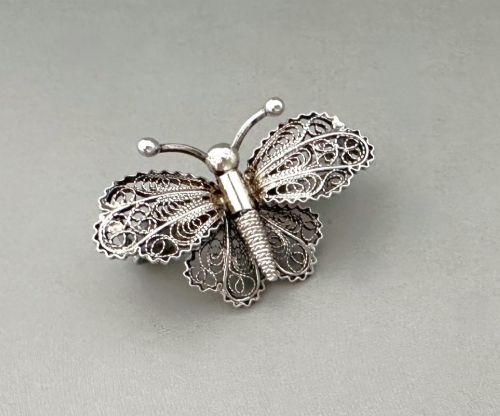
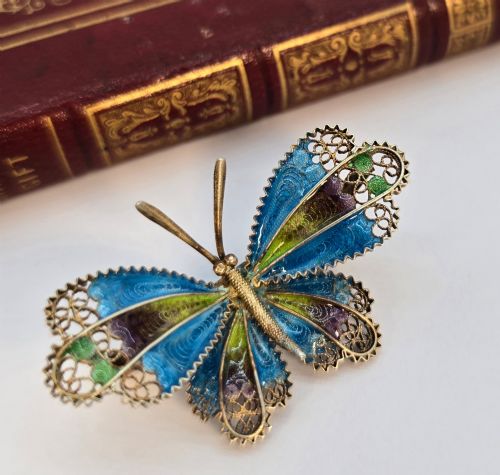
The selections span across several eras, including the Victorian, Edwardian, and Art Deco periods, alongside pieces dated around nineteen-thirty. Butterflies emerge most frequently among the designs, appearing in various forms from simple silver filigree to vibrant enamelled wings.
Alongside standard brooches, the selection includes a specialised pincushion form and bar brooches that integrate insects into a linear setting. Precious and semi-precious stones frequently accent the metalwork to highlight the bodies and wings of the creatures.
How they were made
Silversmiths shaped these insects using sterling silver and silver gilt, often employing fine filigree work to suggest delicate wing veins and insect anatomy. Pewter also appears in select pieces, particularly within the Art Nouveau style where flowing organic lines dominate.
Craftsmen enhanced the silver settings with a variety of gemstones, setting diamonds, rubies, pearls, moonstones, and multi-coloured gems into the metal. Enamel and butterfly wing panels add bright swathes of colour to the wings, while glass serves as an alternative accent material.
Spiders and scorpions join the butterflies and dragonflies, ensuring your lapel can host a rather unexpected arachnid.
What varies in quality
Quality rests heavily on the fineness of the metalwork and the complexity of the design, distinguishing simple cast pieces from intricate filigree creations. The precision of the setting work for stones like diamonds and rubies dictates the overall refinement of the piece.
The preservation of delicate materials such as enamel and butterfly wing sections also separates finer examples from standard ones. Well-preserved colour and intact wing panels elevate the visual impact of insect brooches.
The Edwardian Silver Insect Pin Glossary
- Silver gilt
- Silver that has been coated with a thin layer of gold. This technique provides the warm appearance of gold while utilising a silver base.
- Filigree
- Delicate wirework soldered into open patterns. It creates lightweight, lace-like structures often seen in butterfly wings.
- Bar brooch
- A slender horizontal metal pin designed to fasten clothing. Insects frequently sit centrally upon this bar structure.
- Pincushion
- A small decorative object designed to hold sewing pins. In silver, these often take the form of animals and insects.
Edwardian Silver Insect Pin: Frequently Asked Questions
What materials make up these insect pins?
The listings show pieces constructed primarily from silver, sterling silver, and silver gilt. Many incorporate gemstones such as diamonds, rubies, pearls, and moonstones.
Additional materials include enamel, glass, pewter, and butterfly wing panels. These diverse components help create the varied colours seen on the insect bodies and wings.
How do I identify the period of a piece?
Period identification relies on stylistic clues and recorded dates within the listings, which span the Victorian, Edwardian, and Art Deco eras. Art Nouveau styles typically feature flowing organic lines, while later pieces lean towards geometric forms.
Items from nineteen-thirty and the nineteen-twenties often display different aesthetic choices compared to nineteenth-century examples. Examining the mounting techniques and materials helps narrow down the era of manufacture.
Were these pins worn daily?
These insect brooches served as fashionable accessories for fastening garments and decorating lapels during their respective periods. They functioned primarily as ornamental additions to day and evening wear.
Some pieces, such as the pincushion, served a functional purpose on a dressing table or sewing desk rather than being worn on clothing.
What insect motifs are common?
Butterflies appear most frequently across the selections, rendered in various styles from plain silver to enamelled and gem-set variations. Other creatures represented include spiders, scorpions, dragonflies, and scarabs.
Each insect type utilises the specific properties of silver and gemstones to imitate natural textures and colours.