




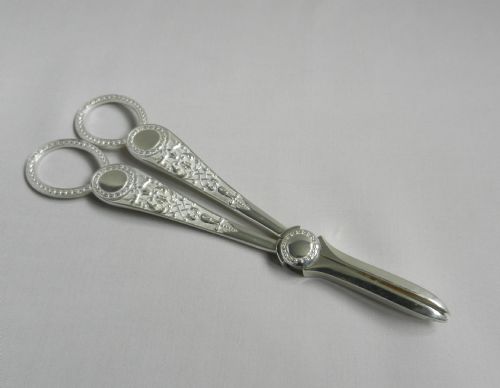
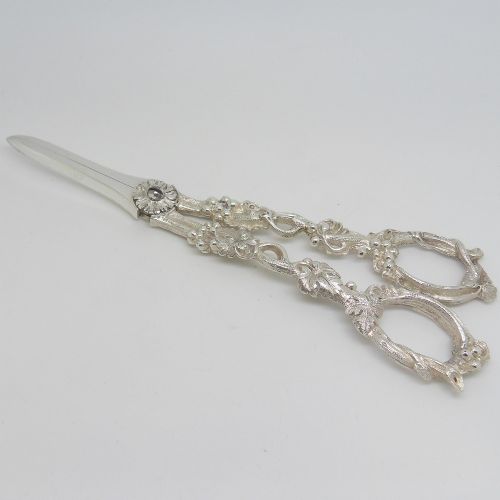
Sterling Silver Fruit Scissors
Sterling silver fruit scissors are specialised Victorian and Edwardian dining implements designed for severing grape clusters at the table.
Sterling Silver Fruit Scissors
Sterling silver fruit scissors, often catalogued as grape shears, are dining implements designed specifically for cutting portions of fruit from a larger bunch during dessert courses. These pieces appear in forms ranging from plain nineteenth-century designs to heavier twentieth-century barware items.
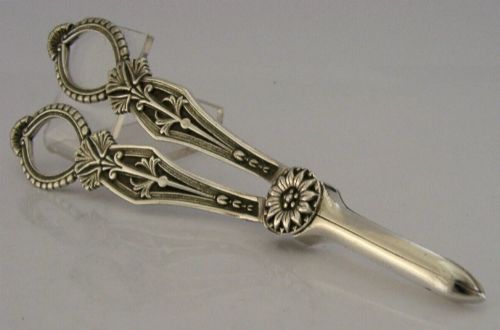
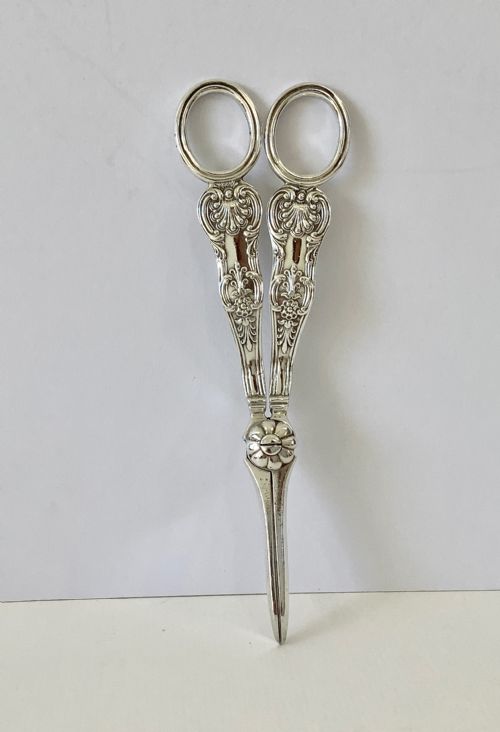
The versions most frequently met on this page include Victorian and Edwardian examples, alongside occasional William IV pieces and mid-twentieth-century items. They frequently feature cast or chased decoration depicting grapevines and foliage, reflecting their primary function at the dining table.
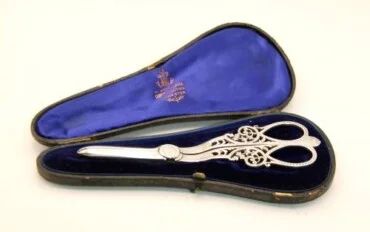
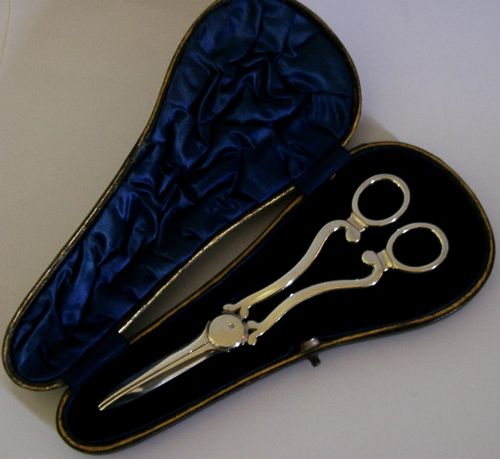
Makers often housed these implements in fitted cases lined with velvet, silk, or satin, accompanied by leather or leatherette outer shells. Buyers encounter both cased pairs and individual loose shears across various nineteenth and twentieth-century periods.
How they were made
These implements were produced using sterling silver, sometimes finished with silver gilt to provide a contrasting internal or decorative surface. Silversmiths utilised casting and chasing techniques to shape the detailed vine leaf and grape ornamentation along the handles.
Protection and presentation involved custom cases constructed from materials such as leather and leatherette. The interiors of these boxes were carefully fitted with textile linings in silk, velvet, or satin to cradle the scissors securely.
Sterling Silver Fruit Scissors Retail Price Guide 2026
Typical asking prices for sterling silver fruit scissors among the pieces listed under this phrase on Sellingantiques today, from the lower quarter to the upper quarter. They describe what is for sale here now, not the wider market.
Some pairs weigh over one hundred grams, proving that nineteenth-century fruit consumption was treated as a serious weightlifting exercise.
What varies in quality
Quality in these implements rests upon the weight of the sterling silver used and the crispness of the chased or cast grapevine decoration. Heavier pairs demonstrate substantial metal gauge, whereas lighter examples rely on hollow or thinner construction.
The presence of original fitted cases lined in silk, satin, or velvet elevates the completeness of a piece. Finer examples bear clear hallmarks from notable silversmiths and provincial or assay offices.
Charles Reily George Storer·Paul Storr·Chawner Co·C.J. Vander
The Sterling Silver Fruit Scissors Glossary
- Grape shears
- A large form of scissors designed specifically for cutting bunches of grapes at the dining table. They possess wide, blunt-tipped blades and ornate handles.
- Silver gilt
- Sterling silver that has been coated with a thin layer of gold, often applied to the interior blades or bowls of dining implements. This finish protects the silver from acidic fruit juices.
- Chasing
- A metalsmithing technique where designs are hammered into the front surface of the metal without removing material. It creates raised ornamental patterns of vines and fruit.
- Hallmark
- An official stamp applied by an assay office indicating the purity of the silver, the maker, and the year of manufacture. British pieces typically show a lion passant and town marks.
- Leatherette
- A simulated leather material utilised for the outer covering of nineteenth and twentieth-century presentation cases. It provides a durable exterior while mimicking genuine leather grain.
Sterling Silver Fruit Scissors: Frequently Asked Questions
What are sterling silver fruit scissors used for?
These implements were utilised at the formal dining table for dividing clusters of grapes without damaging the fruit or touching them by hand.
They allowed diners to serve individual portions cleanly during the dessert course.
How do I clean antique silver grape shears?
Cleaning requires a soft microfiber cloth and a mild silver polish formulated specifically for antique metalwork.
Harsh abrasive dips should be avoided to preserve the original chased details and any silver gilt finishes.
Are these scissors suitable for daily use?
While fully functional as cutting implements, antique silver items benefit from gentle handling during modern dining.
Hand washing in warm soapy water ensures the silver and any original case linings remain undamaged.
How can I tell the period of a pair?
Dating relies upon examining the hallmarks stamped into the metal, which record the assay office and year letter.
Stylistic elements such as Gothic Revival motifs or Victorian floral chasing also provide clear chronological indicators.