




Sterling Silver Dessert Forks
These sterling silver dessert forks combine period craftsmanship with utility, offering a refined addition to any traditional dining table.
Sterling Silver Dessert Forks
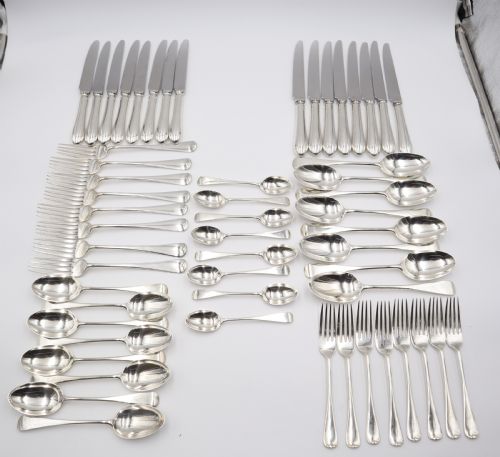
When you search for sterling silver dessert forks, you encounter a refined selection of cutlery spanning the Georgian, Victorian, and later periods. These pieces include individual three-pronged forks, boxed sets with matching knives, and larger canteens designed for multiple persons.
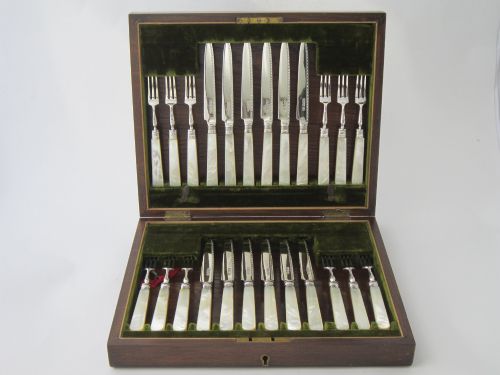
The versions most frequently met on this page range from mid-Victorian boxed serving items to early twentieth-century George V and Art Deco designs. Many examples incorporate natural materials such as mother-of-pearl handles alongside traditional sterling silver tines.
Makers and origins vary across the inventory, reflecting both eighteenth-century workshops and later nineteenth-century Sheffield production. Collectors find everything from single canteens to comprehensive sets complete with fitted velvet or silk-lined presentation boxes.
Materials and construction
Makers utilised solid sterling silver for the primary structural tines and blades, often pairing the metal with handles carved from mother-of-pearl, wood, or steel. The combination of silver and mother-of-pearl created a distinct tactile contrast favoured by period silversmiths.
Techniques ranged from early hand-forged three-pronged Georgian formats to later stamped and assembled Victorian and Art Deco manufacturing methods. Boxed sets frequently featured fitted interiors lined with silk or velvet to protect the polished metal and delicate handles.
Sterling Silver Dessert Forks Retail Price Guide 2026
Typical asking prices for sterling silver dessert forks among the pieces listed under this phrase on Sellingantiques today, from the lower quarter to the upper quarter. They describe what is for sale here now, not the wider market.
Listings incorporate sterling silver, mother-of-pearl, velvet, and silk across Georgian, Victorian, and 1930s periods.
Assessing craftsmanship and condition
The distinction between standard examples and top-tier items rests upon the crispness of the hallmarks, the integrity of the maker's mark, and the preservation of any engraved crests. Finer pieces retain distinct hallmarks and unpolished details that reveal the original hand of the silversmith.
The condition of the handle material, whether mother-of-pearl or wood, significantly influences the overall character of the set. Complete presentation boxes lined in original velvet or silk also elevate the historical completeness of the cutlery.
E Coker
The Sterling Silver Dessert Forks Glossary
- Sterling silver
- A silver alloy containing substantial pure silver combined with other metals to ensure durability for cutlery. This standard is verified by official hallmarks stamped directly onto the metal.
- Hallmark
- An official stamp or series of marks applied to precious metals indicating the maker, assay office, and year of production. These stamps provide the primary method for dating antique cutlery.
- Mother-of-pearl
- An iridescent inner layer of shell utilised for the handles of period dessert cutlery. This natural material offers a smooth, tactile grip distinct from all-metal designs.
- Canteen
- A fitted box or case designed to house a complete set of cutlery securely. These containers often feature internal divisions lined with silk or velvet.
- Tine
- Each of the parallel prongs forming the business end of a fork. Period examples often display three tines rather than the four standard in modern production.
Sterling Silver Dessert Forks: Frequently Asked Questions
What periods do these dessert forks date from?
The available items span multiple centuries, including the Georgian era, the reign of George II, the Victorian period, and the twentieth century up to the 1930s.
These varied timelines reflect shifting domestic dining habits and evolving design standards across British silver production.
Are these forks sold individually or in sets?
Listings include both single items and comprehensive boxed sets, sometimes paired with matching knives or serving pieces.
Many of the multi-piece collections arrive in their original presentation boxes lined with velvet or silk.
How do I identify the age of the silver?
Age is determined through official hallmarks stamped onto the metal, which indicate the assay office, standard, and specific year of manufacture.
Additional clues include the style of the handle, such as mother-of-pearl integration, and the number of tines on the fork head.
What materials are combined with the silver?
Makers frequently paired sterling silver with mother-of-pearl for the handles, though wood and steel also appear in certain historical items.
Presentation boxes often utilise interior linings of velvet or silk to protect the polished surfaces.