



Steel Lock Firearm
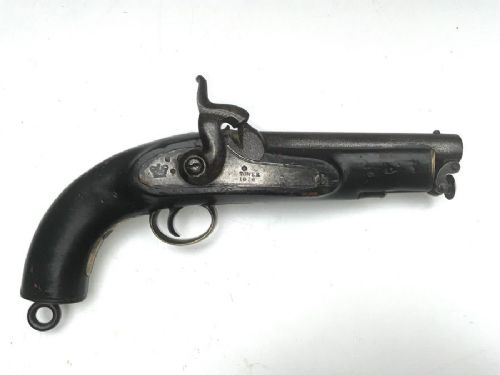
These steel lock firearm pieces are working mechanisms of iron and walnut, built for service and defence across four centuries.
Steel Lock Firearm
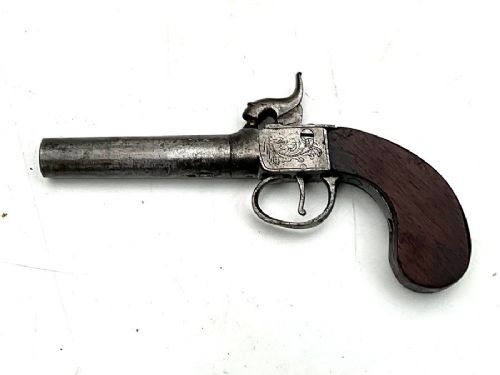
When you search for a steel lock firearm, you encounter pocket pistols, belt pistols, blunderbusses, and rifles spanning the seventeenth, eighteenth, and nineteenth centuries. The majority of pieces on this page are flintlock and percussion pistols from the Georgian and Victorian military eras.
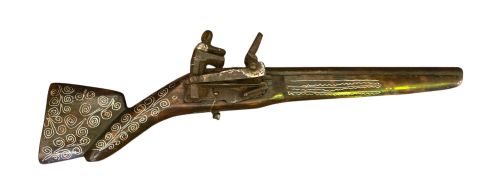
You will find items originating from British makers alongside Balkan, Ottoman, and Afghan examples. These range from heavy service arms bearing Tower stamps to delicate turn-off box-lock pocket pistols designed for civilian carry.
How they were made
Makers shaped stocks from dense hardwoods such as walnut, pairing them with heavy iron and steel barrels and locks. Many incorporate cast brass furniture, ranging from simple trigger guards to elaborate mounts.
Finer pieces show meticulous hand-engraving across the brass and steel components, sometimes inlaid with silver wire or mounted with bone details to enrich the stock.
Steel Lock Firearm Retail Price Guide 2026
Typical asking prices for steel lock firearm among the pieces listed under this phrase on Sellingantiques today, from the lower quarter to the upper quarter. They describe what is for sale here now, not the wider market.
Some regional lock mechanisms feature ball triggers designed to be pulled with the pinky finger rather than the index.
What varies in quality
The distinction between standard service arms and superior examples lies in the crispness of the lock mechanism and the execution of the metal engraving. Maker-signed barrels and crisp proof marks elevate a piece above unmarked military issue.
The grade of timber selection and the precision of brass or silver inlay also separate utilitarian pieces from those commissioned for officers or high-status civilian owners.
HARRISON OF LONDON·MANTON·BRASHER·J. ROBINSON·A.W SPIRES
The Steel Lock Firearm Glossary
- Flintlock
- An ignition mechanism that uses a flint struck against a steel frizzen to create sparks that ignite the gunpowder. This system dominated military and civilian arms for centuries.
- Percussion
- A later ignition system utilising a percussion cap struck by the hammer to detonate the powder charge. It replaced the flintlock in the nineteenth century.
- Snaphaunce
- An early type of flintlock mechanism with a manually operated frizzen and pan cover. It appears on regional variants such as Balkan and Ottoman long arms.
- Turn-off
- A barrel design that unscrews from the breech to allow front-loading without a ramrod. This configuration is common on pocket pistols.
- Frizzen
- The vertical steel plate struck by the flint in a flintlock mechanism. Its surface quality dictates the reliability of the spark.
Steel Lock Firearm: Frequently Asked Questions
Are these firearms still in working order?
Many retain functional lock mechanisms that snap or cock correctly, though testing them with live ammunition is neither recommended nor standard practice for antique arms.
Most buyers preserve them as historical artefacts rather than operational weapons.
How do I date an antique pistol?
Dating relies on stylistic shifts in the lock design, barrel shape, and stock geometry, alongside any proof marks or maker signatures stamped into the metal.
Military pieces often display crown ciphers or contractor names that anchor them to specific reigns and decades.
What is the difference between flintlock and percussion?
Flintlocks rely on a piece of flint striking steel to generate sparks, representing the older technology seen from the seventeenth through early nineteenth centuries.
Percussion arms use a small chemical cap struck by a hammer, which provides faster and more reliable ignition in wet weather.
How should I display one at home?
These pieces suit wall mounting on bespoke brackets or secure placement in a glass-fronted cabinet away from direct sunlight and damp conditions.
Applying a light micro-crystalline wax helps protect the steel surfaces from atmospheric corrosion.