

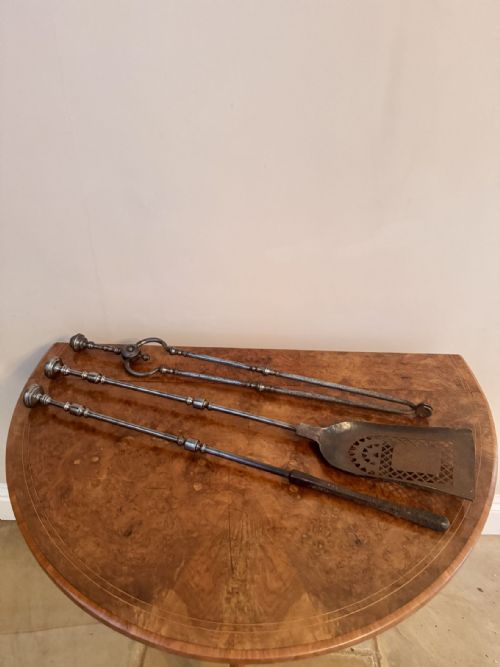
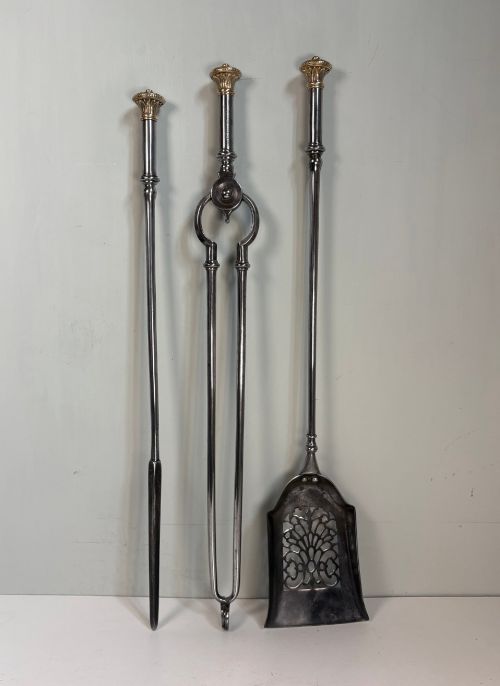
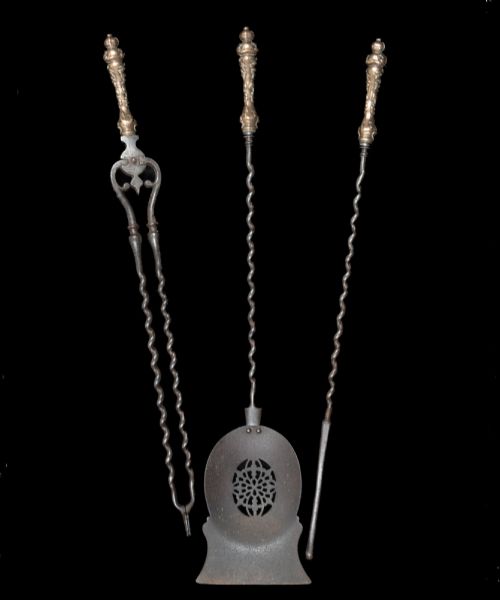
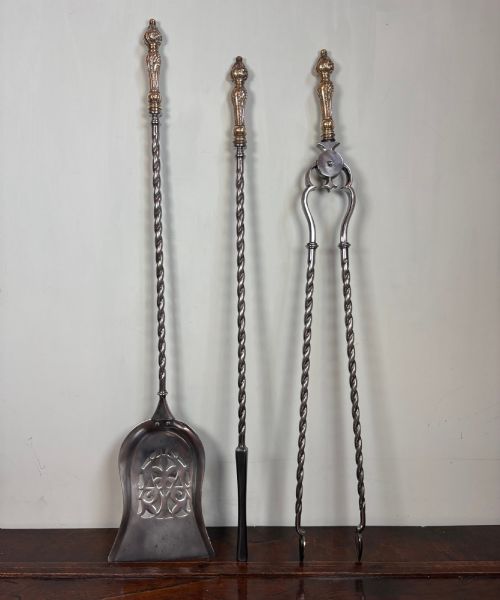
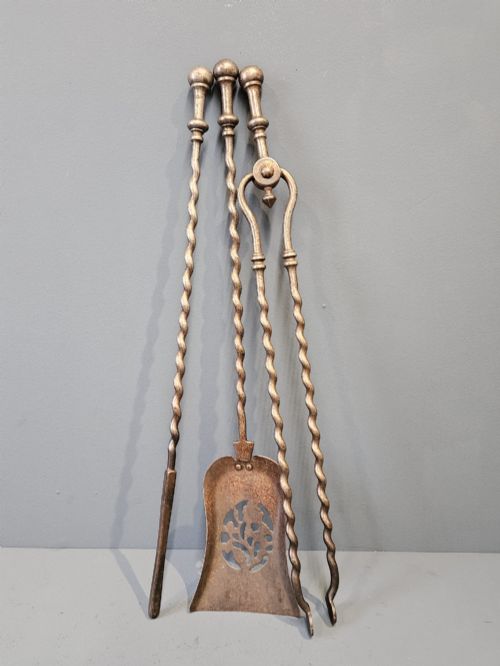
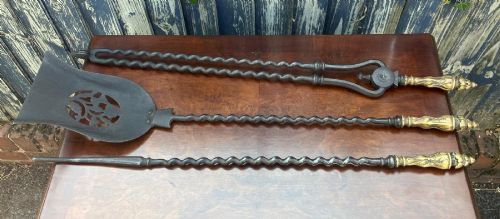


Steel Hearth Shovel
These steel hearth shovel pieces are essential utilitarian implements crafted to maintain the open coal fire, combining sturdy ironwork with polished metal surfaces.
Steel Hearth Shovel
When you search for a steel hearth shovel, you encounter utilitarian fireplace accessories designed to clear ash and tend the grate, often appearing as part of a larger set of fire irons.
The versions you meet on this page span several distinct periods, including Georgian, Regency, and Victorian eras, alongside specific nineteenth-century revival styles.
Most examples combine steel with brass or gunmetal accents, reflecting the domestic priorities of British hearths from the eighteenth century through to the early twentieth century.
Materials and construction
Blacksmiths and metalworkers utilised forged steel for the strength required to lift heavy coal and ash, frequently burnishing or polishing the metal to a bright finish.
Brass, gilt brass, and gunmetal appear regularly as decorative elements, providing visual contrast through handles, mounts, and companion fender fixtures.
Construction techniques rely on traditional metal shaping, joining iron rods and sheet steel to create balanced, durable tools intended for daily domestic use.
Steel Hearth Shovel Retail Price Guide 2026
Typical asking prices for steel hearth shovel among the pieces listed under this phrase on Sellingantiques today, from the lower quarter to the upper quarter. They describe what is for sale here now, not the wider market.
Listings feature steel hearth shovel pieces spanning the Georgian, Regency, Victorian, and Arts and Crafts periods, incorporating brass and gunmetal.
Distinctions in quality
The distinction between standard utility items and finer examples rests upon the weight of the metal, the precision of the forging, and the integrity of any brass detailing.
Higher quality pieces display careful polishing on the steel blade and handle, maintaining balanced proportions that indicate careful workshop production rather than mass output.
Subtle differences in decorative turning on handles and the secure integration of mixed metals separate utilitarian workshop items from more ambitious domestic accessories.
The Steel Hearth Shovel Glossary
- Steel hearth shovel
- A flat metal scoop utilised for clearing ash from beneath an open coal fire, usually forged from iron or steel.
- Fire irons
- A matching group of hearth implements, typically comprising a shovel, tongs, and a poker, designed to rest together by the fireplace.
- Burnished steel
- Metal that has been mechanically polished to achieve a smooth, reflective surface finish that resists minor tarnishing.
- Gunmetal
- A type of bronze containing copper, tin, and zinc, frequently utilised for decorative handles and mountings on nineteenth-century hearth tools.
- Companion set
- A collective grouping of fireplace tools arranged together on a stand or fender for easy access beside the grate.
Steel Hearth Shovel: Frequently Asked Questions
What is a steel hearth shovel used for?
These shovels were primarily designed to lift coal onto the fire and clear accumulated ash from the hearth bed.
Their sturdy metal construction allowed them to handle hot embers and heavy fuel safely during daily maintenance of domestic coal fires.
How do I date a steel hearth shovel?
Dating relies on observing the prevailing metalworking techniques, handle designs, and stylistic traits associated with specific historical periods.
Georgian and Regency examples often display restrained classical lines, whereas Victorian pieces tend to be heavier and more ornate in their brass and steel combinations.
Are these shovels sold individually?
While individual tools do exist, many steel hearth shovels survive as part of larger sets that include pokers and tongs.
Matching companions often share identical handle turning and metal finishes, indicating they were manufactured as a cohesive suite for the hearth.
How should I care for polished steel?
Polished steel requires a dry environment and regular gentle dusting to prevent oxidation and surface rust from forming.
Applying a light, protective microcrystalline wax can help maintain the bright finish without harming the historic metal surface.