





Steel Hearth Poker
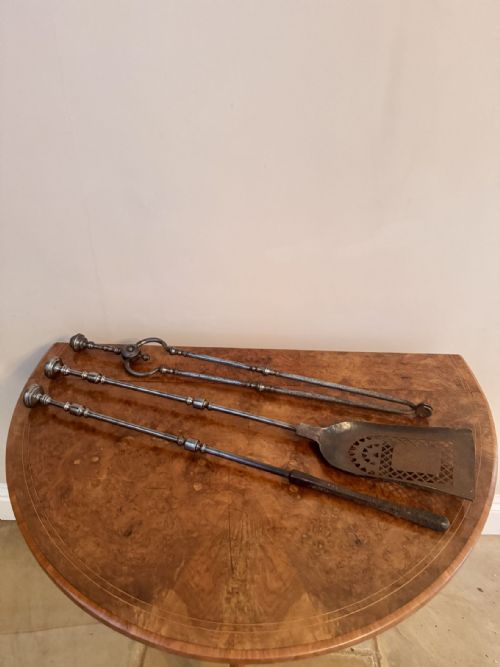
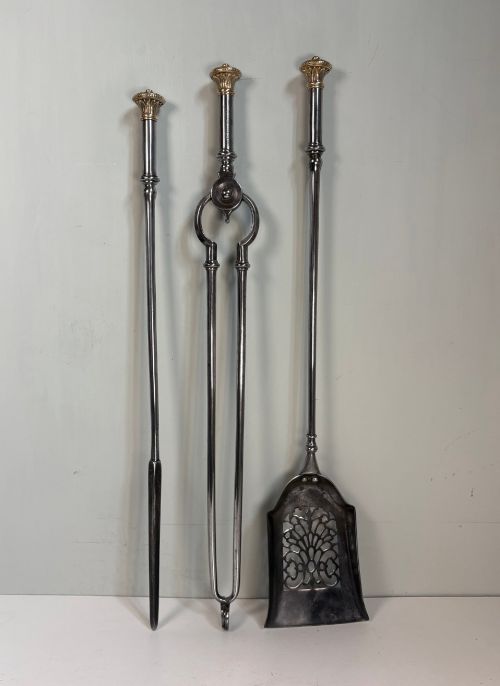
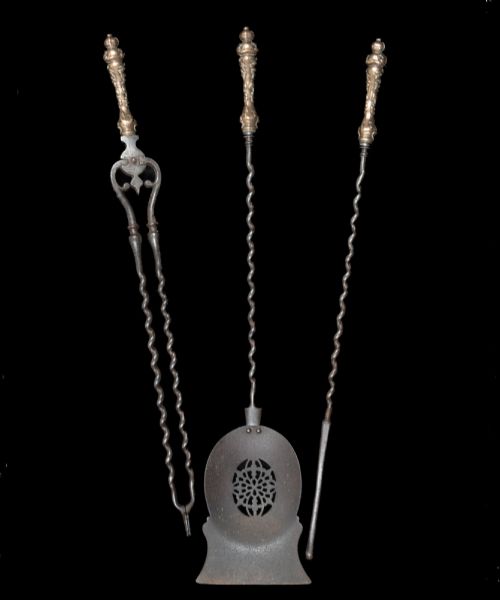
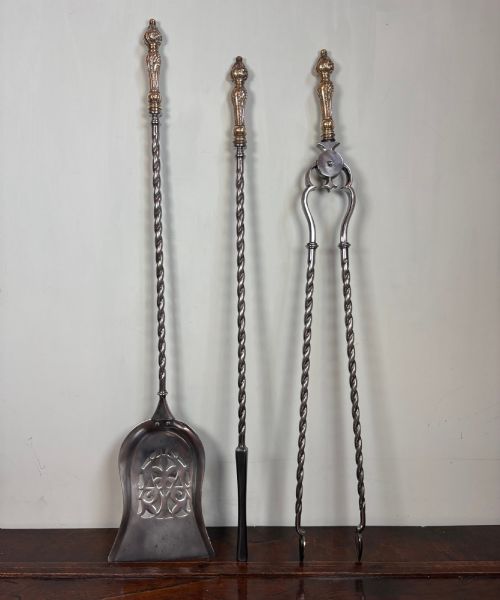
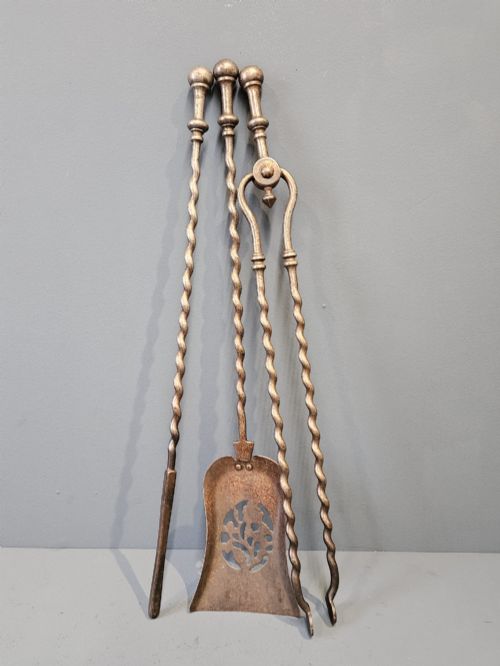
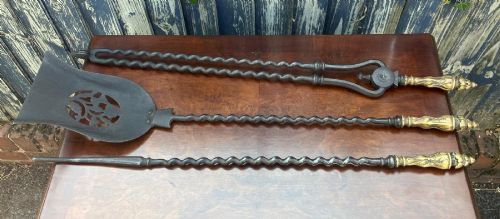
These steel hearth poker options form the central working member of a traditional fireplace companion set.
Steel Hearth Poker
A steel hearth poker is an essential fireplace tool designed for managing and tending burning fuel within an open hearth. When searching for this piece, buyers typically encounter individual items or matched sets originating from the eighteenth, nineteenth, and early twentieth centuries.
The versions most commonly met on this page date from the Georgian, Regency, and Victorian periods, often appearing alongside tongs and shovels. These examples reflect the changing domestic interiors and heating methods of their respective eras, utilising robust metals suited to daily use by the grate.
How they were made
The manufacture of these fireplace tools relies heavily on durable metals, predominantly steel, iron, and brass. Blacksmiths and metalworkers shaped these materials through forging, turning, and polishing to create both functional shafts and decorative handles.
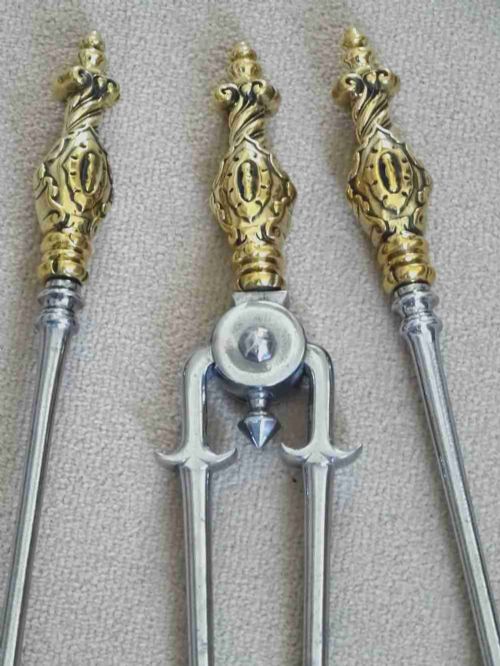
Surfaces frequently receive specialised finishes, ranging from high burnished or polished steel to gunmetal or gilt brass details. These techniques provide both corrosion resistance and aesthetic appeal for display beside the mantelpiece.
Steel Hearth Poker Retail Price Guide 2026
Typical asking prices for steel hearth poker among the pieces listed under this phrase on Sellingantiques today, from the lower quarter to the upper quarter. They describe what is for sale here now, not the wider market.
A sturdy poker doubles as an emergency conductor for stray fireplace sparks and an impromptu conductor for household symphony recitals.
What varies in quality
The distinction between standard utility tools and finer examples lies in the precision of the metalwork and the integrity of the design. Superior pieces display carefully proportioned shafts, well-balanced weight, and cleanly finished handles without clumsy repairs.
Material combination also elevates a piece, where solid polished steel meets well-cast brass or gunmetal ornamentation. Subtle differences in handling comfort and decorative restraint separate mass-produced items from skilled artisan production.
The Steel Hearth Poker Glossary
- Steel
- An alloy of iron and carbon known for its strength and resilience. It serves as the primary structural material for durable fireplace implements.
- Fire irons
- A collective term for the matching set of tools used to tend a fire, typically comprising a poker, tongs, and shovel.
- Companion set
- A group of fireplace tools designed to be stored together in a stand or holder by the hearth.
- Burnished steel
- Metal finished by rubbing or polishing to achieve a smooth, reflective surface that highlights the grain and texture of the material.
- Regency
- A British design period spanning the early nineteenth century characterised by classical restraint, elegance, and refined metalwork details.
Steel Hearth Poker: Frequently Asked Questions
Are pokers sold individually or in sets?
These fireplace implements appear both as standalone items and as part of larger matching companion sets.
Buyers frequently find them grouped with tongs and shovels from the same period.
How do I identify the period of a poker?
Stylistic details such as handle shaping, metal finishing techniques, and decorative brass accents point toward specific eras.
Georgian and Regency examples tend to feature classical proportions, while Victorian pieces often display more robust ornamentation.
Can I use an antique poker with an active fire?
These forged steel and iron tools were originally built for heavy daily use around burning coal or wood.
Solid metal construction allows them to handle standard hearth duties safely when treated with proper care.
What is the difference between polished and burnished steel?
Polished steel offers a bright, reflective finish achieved through mechanical abrasion and fine polishing compounds.
Burnished steel undergoes a specific smoothing process that compresses the surface layer to create a dense, lustrous sheen.