




Steel Duelling Pistol
A steel duelling pistol is a precision firearm of iron, brass and walnut, bought today for its martial history and the crisp mechanics of Georgian and Victorian gunmaking.
Steel Duelling Pistol
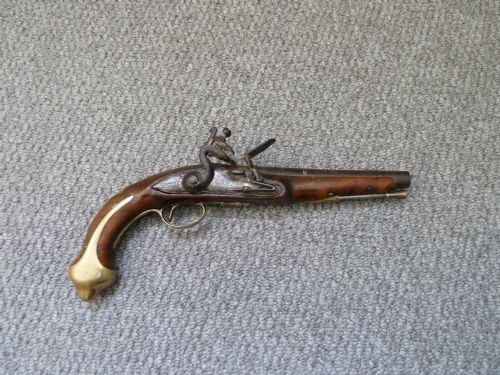
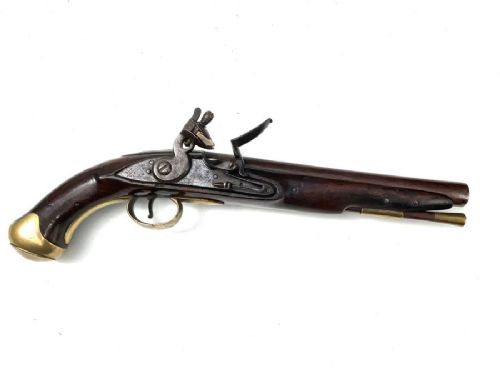
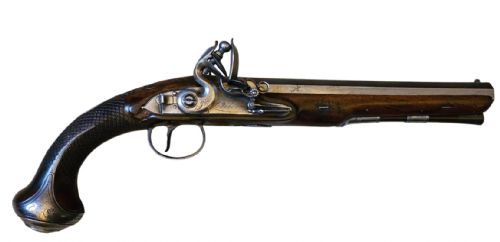
When you search for a steel duelling pistol, you look at antique firearms and militaria that span several centuries of British gunmaking. The examples recorded here cross the seventeenth, eighteenth, and nineteenth centuries, taking forms such as flintlock pistols, percussion target pistols, and officers' sidearms.
You are most likely to meet flintlock and percussion models originating from London and regional makers, often housed in fitted wooden cases with velvet linings. These arms include single pieces and matched pairs, displaying smooth-bore barrels and figured stocks.
The materials and styles reflect the shifting military and civilian needs of the Georgian and Regency periods, alongside earlier seventeenth-century work. Every piece carries the specific hallmarks of its maker and period of use.
How they were made
Makers shaped these pistols from forged steel and iron for barrels and locks, paired with stocks of figured walnut or mahogany. Metal components frequently feature brass mountings or silver furniture to strengthen and ornament the frame.
Internal mechanisms rely on precise flintlock and percussion systems designed for reliable ignition. Wood stocks are carefully carved and polished to fit the hand, while fitted cases often line their interiors in velvet.
Some pistols rest so snugly in their velvet beds they refuse to leave without a polite British nudge.
What varies in quality
Quality in a steel duelling pistol rests on the crispness of the maker's signature and the depth of proof marks stamped into the metal. Finer pieces demonstrate superior balance in the hand and sharper definition in the carving of the walnut stock.
The presence of an original fitted case with intact velvet lining separates standard sidearms from superior collector pieces. Engraving on the lockplate and the integration of silver or brass mounts further distinguish workshop standards.
Harrison of London·Joseph Egg London·Timothy Hughes·Barber of Newark·Dutton·A.W Spires
The Steel Duelling Pistol Glossary
- Flintlock
- An ignition mechanism that uses a piece of flint striking a steel frizzen to create sparks for firing. This system dominated European firearms before the invention of the percussion cap.
- Percussion pistol
- A firearm that uses a percussion cap struck by the hammer to ignite the gunpowder. This mid-nineteenth-century method replaced the earlier flintlock ignition.
- Bore
- The interior diameter of a firearm barrel. Measurements like eighteen-bore denote the size of lead ball the barrel accepts.
- Proof marks
- Official stamps applied to a firearm barrel to certify that it has undergone pressure testing. These marks indicate the place and era of manufacture.
Steel Duelling Pistol: Frequently Asked Questions
Were these pistols used in actual duels?
Many pistols from this era served as officers' sidearms or private protection weapons rather than formal duelling pieces. Matched pairs were specifically balanced for precision shooting and self-defence.
Makers tailored these arms for accuracy and reliability in high-stakes situations.
How should I display a cased pistol?
Cased pistols sit best in stable environments away from direct sunlight and excessive humidity to protect the wood and velvet. Keeping the firearm inside its original fitted box preserves the internal lining and metal finish.
Gentle ambient conditions prevent the walnut stock and iron components from degrading over time.
What is the difference between flintlock and percussion?
Flintlock mechanisms rely on sparks generated by flint striking steel to ignite loose gunpowder in an open pan. Percussion systems use a self-contained cap placed on a nipple, struck directly by the hammer.
Percussion ignition offered faster firing times and better reliability in wet weather.