


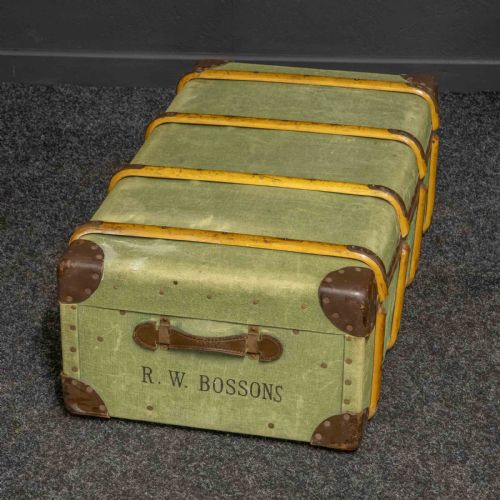


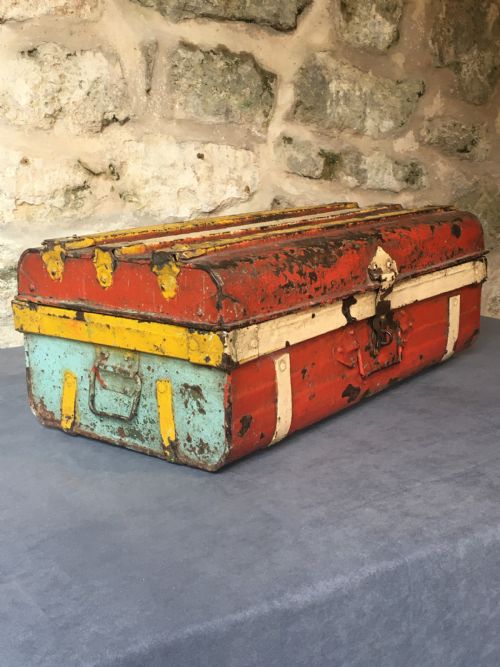
Steamer Trunk Coffee Table
These steamer trunk coffee table pieces bring original travel baggage and shipping chests into the living room as sturdy, characterful low tables.
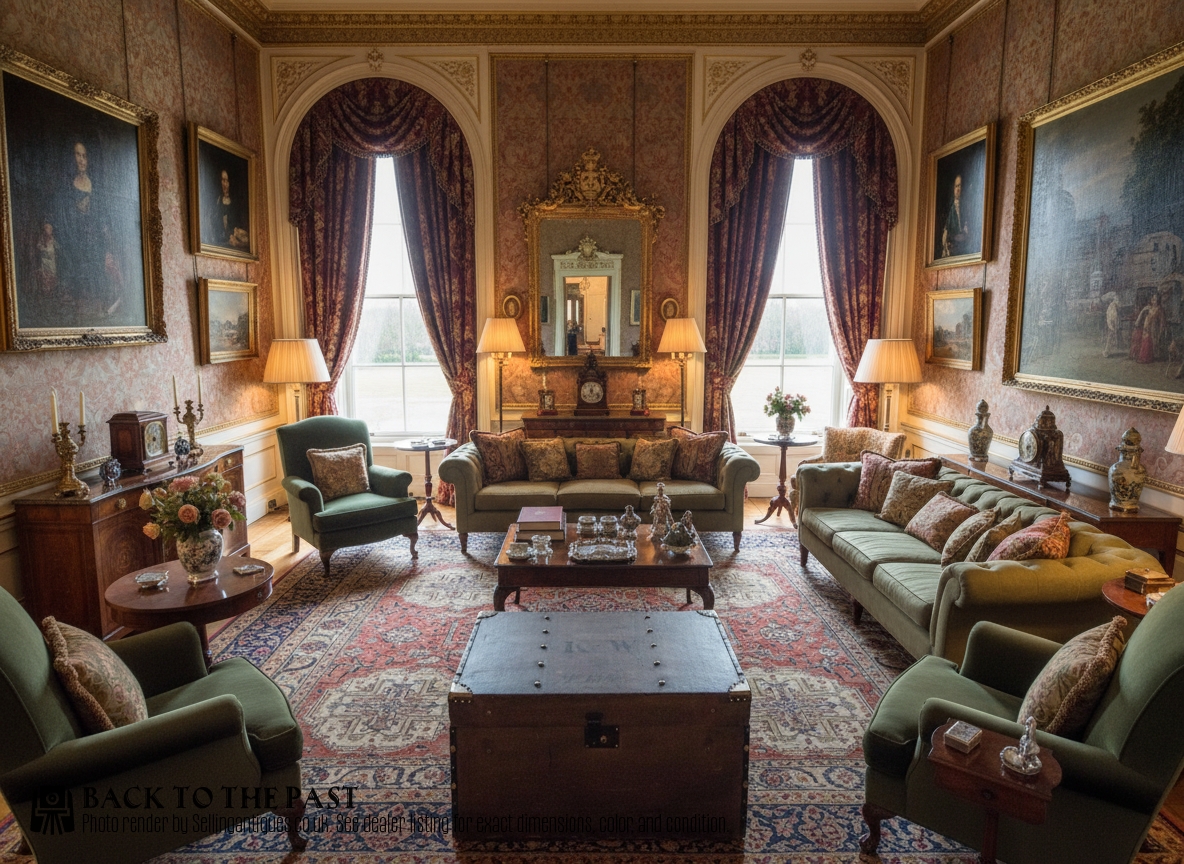
Steamer Trunk Coffee Table
A steamer trunk coffee table adapts antique travel baggage and storage chests for modern seating arrangements. These pieces emerge from the Victorian, Edwardian, and early twentieth century periods, spanning nineteen twenty and nineteen ten.
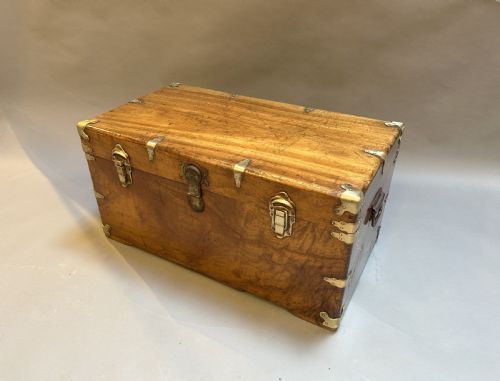
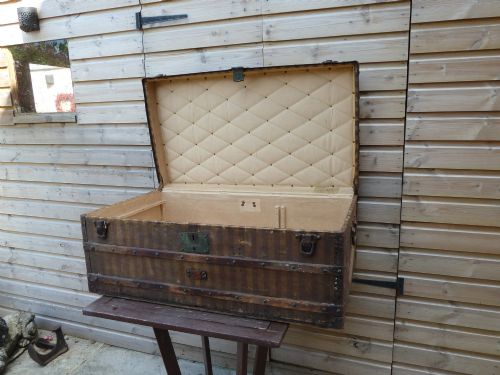
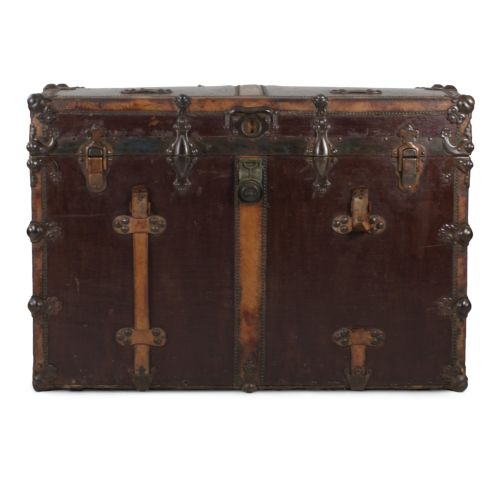
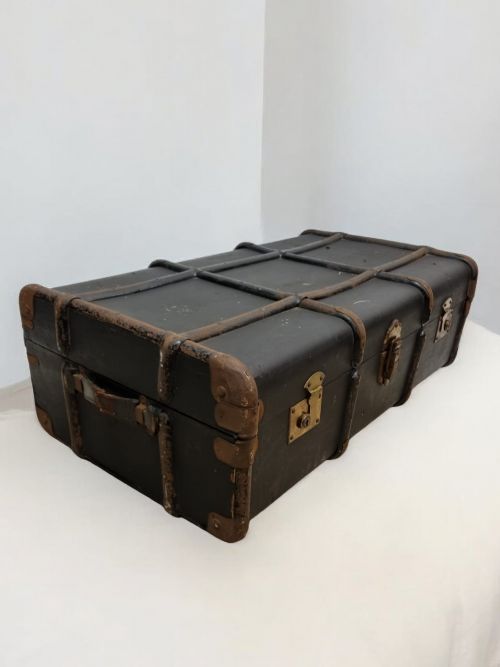
The selection includes low shipping chests, fitted travel trunks, and cabin pieces originally designed for long journeys. You will encounter variants in canvas, leather, wood, and metal.
Makers and makers' marks occasionally appear on these travel chests, connecting utilitarian baggage to notable retailers and Parisian houses.
Materials and construction
Construction relies on sturdy wooden carcasses bound in canvas, leather, or vulcanised fibre to withstand rough handling. Brass, metal, and aluminium reinforcement protects the corners, edges, and lids.
Original hardware such as brass locks, latches, and leather handles remains a defining feature of these pieces. Interior fittings sometimes include wooden compartments or lined trays.
Listings feature pieces spanning the nineteenth century, Victorian era, Edwardian period, and nineteen twenty.
Quality variations
Quality rests in the originality of the hardware, the integrity of the binding materials, and the presence of maker details. Pieces retaining their original brass locks and leatherstraps command greater interest.
The choice of primary material alters the character, from robust camphor wood to bound canvas and polished metal. The precision of the original corner bracing and edge binding indicates the standard of manufacture.
Louis Vuitton·Aux Etats Unis·Mr Selfridge·J.Burton London
The Steamer Trunk Coffee Table Glossary
- Steamer trunk
- A low-profile travel trunk designed to fit beneath the berth in a passenger ship cabin. These flat-topped pieces form the basis of most trunk coffee tables.
- Vulcanised fibre
- A laminated material made from cellulose, developed in the nineteenth century for durable luggage construction. It provides a tough, water-resistant exterior on travel trunks.
- Camphor wood
- An aromatic timber frequently utilised in campaign chests and travel trunks to protect contents from insects. Its distinctive scent often lingers in these pieces.
- Campaign chest
- Portable furniture designed for military officers and travellers during the nineteenth century. These items feature recessed brass handles and corner brackets to prevent snagging during transit.
- Fitted interior
- Internal compartments, trays, or drawers built into a trunk to organise luggage during transit. These original configurations add complexity to the piece.
Steamer Trunk Coffee Table: Frequently Asked Questions
How do I choose the right height?
Consider the height of your surrounding seating when selecting a trunk. Most steamer trunks sit lower than standard coffee tables, offering a casual proportion for modern living rooms.
Measure the clearance needed between the floor and your sofa seat to ensure comfortable reach. A lower profile works well with deep, low-slung seating arrangements.
Can I use them for storage?
These trunks retain their internal cavities, making them practical for concealing blankets, books, and household items. The hinged lids lift to reveal deep storage spaces.
Check the internal condition of the lining before placing delicate textiles inside older luggage pieces. Some trunks retain original fitted trays that segment the storage area.
How do I care for leather and canvas?
Dust leather surfaces regularly with a dry cloth and apply a neutral conditioning wax periodically to prevent cracking. Canvas and fibre bodies require gentle cleaning without excessive moisture.
Protect the original metal and brass hardware from damp environments to maintain its finish. Avoid placing these tables in direct sunlight, which can fade antique fabrics and leather.
How do I date a steamer trunk?
Examine the materials, lock mechanisms, and construction styles to determine the period. Vulcanised fibre and aluminium point toward Edwardian and later twentieth-century manufacturing, while brass-capped camphor wood often indicates nineteenth-century origins.
Maker stamps, luggage labels, and patent dates printed on the hardware offer precise chronological clues. Nineteenth-century pieces typically display heavier wooden frames and hand-stitched leather bindings.