

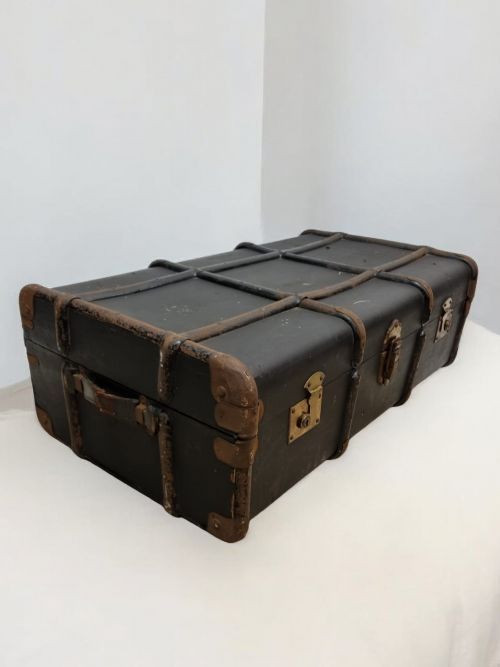
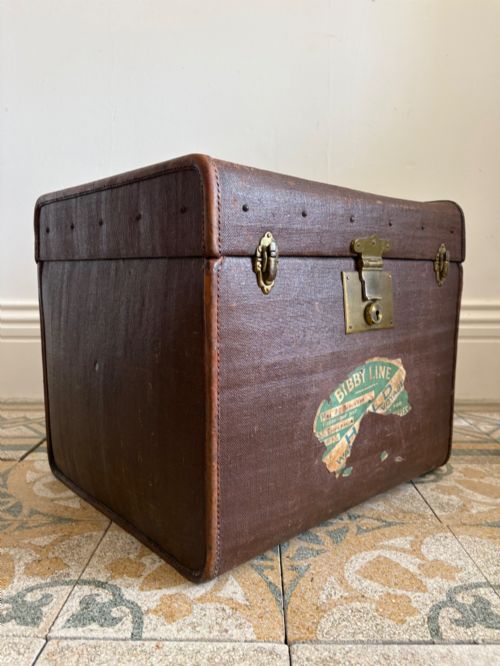


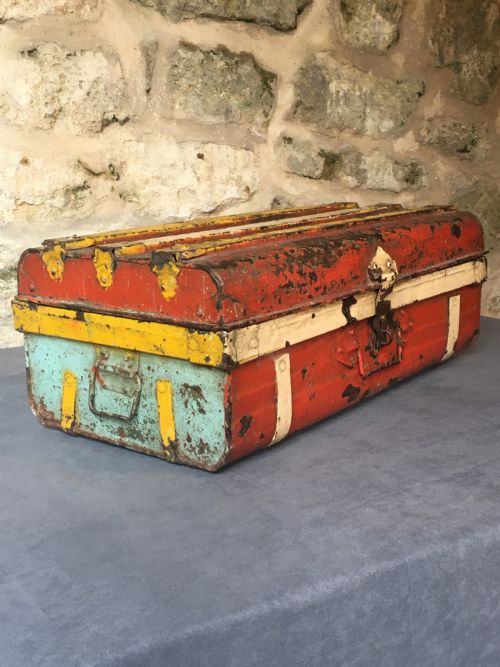


Steamer Storage Box
These steamer storage box pieces are travel cases and chests built for long journeys, offering sturdy storage with period character for modern interiors.
Steamer Storage Box
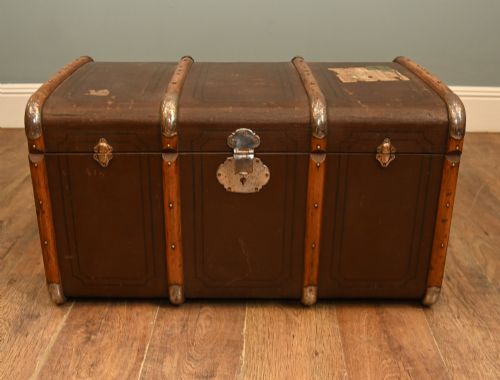
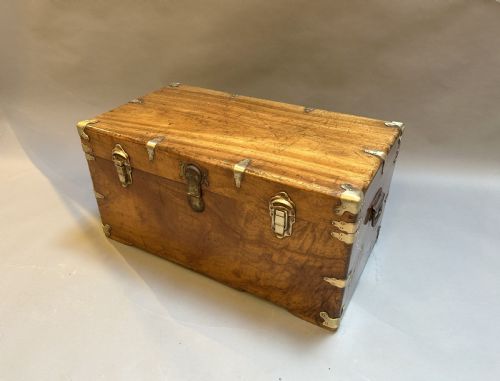
When you search for a steamer storage box, you are looking at substantial travel luggage and chests dating from the nineteenth and early twentieth centuries. The selection encompasses Victorian, Edwardian, and 1920s examples designed for cabin travel and domestic storage.
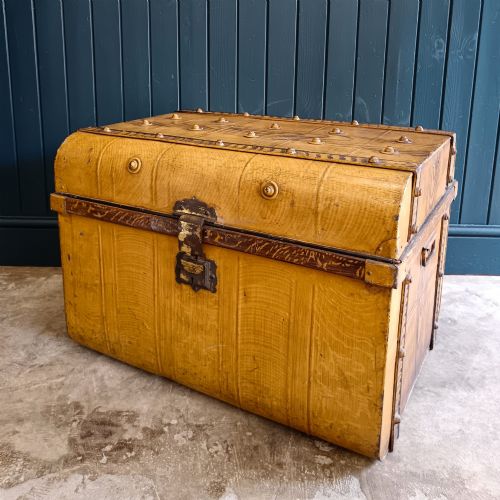
You will encounter various formats ranging from dome-top chests to flat-topped travel trunks and specialised cases. These pieces originate from distinct periods spanning the 1850s through to the 1920s, reflecting the evolution of global travel.
Materials and construction methods
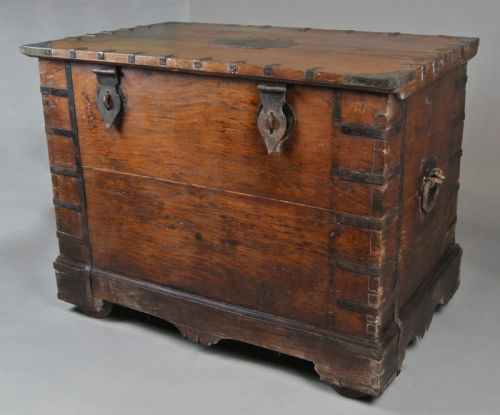
Construction relies heavily on robust timbers such as oak, camphor wood, and teak, frequently reinforced with metal bands, iron brackets, and brass corners. Canvas and leather coverings provide exterior protection, secured with studs and original hardware.
Makers utilised painted finishes, faux-wood effects, and fitted interiors to combine utility with aesthetic appeal. Metal components like brass and steel binding ensure structural integrity across heavy-duty travel trunks.
Steamer Storage Box Retail Price Guide 2026
Typical asking prices for steamer storage box among the pieces listed under this phrase on Sellingantiques today, from the lower quarter to the upper quarter. They describe what is for sale here now, not the wider market.
Listings include items spanning the 19th century, Victorian era, Edwardian period, and the 1920s.
Distinguishing quality and craftsmanship
Quality separates pieces through the retention of original hardware, locks, and internal linings rather than generic restoration. Finer examples display superior timber selection, such as solid camphor or polished oak, coupled with precise metal binding.
The degree of original patina and maker signatures elevate certain trunks above standard utility items. Superior construction involves heavy brass capping and robust leather work that withstands decades of handling.
H D Dean·Louis Vuitton
The Steamer Storage Box Glossary
- Steamer trunk
- A luggage case designed specifically to fit into the restricted space of a steamship cabin. These pieces are typically lower in profile than standard wardrobe trunks.
- Dome top
- A curved lid design intended to encourage rainwater runoff during transit. This shape prevents items from being stacked directly on top.
- Portmanteau
- A large travelling bag or case that opens into two equal compartments. The term describes specific hinged luggage variants within the evidence.
Steamer Storage Box: Frequently Asked Questions
What is a steamer storage box?
A steamer storage box is a historical travel trunk or chest built to accompany passengers on ocean liners and long-distance journeys. These pieces provided secure luggage transport before the era of modern synthetic suitcases.
Today, they serve as functional storage furniture in homes, offering deep compartments for blankets, linens, and personal items while adding historical character to a room.
How do I date a vintage trunk?
Dating a trunk involves examining the materials, hardware, and construction techniques used by the maker. Nineteenth-century examples often feature heavy oak and brass banding, while 1920s pieces may incorporate canvas coverings and Art Deco stencilling.
Internal linings, lock mechanisms, and maker labels also provide reliable clues for placing a piece within the Victorian, Edwardian, or early twentieth-century periods.
Can I use these trunks for living room storage?
These trunks adapt well to modern living spaces as coffee tables, end tables, or blanket chests at the foot of a bed. Their flat-topped variants provide convenient surface space alongside internal organisation.
Placing them in a room introduces texture through materials like leather, canvas, and bound metal without compromising on hidden storage capacity.
What woods were used in these boxes?
Trunk makers utilised a range of domestic and exotic timbers depending on the intended destination and purpose of the luggage. Oak, pine, and teak appear frequently alongside aromatic camphor wood for specialised travel needs.
External surfaces were often covered in canvas or leather, meaning the primary wood is sometimes revealed only on the interior or through older painted finishes.