





Starburst Diamond Setting
When you handle a starburst diamond setting, you hold a piece of jewellery designed to catch the light with celestial brilliance across rings, brooches, and pendants.
Starburst Diamond Setting
A starburst diamond setting brings together central diamonds and surrounding metal rays to form a celestial motif, appearing frequently across rings, pendants, brooches, and stick pins. These pieces bridge several eras, drawing particularly on Victorian, Edwardian, and mid-century design traditions.
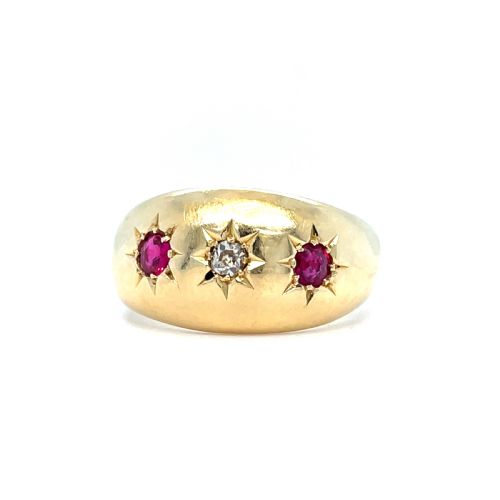
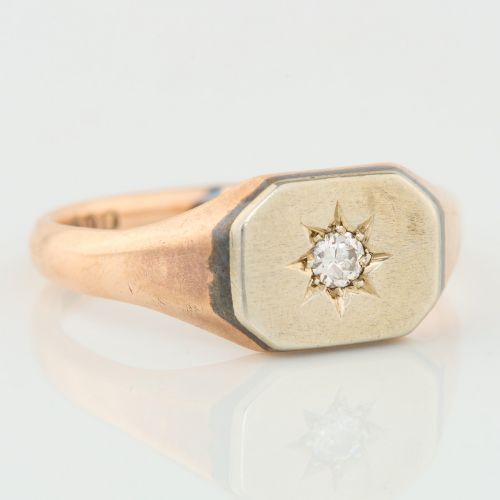
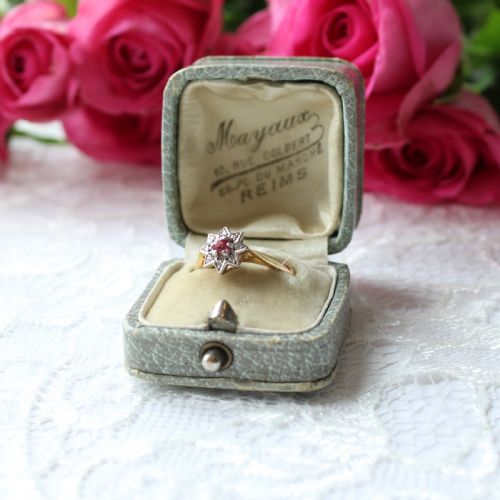
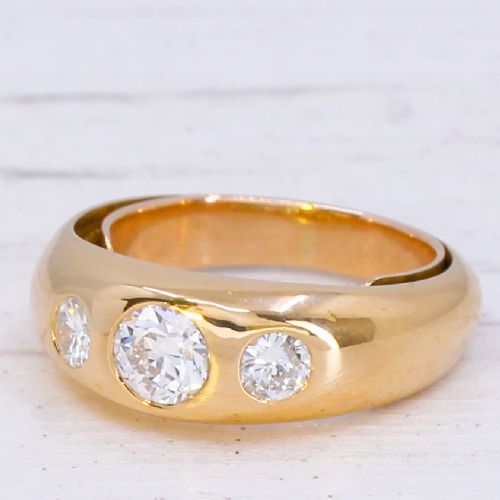
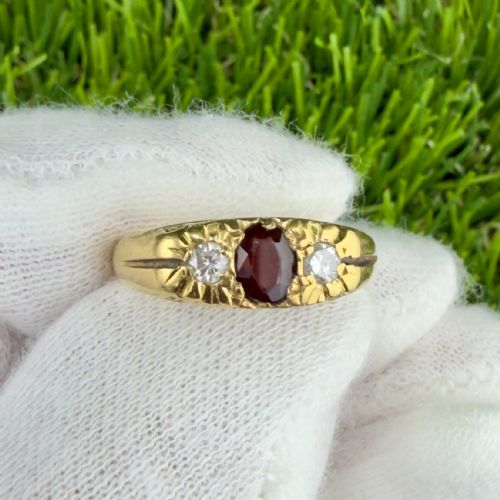
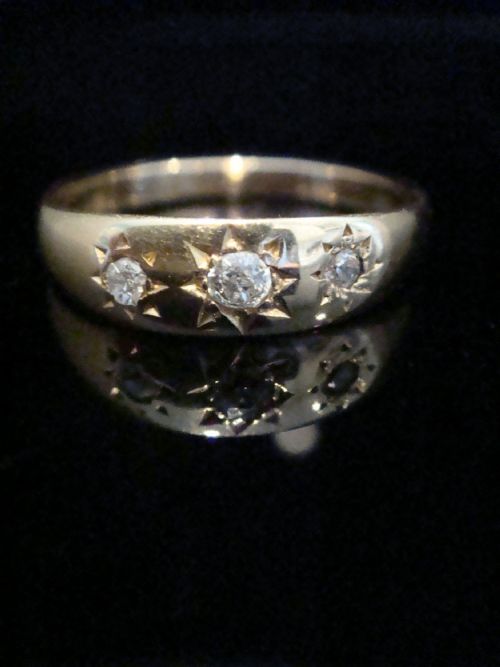
The most common form you will meet on this page is the gypsy ring or cluster ring, where diamonds are flush-set or raised within starburst engravings in yellow gold or silver-topped gold. Such pieces often incorporate rubies, sapphires, or garnets alongside the central stones.
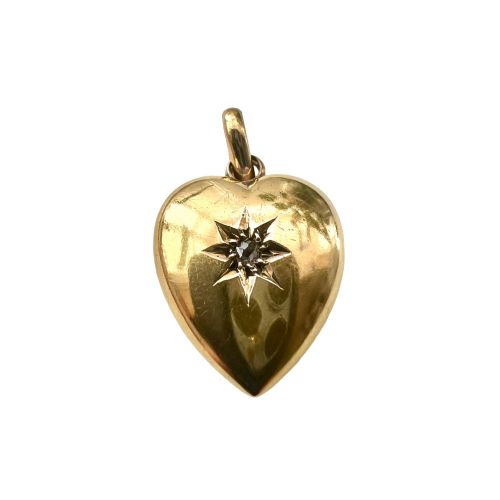
Pendants and brooches also feature prominently, including puffy heart pendants and large silver-set star brooches that showcase old cut diamonds from the nineteenth century.
Assessing Quality and Execution
Quality in a starburst diamond setting rests on the precision of the engraved rays and the security of the metal surrounding the stones. Finer examples display crisp, deep starburst chasing that frames the diamond cleanly without crowding the table of the stone.
The choice of materials and the integrity of the original hallmarks, such as those from Chester or Birmingham, separate standard production from superior pieces. Weight, stone carat, and the preservation of the original old cut diamonds also define the upper tier of these items.
A Victorian star brooch doubles as a pendant, proving that nineteenth-century jewellers understood the value of convertible day-to-night accessories.
The Starburst Diamond Setting Glossary
- Gypsy setting
- A mounting style where the gem is flush with the surface of the metal, surrounded by a starburst engraving that spreads the visual impact of the stone. This technique was popular in Victorian and Edwardian rings.
- Old cut diamond
- A hand-faceted diamond cut before the advent of modern machinery, typically featuring a smaller table, higher crown, and open culet. These stones possess a distinctive candlelight sparkle.
- Celestial motif
- Design work incorporating stars, sunbursts, and planetary themes, which gained immense popularity during the Victorian and Edwardian periods.
- Trilogy ring
- A ring featuring three main stones, often diamonds or a combination of diamonds and coloured gemstones like rubies or garnets. Each stone typically represents a different time or meaning.
- Puffy heart
- A hollow, three-dimensional heart pendant stamped from gold and often decorated with applied star-set diamonds. They were widely produced during the Victorian era.
Starburst Diamond Setting: Frequently Asked Questions
How do I care for a starburst diamond ring?
Clean your ring gently with warm soapy water and a soft brush to remove everyday oils from the starburst engravings.
Avoid harsh chemical dips, particularly if the piece combines gold and silver or includes softer coloured gemstones.
Are these rings suitable for daily wear?
Gypsy set and flush-set starburst rings handle daily wear well because the stones sit level with the metal band.
Lighter 9ct or 18ct gold bands from the Victorian and Edwardian periods still require sensible care to preserve their original engraving.
How can I tell a Victorian starburst from a later piece?
Victorian starburst pieces often feature silver-topped gold construction, hand-carved starbursts, and distinct old cut diamonds.
Mid-century and later variations tend to utilise solid yellow gold settings with brighter, more uniform metalwork.
What is a celestial band?
A celestial band is a ring featuring engraved star motifs, often punctuated with small diamonds or starburst settings around the hoop.
These bands were favoured for their symbolic meaning and low-profile comfort during the nineteenth and early twentieth centuries.