





Star Setting Ring
A star setting ring brings together celestial motifs and flush metalwork, offering enduring appeal for anyone seeking distinctive historical jewellery.
Star Setting Ring
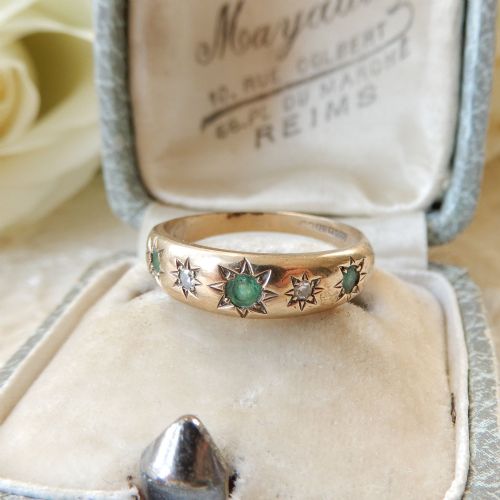
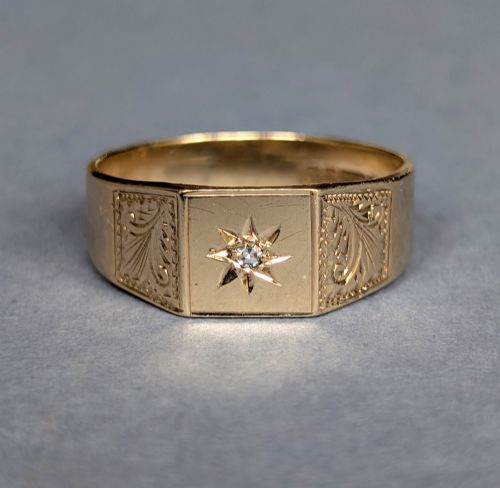
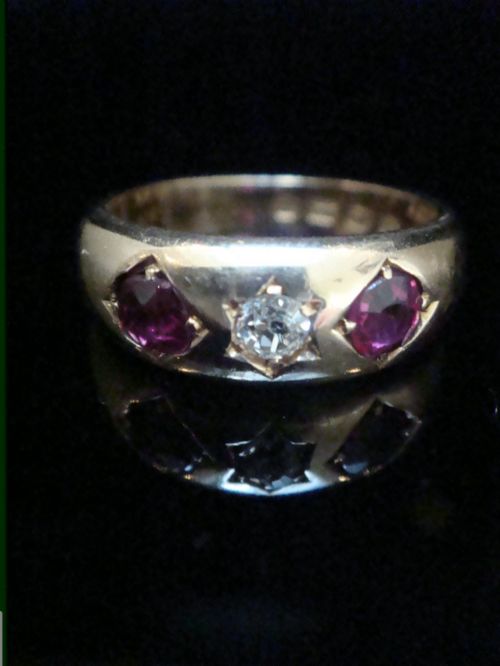
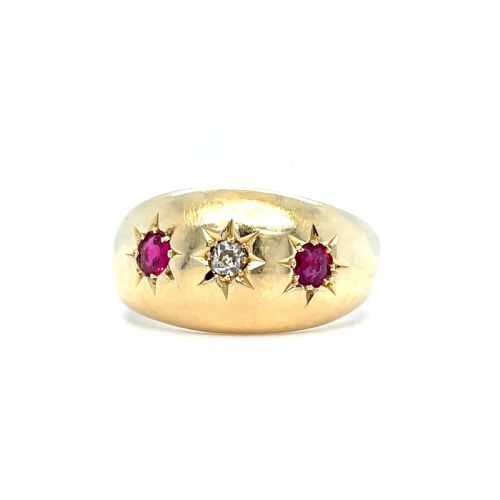
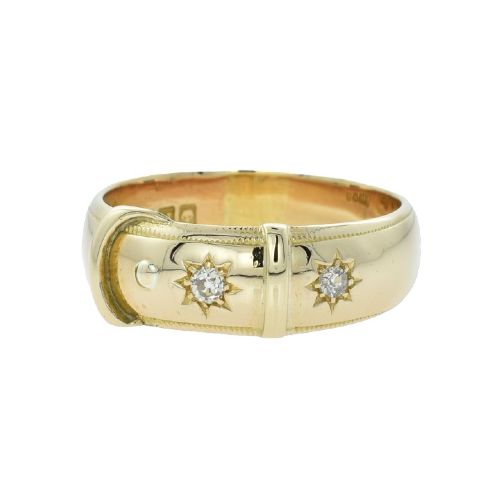
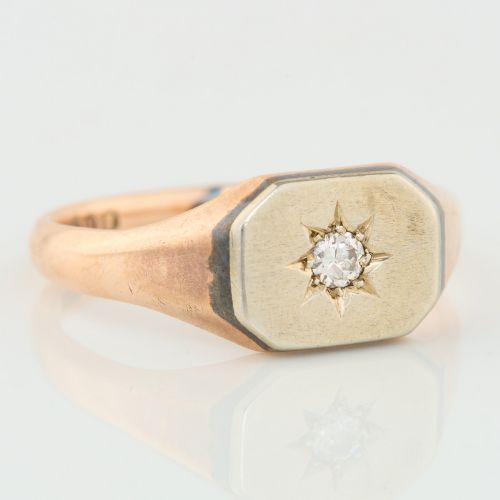
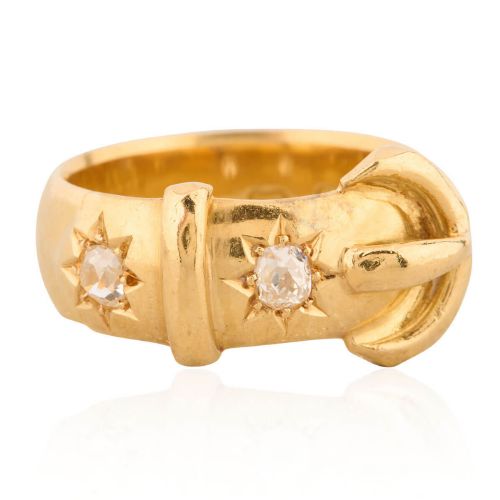
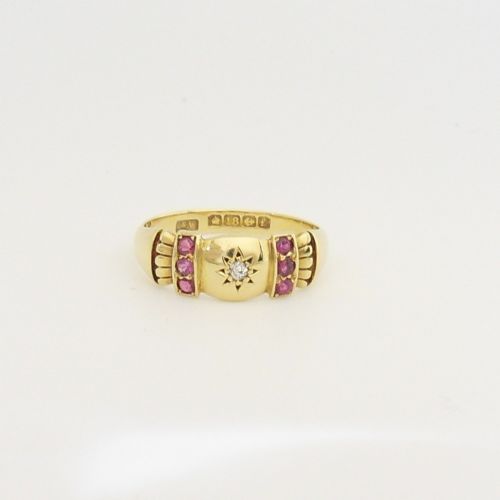
A star setting ring takes many forms, appearing frequently as a gypsy ring, a flush-set band, or an illusion-set solitaire across Victorian, Edwardian, and later periods. These pieces place diamonds, rubies, or sapphires directly into the metal band, often surrounded by hand-engraved starburst rays that catch the light. Buyers encounter numerous 19th-century and early 20th-century examples featuring yellow gold alongside old-cut stones.
The inventory spans multiple decades, stretching from the mid-nineteenth century through the Edwardian era into the mid-twentieth century. Alongside traditional gypsy bands, the selection includes buckle designs, trilogy arrangements, and sapphire or ruby cluster configurations. This variety reflects how jewellers adapted flush stone settings across changing aesthetic movements while retaining the signature engraved star motif.
Materials and Construction
Goldsmiths constructed these rings primarily in 18ct yellow gold, alongside occasional 9ct gold, 15ct gold, and platinum or palladium on gold combinations. Stones such as diamonds, rubies, sapphires, and pearls sit flush within the thick metal walls of the band. This flush mounting protected the girdle of the stone during daily wear.
Engravers used sharp gravers to cut radiating star facets directly into the surrounding metal surface around the gemstone. This technique created the illusion of a larger diamond or gemstone by reflecting light outwards from the metal face. Old-cut diamonds and natural rubies or sapphires appear most frequently within these hand-finished mountings.
Star Setting Ring Retail Price Guide 2026
Typical asking prices for star setting ring among the pieces listed under this phrase on Sellingantiques today, from the lower quarter to the upper quarter. They describe what is for sale here now, not the wider market.
Distinctions in Quality
The crispness of the hand-engraved starburst rays defines the visual impact of the piece, as worn engravings soften the celestial geometry over decades of use. Deeper, sharper cuts maintain the illusion effect and frame the gemstone with greater precision. Goldsmiths who maintained clean symmetry achieved a more striking focal point on the finger.
The weight and gauge of the gold band itself set pieces apart, with heavier mountings offering greater structural integrity around the flush-set stones. Thicker shanks resist bending and preserve the integrity of the integrated stone setting. Finer examples combine substantial gold weight with well-matched old-cut diamonds or vibrant rubies and sapphires.
The Star Setting Ring Glossary
- Gypsy ring
- A ring style featuring stones set flush into a heavy band, popular during the Victorian and Edwardian eras. The metal tapers smoothly towards the back of the shank.
- Star setting
- A flush gemstone setting surrounded by hand-engraved starburst rays. This technique enhances the perceived brilliance of the central stone.
- Old-cut diamond
- A hand-faceted diamond cut before the standardisation of the modern brilliant cut in the early twentieth century. These stones typically exhibit smaller tables and higher crowns.
- Illusion set
- A setting technique where a metal plate surrounds a smaller diamond to make it appear larger. This method was widely utilised in Art Deco and mid-century designs.
- Trilogy ring
- A ring featuring three main gemstones, often representing the past, present, and future. These stones appear across Victorian and Edwardian gypsy and boat mountings.
Star Setting Ring: Frequently Asked Questions
What is a star setting ring?
A star setting ring is a piece of jewellery where a diamond or coloured gemstone is set flush into the metal band, surrounded by hand-engraved star rays. This design technique dates back to the nineteenth and early twentieth centuries.
The flush mounting protected the stone, making these pieces practical for everyday wear while the engraved star added decorative brilliance.
How do I date a gypsy ring?
Dating a gypsy ring involves examining the hallmarks, shank shape, and diamond cutting style. Old-cut diamonds and Chester or Birmingham assay office marks often point to Victorian or Edwardian origins.
Heavier gold bands and specific engraved patterns also help differentiate nineteenth-century examples from later mid-century reinterpretations.
Can I wear an antique star ring daily?
These rings were originally built for daily wear, featuring flush stone settings that resist catching on clothing. The thick metal bands provide substantial durability for regular use.
Checking the security of the metal around the gemstone ensures the piece remains safe for ongoing wear.
What stones are used in these rings?
Old-cut diamonds, rubies, sapphires, and pearls appear frequently in historical star-set rings. Goldsmiths often combined diamonds with rubies or sapphires in multi-stone bands.
Natural gemstones set in 18ct yellow gold represent the majority of available pieces from the Victorian and Edwardian periods.