

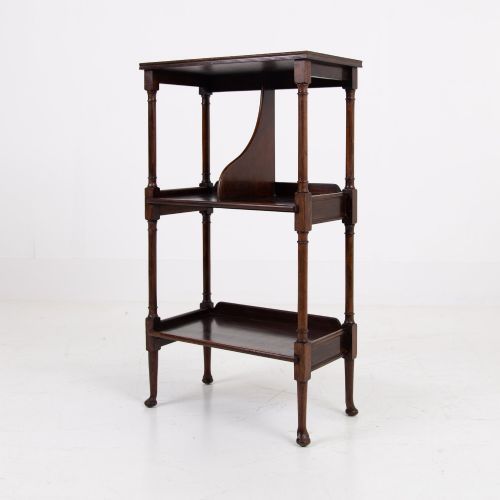

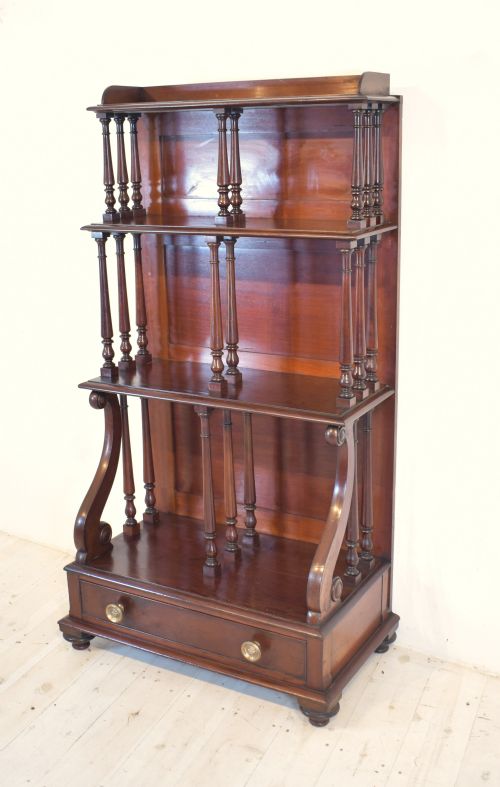

Standing Wood Book Rack
A standing wood book rack holds volumes upright on a desk or floor, bringing order and timber warmth to a room.
Standing Wood Book Rack
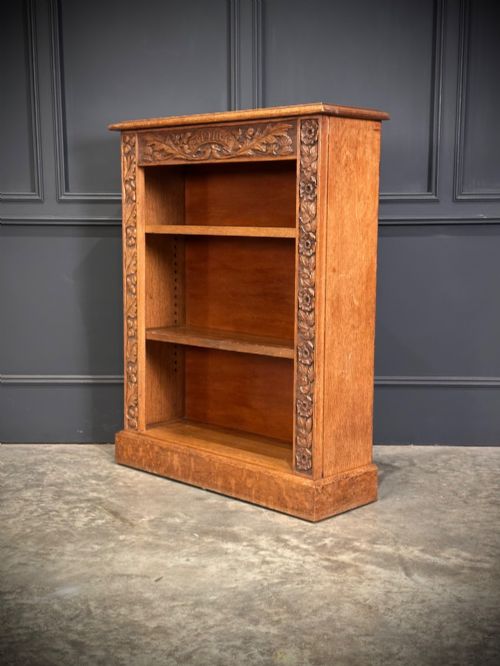
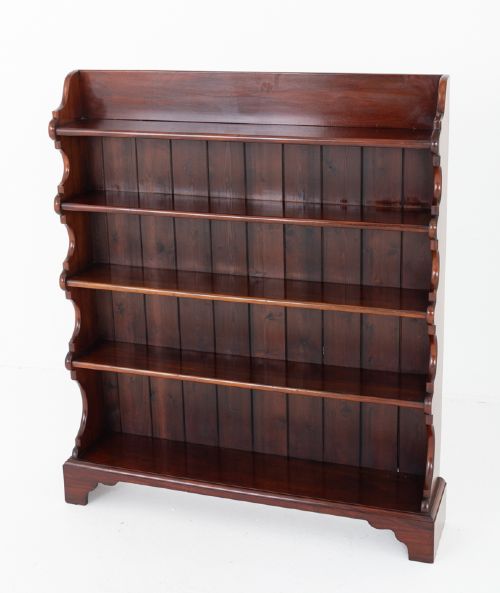
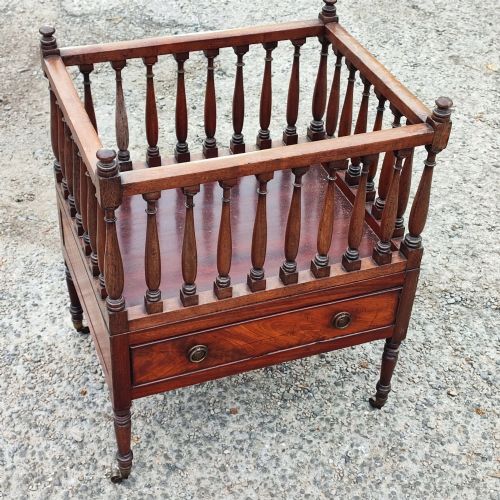
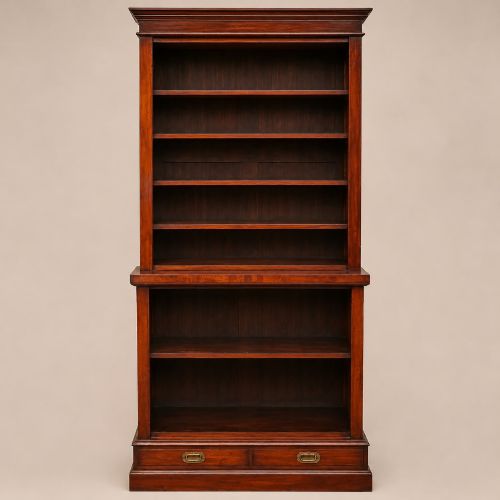
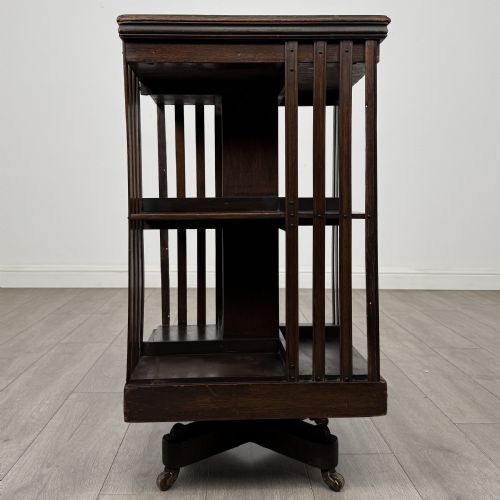
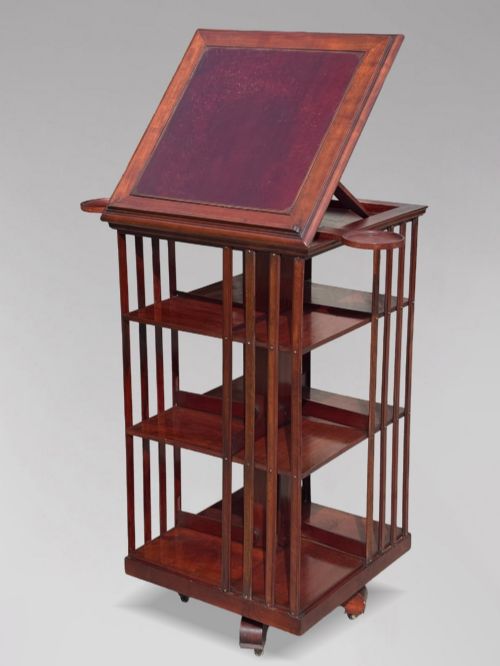
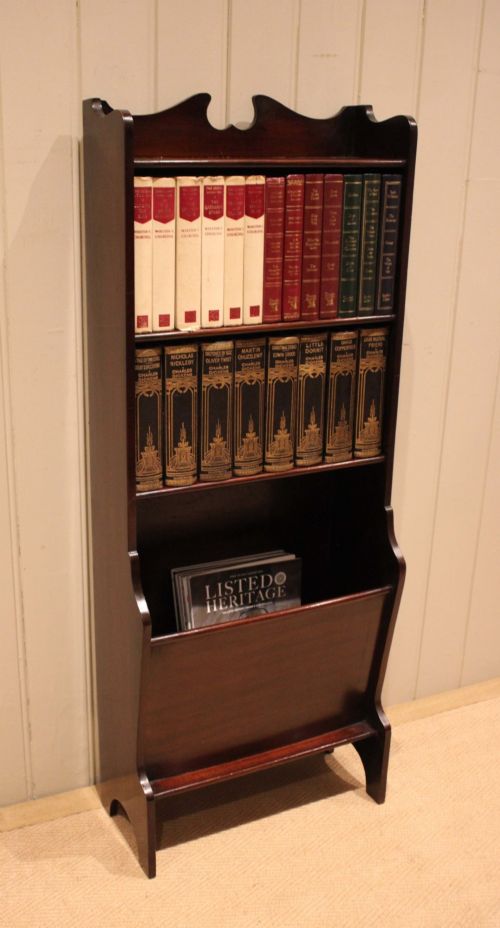
A standing wood book rack provides accessible storage for volumes and periodicals, appearing in forms from revolving desktop stands to tall open floor bookcases. When searching for a standing wood book rack, buyers meet pieces spanning the Georgian, Victorian, and Edwardian periods.
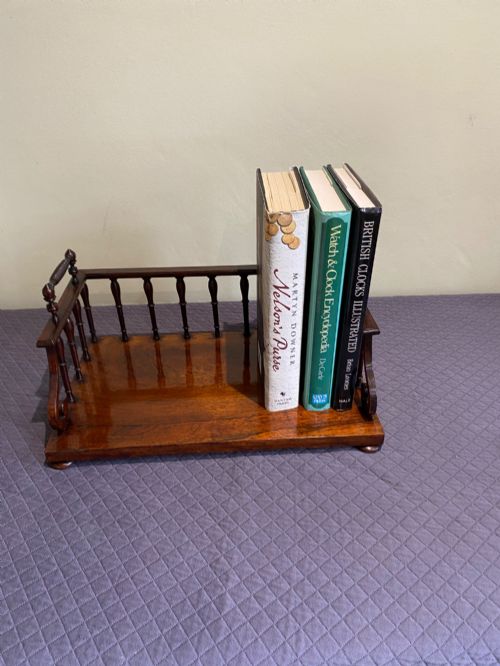
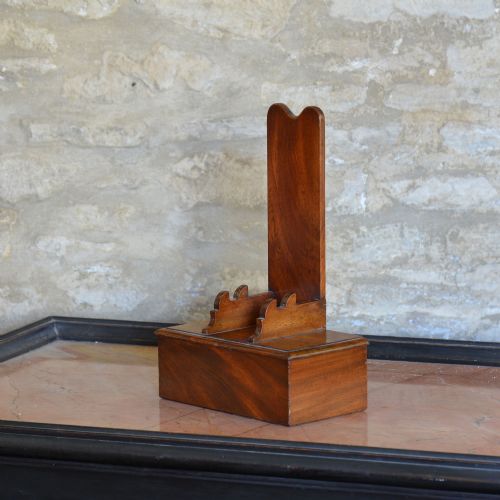
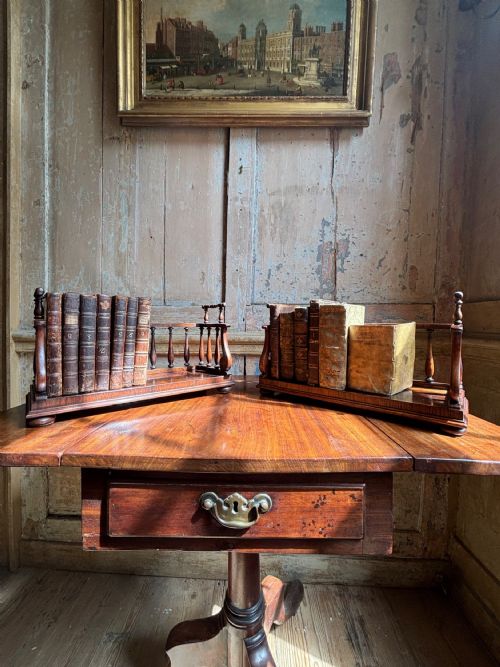
The selections range from compact table troughs and extending slides to multi-tiered revolving bookstands and floor standing units. Mahogany and oak dominate the offerings, frequently accompanied by rosewood, walnut, and teak.
Design influences vary widely across the inventory, encompassing Gothic Revival, Regency, and Arts and Crafts aesthetics. Practicality unites them, offering dedicated spaces for everyday reading material within domestic and library settings.
Materials and construction methods
Cabinetmakers utilised dense hardwoods such as mahogany, oak, and rosewood to construct frames capable of supporting heavy volumes. Figures like flame mahogany and satinwood veneers add decorative contrast to the primary timbers.
Joinery techniques include pegged joints, dovetails, and turned spindles, paired with brass hinges, rods, and revolving mechanisms. Inlays of mother-of-pearl and Tunbridge ware surface on specific Victorian and Arts and Crafts examples.
Carved details appear on Burmese and Anglo-Indian teak pieces, while ebonised finishes and painted surfaces provide alternative aesthetic treatments across nineteenth-century items.
Standing Wood Book Rack Retail Price Guide 2026
Typical asking prices for standing wood book rack among the pieces listed under this phrase on Sellingantiques today, from the lower quarter to the upper quarter. They describe what is for sale here now, not the wider market.
Listings span Georgian, Victorian, and Edwardian eras, constructed primarily from mahogany, oak, and rosewood.
Factors of quality and construction
Quality rests upon the selection of timber grain, the precision of the joinery, and the integrity of the revolving or extending mechanisms. Solid framing timbers and well-matched veneers distinguish superior pieces from utilitarian items.
Hardware weight and smooth operation define the better examples, particularly in revolving bookstands and extending book slides. Refined carving, crisp inlay work, and thoughtful proportion elevate individual items above standard production.
Waring and Gillows·Gillows
The Standing Wood Book Rack Glossary
- Book slide
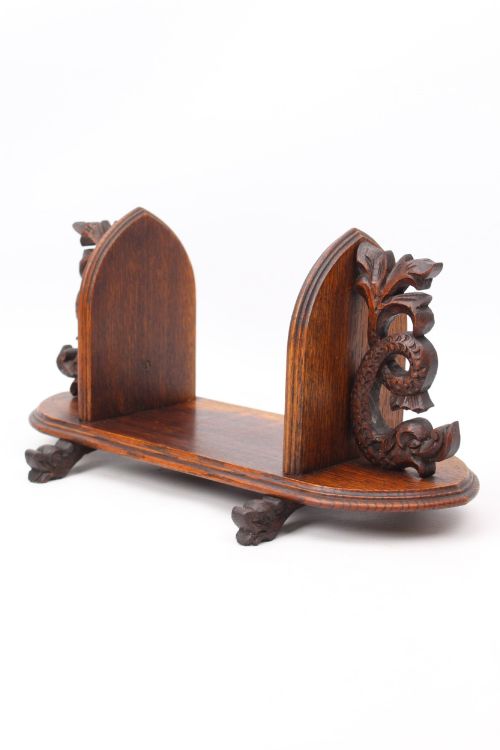
- An extending rack designed to hold a small row of books on a desk, often featuring hinged ends.
- Revolving bookcase
- A rotating stand mounted on a cruciform base, allowing access to volumes from multiple angles.
- Book trough
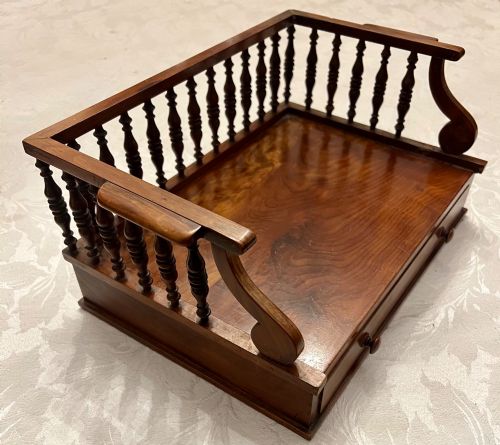
- A V-shaped or open-sided desk accessory intended for holding current reading or periodicals.
- Whatnot
- A multi-tiered open stand utilised for displaying books and decorative objects.
- Tunbridge ware
- A form of woodworking utilising tiny pieces of coloured wood to form mosaic pictures, popular on Victorian items.
Standing Wood Book Rack: Frequently Asked Questions
What is a revolving bookcase?
A revolving bookcase is a compact stand that turns on a central pivot, allowing multiple directions of access to volumes.
These pieces sit easily beside a desk or armchair for daily reference.
How do book slides work?
Book slides use an extending base mechanism to adjust the length of the trough as volumes are added or removed.
Hinged ends often fold down or display decorative carvings.
Where should I place a standing book rack?
Standing book racks suit placement beside a reading chair, upon a library table, or in a study for immediate access.
Their open construction keeps frequently used titles close at hand.
How do I distinguish Victorian from Edwardian pieces?
Victorian pieces often display heavier timbers, darker finishes, and ornamental inlays like mother-of-pearl.
Edwardian examples lean towards lighter mahogany or oak frames with slatted sides and simplified lines.