
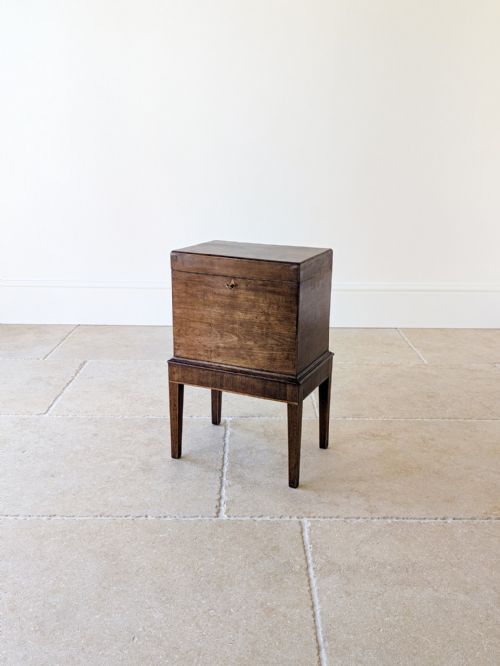
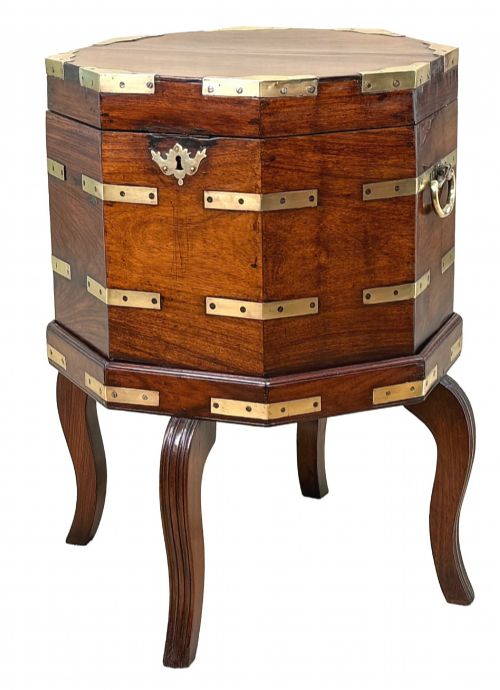
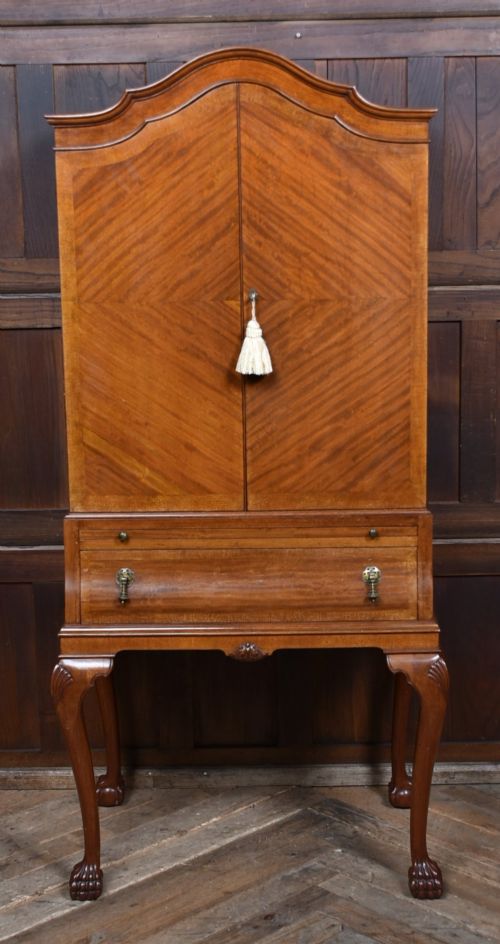
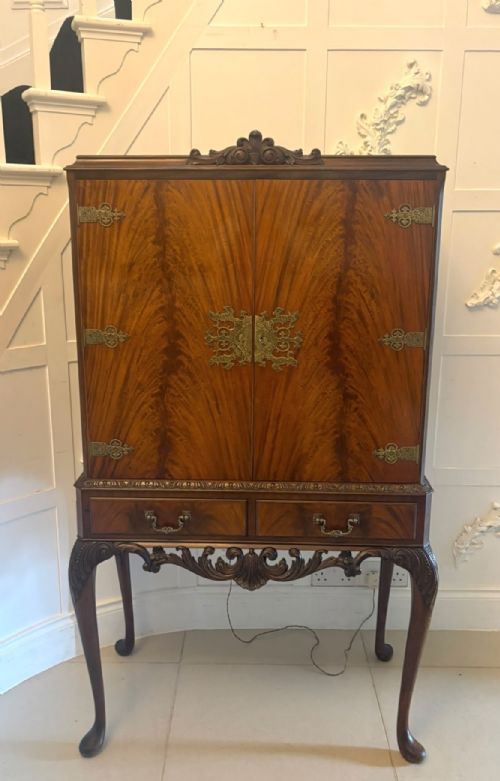
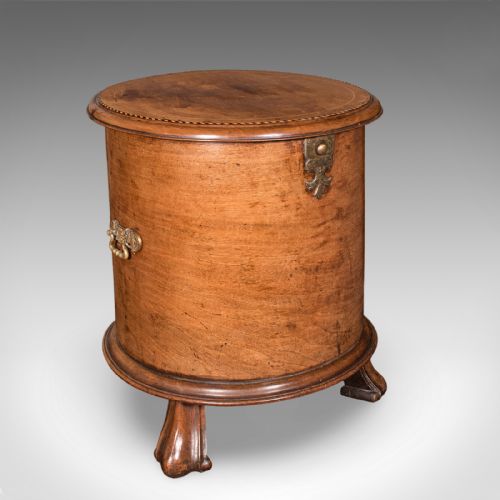


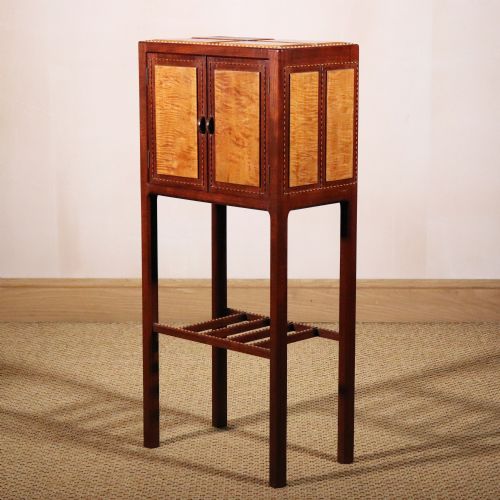
Standing Mahogany Liquor Cabinet
These standing mahogany liquor cabinet pieces include cellarettes, wine coolers and drinks cabinets made to store bottles securely.
Standing Mahogany Liquor Cabinet
When you search for standing mahogany liquor cabinet, you are looking at specialised storage furniture designed for holding wine, spirits and decanters. The pieces on this page span from the eighteenth century through the Georgian and Regency periods, stretching into Edwardian and later twentieth-century cocktail cabinets.
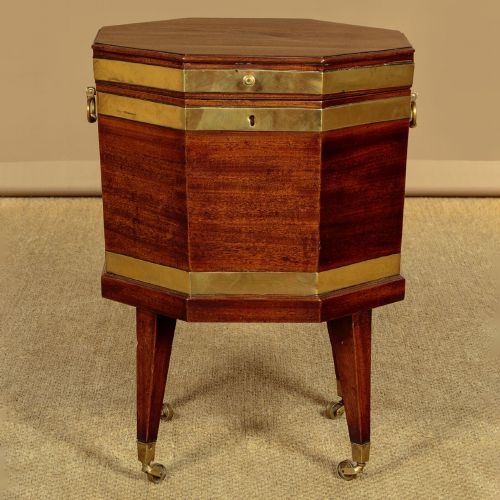
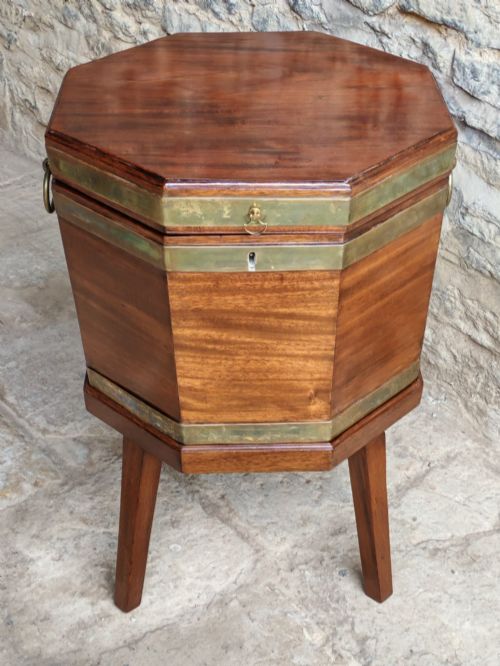
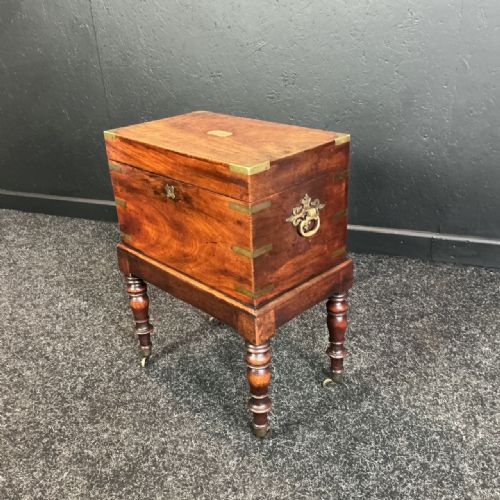
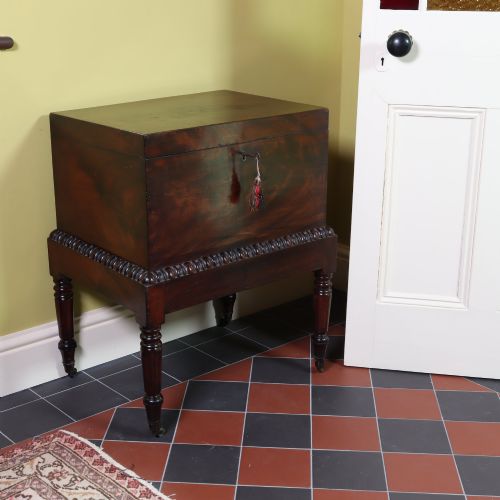
You will encounter forms such as octagonal wine coolers, cellarettes with brass banding, and cabinets on stands. These items originated to keep expensive beverages secure and accessible in formal dining rooms and drawing rooms.
The materials used across these listings focus heavily on mahogany, flame mahogany and padouk, often enhanced by satinwood and boxwood inlay. Styles range from George III Chippendale and Anglo-Indian Colonial to Art Deco and Arts and Crafts.
How they were made
Cabinetmakers constructed these standing liquor pieces using solid mahogany and figured veneers over supportive secondary timbers. Timber selection prioritized rich grain patterns, particularly in flame mahogany and padouk surfaces.
Joinery methods involved traditional framing, dovetailing and panel construction suited to heavy internal bottle weights. Metalwork such as brass hoops, corner mounts, handles and hinges provided structural reinforcement and security.
Inlaid decoration utilised contrasting woods like satinwood and boxwood set into precise channel work. Surface finishing relied on polishes that brought out the deep natural tones of the timber.
Listings feature periods from the 18th century and Georgian era through Regency, Edwardian, and the 1930s.
What varies in quality
The standard of a standing mahogany liquor cabinet depends upon the choice of timber and the dexterity of the cabinetmaker. Highly figured flame mahogany or exotic padouk elevate an example far above plain utility versions.
Refinement in decorative elements such as hand-cut string inlay, brass mountings and finely carved bracket feet separates standard production from exceptional workshop output. The integrity of the internal fittings, whether bottle dividers or lead-lined compartments, also dictates the grade of the piece.
Gillows
The Standing Mahogany Liquor Cabinet Glossary
- Cellarette
- A lockable container or cabinet designed for storing bottles of wine and spirits near the dining table. They frequently feature internal divisions and metal linings.
- Wine Cooler
- A freestanding vessel or chest used to chill wine bottles in ice or water before serving. Many period examples take octagonal or sarcophagus forms.
- Flame Mahogany
- Timber cut from the fork of the mahogany tree where the branch meets the trunk, producing a distinctive flickering flame pattern. Cabinetmakers reserved this veneer for primary display surfaces.
- Inlay
- A decorative technique where pieces of contrasting wood, such as satinwood or boxwood, are inserted into recessed cavities in the mahogany surface. This creates flat geometric or floral patterns.
- Tantalus
- A locking drink container that holds decanters securely visible while preventing access without a key. Georgian and later iterations often employ mahogany frames with metal locking bars.
Standing Mahogany Liquor Cabinet: Frequently Asked Questions
What is a cellarette?
A cellarette is a specialised storage chest or cabinet designed to hold wine bottles and decanters near the dining table. They were essential dining room furniture during the eighteenth and nineteenth centuries.
Most period examples feature secure locks and internal divisions. Some incorporate lead linings originally intended for holding melting ice around the bottles.
How do I date a mahogany cabinet?
Dating relies on examining the timber grain, construction techniques, hardware and stylistic motifs. Georgian pieces typically display hand-dovetailed joints and specific bracket or pedestal foot designs.
Later Edwardian and twentieth-century pieces often incorporate different interior fittings and machine-made elements. Comparing the primary wood selection, such as flame mahogany or padouk, helps narrow the production era.
Where were these cabinets used?
These pieces primarily stood in formal dining rooms, drawing rooms and libraries of large houses. Their main purpose was keeping wine and spirits close at hand for hosts and guests.
Lockable designs ensured that expensive imported vintages remained secure from household staff.
What is the difference between a cellarette and a drinks cabinet?
Cellarettes generally sit lower to the ground, often as octagonal chests on stands or underframes designed specifically for horizontal bottle storage. They belong predominantly to the Georgian and Regency periods.
Drinks cabinets and cocktail cabinets are taller standing furniture pieces developed later in the Edwardian period and the twentieth century. They often feature vertical storage, glassware shelving and illuminated display compartments.