
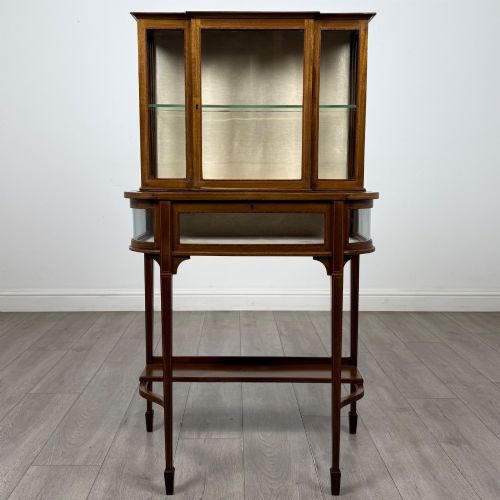
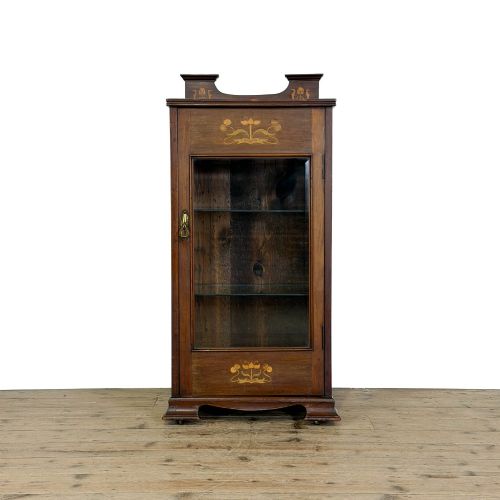
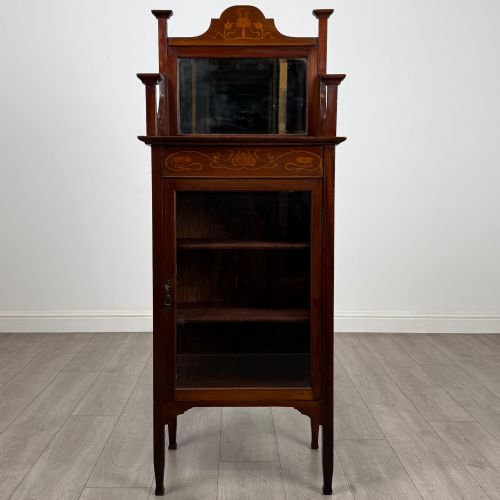
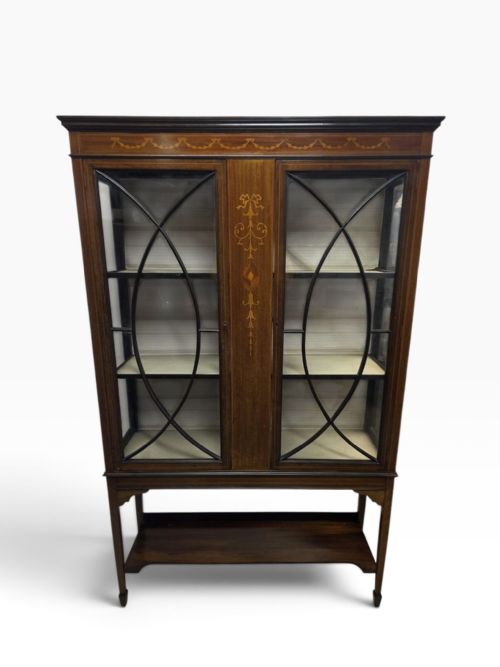
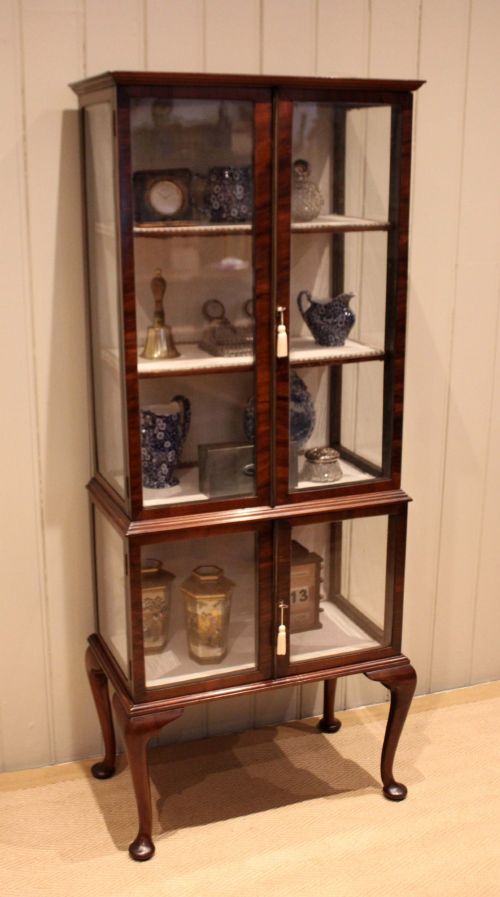
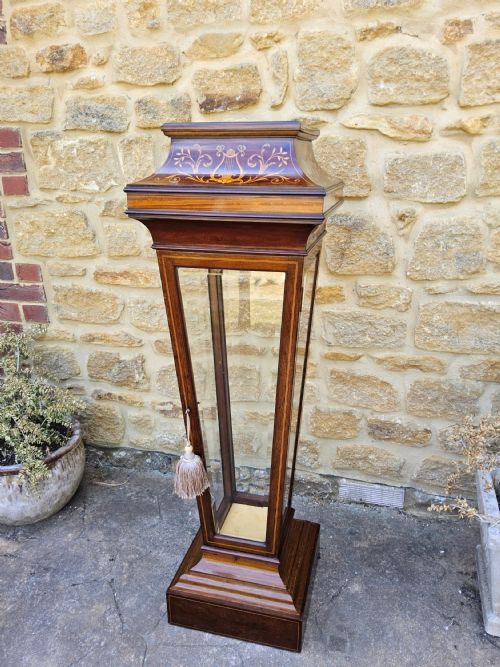
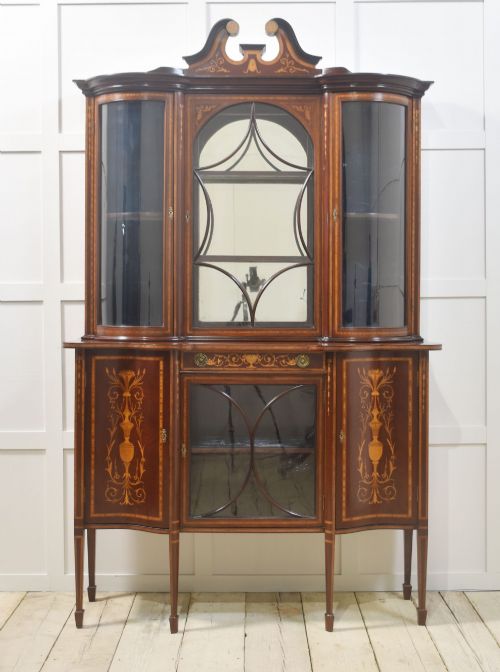
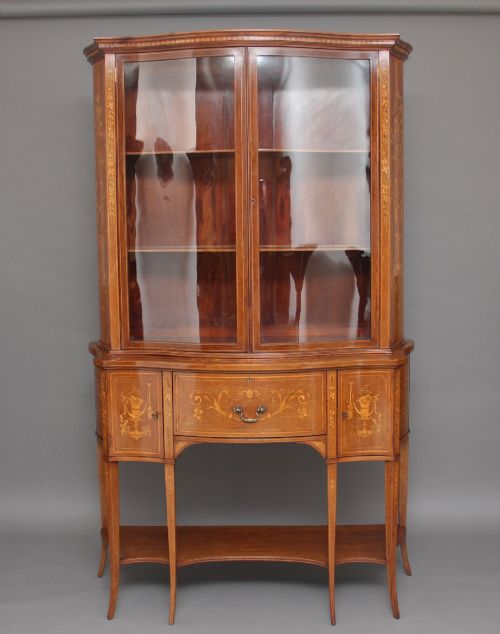
Standing Mahogany Display Case
A standing mahogany display case holds porcelain and books behind glass, uniting timber and light with quiet authority.
Standing Mahogany Display Case
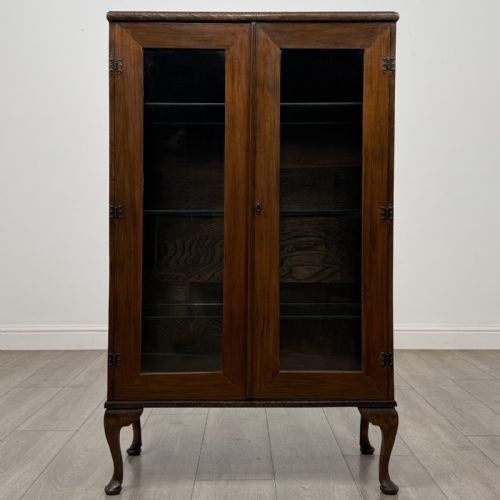
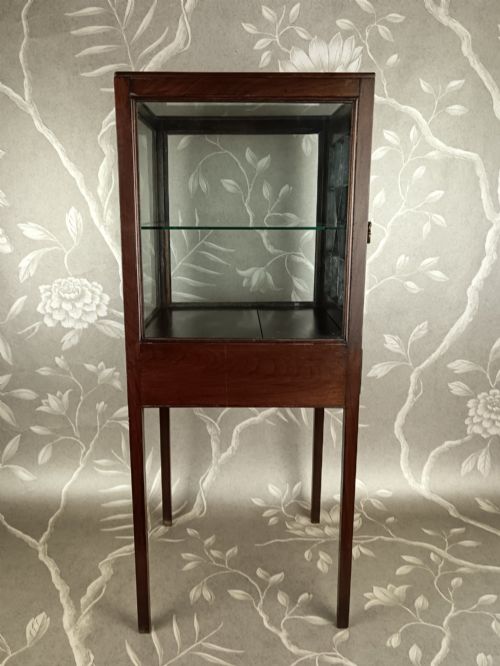
A standing mahogany display case is a vertical piece of furniture designed to exhibit precious objects behind glass doors or panels. These cabinets anchor a room while offering a clear view of ceramics, silver or books.
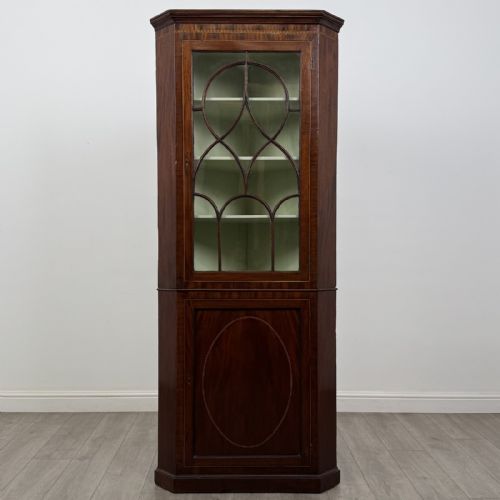
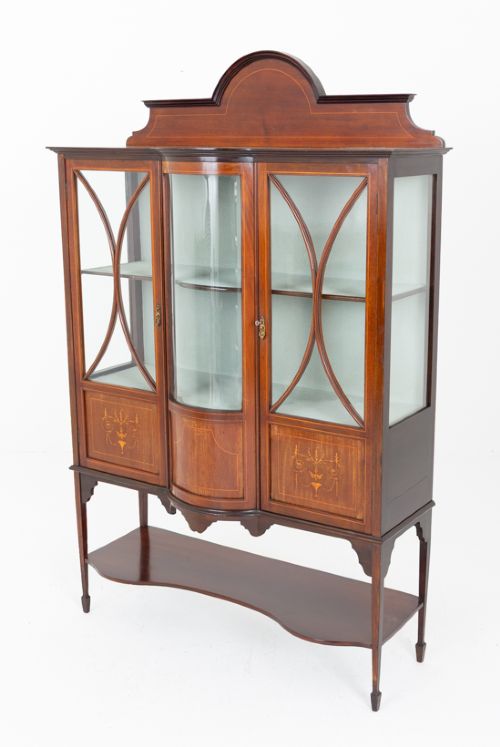
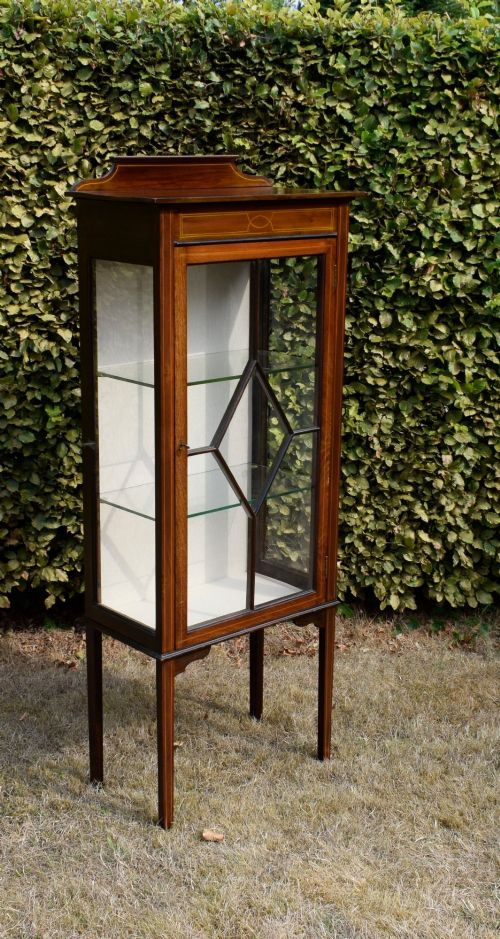
The selections available range from Edwardian inlaid examples to earlier Georgian and Victorian forms, including corner cabinets and tall bookcases. Edwardian variations appear most frequently, often featuring delicate satinwood stringing and glazed upper sections.
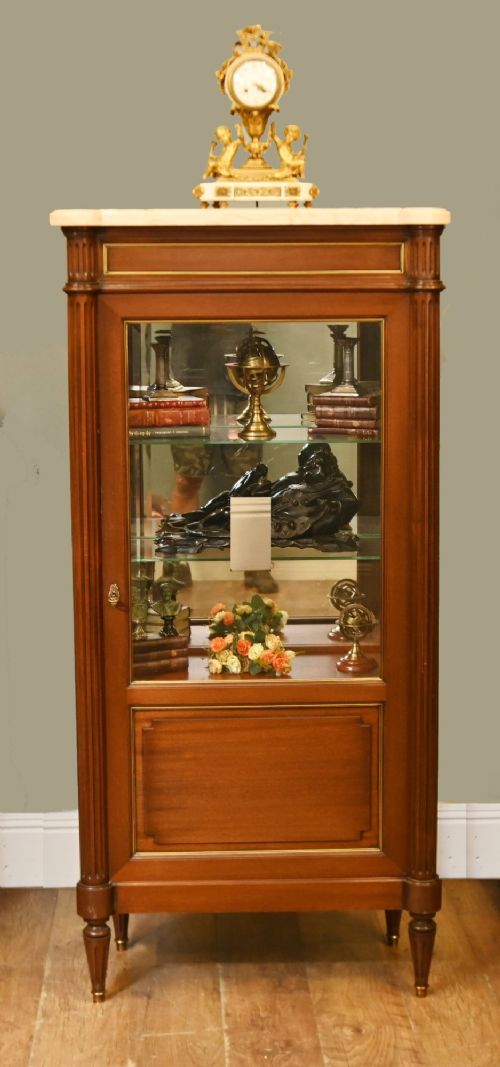
Makers utilised rich timber grains to create focal points in drawing rooms and libraries. Forms span from pedestal vitrines to expansive library bookcases built to command attention.
Materials and construction
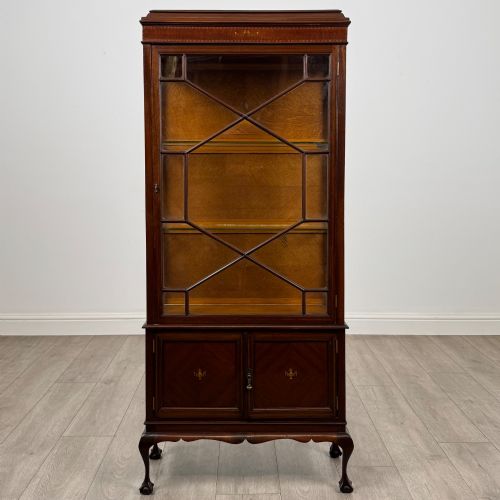
Cabinet makers built these pieces using solid mahogany and carefully selected veneers, complemented by glass panels for visibility. Brass fittings such as hinges, escutcheons and handles secure the doors and drawers.
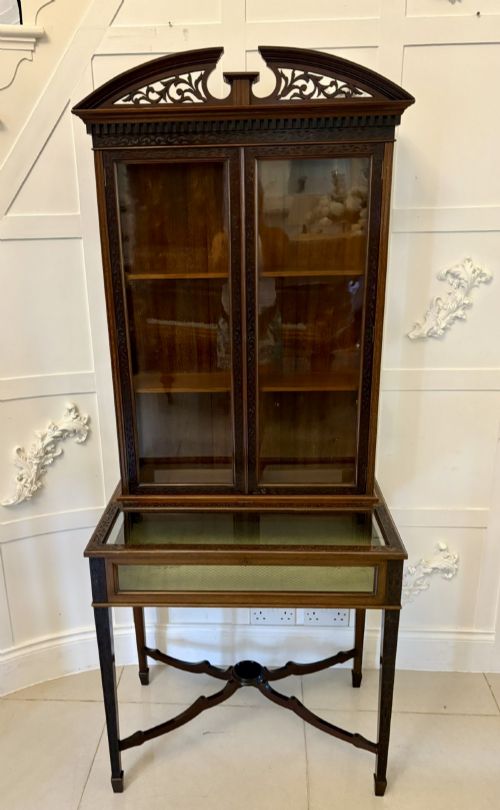
Decoration relied on satinwood inlay and stringing to create geometric or floral borders across the timber surfaces. Ormolu mounts and fabric linings occasionally enhance specific vitrines and bijouterie tables.
Joinery methods ensured stability for tall glazed structures, balancing heavy glass doors with sturdy plinths and cornices. Skilled hands shaped timber into curved glazing bars and slender legs suited to Edwardian and revival tastes.
Listings feature Edwardian, Georgian, and 19th-century periods, utilising mahogany, glass, brass, satinwood, and ormolu.
Judging the work
Quality rests on the depth of the timber grain, the precision of the satinwood inlay and the crispness of any carved details. Superior cabinets display harmonious proportions where every section feels balanced and deliberate.
The execution of the glazing bars demonstrates the maker's competence, with slender, well-fitted wooden frames holding the glass securely. Interior elements, such as fitted shelves and clean fabric backings, complete the construction.
Refined pieces show meticulous attention to secondary timbers and hidden joints, maintaining structural integrity alongside visual elegance.
Maple and Co
The Standing Mahogany Display Case Glossary
- Vitrine
- A glass-fronted cabinet designed specifically for displaying curiosities and fine porcelain. These pieces prioritise visibility from multiple angles.
- Satinwood inlay
- A contrasting light wood set flush into the darker mahogany surface to create decorative lines or motifs. This technique defines many Edwardian pieces.
- Bijouterie table
- A glass-topped display case on legs used for showing small valuables and jewellery. They often feature hinged lids lined with fabric.
- Glazing bar
- The narrow wooden strip holding individual panes of glass within a door or window frame. Delicate bars require high joinery skill.
- Stringing
- Thin lines of contrasting timber inlaid into furniture surfaces as a delicate border. It provides subtle definition to cabinet doors and cornices.
Standing Mahogany Display Case: Frequently Asked Questions
What is a standing mahogany display case used for?
These cabinets serve to protect and display collections of porcelain, silver, books and curiosities. The glazed doors keep dust away while allowing objects to remain visible in principal rooms.
Historically, they filled drawing rooms and libraries where hosts exhibited their most prized acquisitions to visitors. Today, they perform the same function in domestic interiors.
How do I date a mahogany display case?
Dating relies on stylistic clues, timber characteristics and construction methods observed across the piece. Edwardian examples often feature lighter proportions and satinwood stringing, whereas Georgian pieces display heavier timber framing and architectural cornices.
Revival styles from the late nineteenth and early twentieth centuries frequently emulate eighteenth-century aesthetics but retain distinct period hardware and interior linings.
Where should I place a display cabinet?
Position the cabinet against a sturdy interior wall away from direct sunlight to protect timber finishes and fabric linings. Adequate clearance around doors ensures they open fully without obstruction.
Placing the piece where ambient light catches the glass enhances the visibility of the contents inside.
Are corner display cabinets practical?
Corner cabinets utilise awkward room junctions efficiently, turning unused angles into focal points for display. Their triangular footprint allows them to fit snugly into dining rooms and drawing rooms.
They offer ample shelf space behind glass doors while preserving open floor area in smaller spaces.