
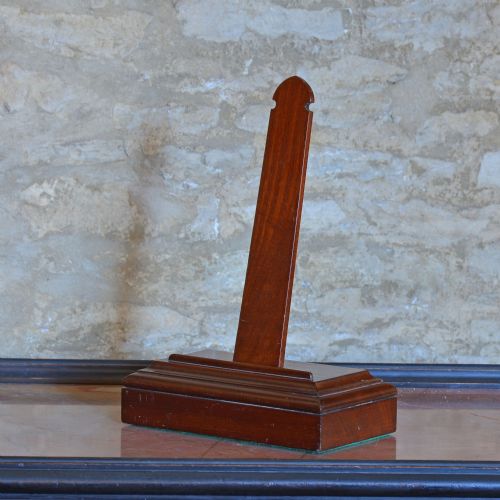
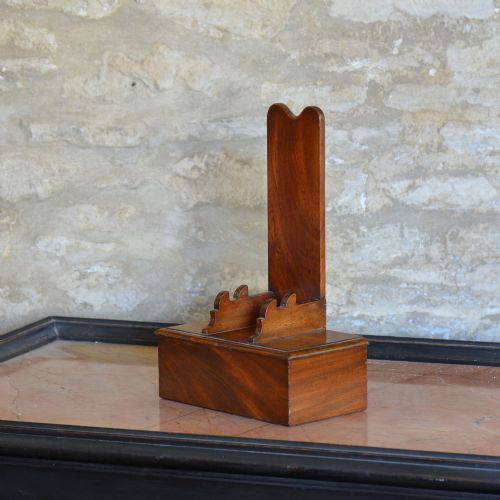


Standing Mahogany Book Rack
A standing mahogany book rack holds volumes close to hand, combining practical storage with the rich grain of native and exotic timbers.
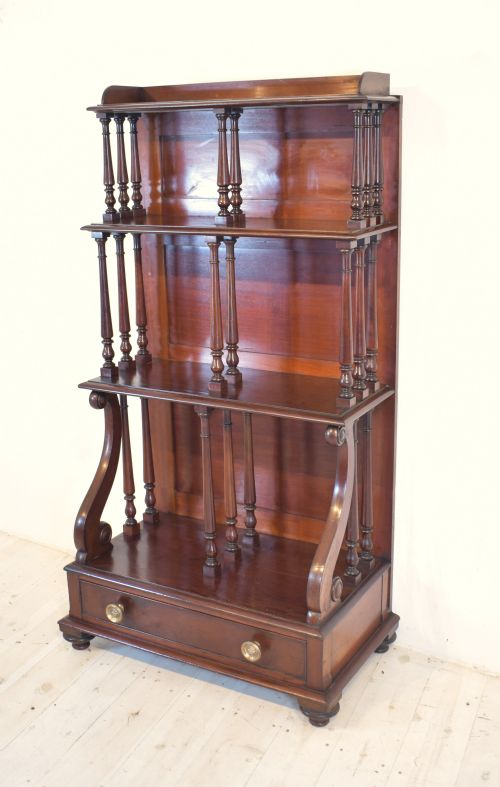
Standing Mahogany Book Rack
When searching for a standing mahogany book rack, collectors encounter a diverse array of open bookcases, revolving bookstands, troughs, and tiered whatnots designed for domestic libraries and studies. These pieces span multiple eras, with strong representation from the Georgian, Victorian, and Edwardian periods.
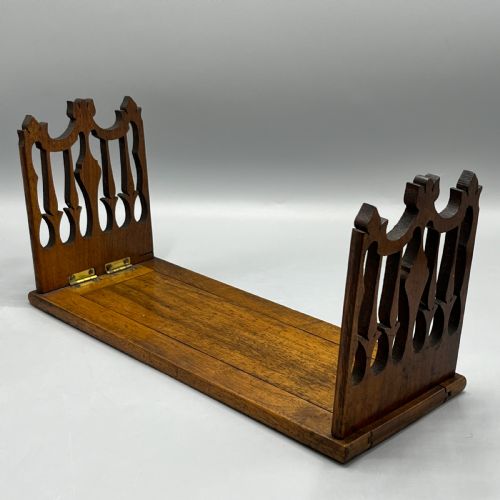
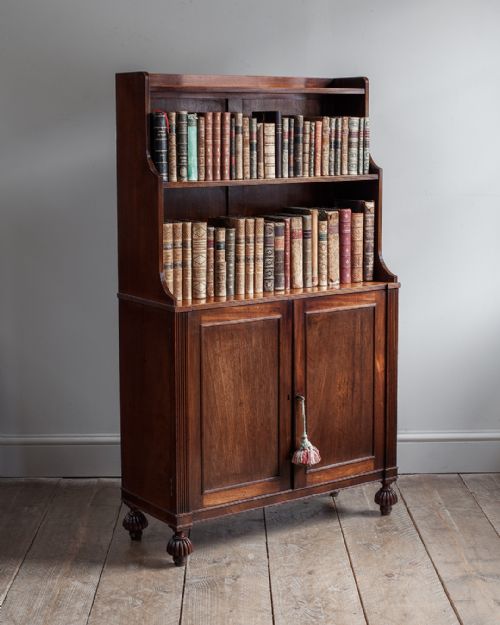
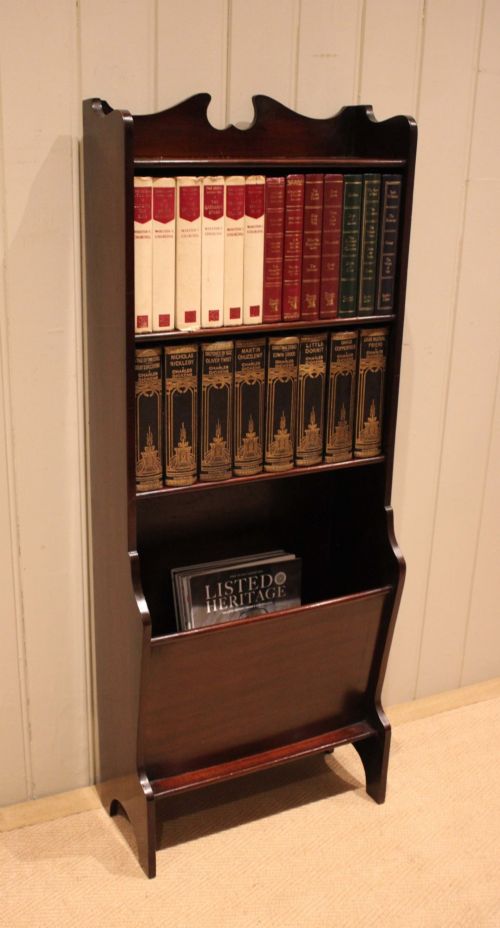
The versions most frequently met on this page include compact Edwardian table-top and floor-standing book troughs, alongside nineteenth-century revolving bookstands and larger open shelving units. Makers and manufacturers adapted these forms to suit changing reading habits, producing items that range from simple table accessories to substantial library furniture.
Materials and construction methods
Cabinetmakers utilised solid mahogany and flame mahogany veneers as the primary timber, frequently enhancing surfaces with satinwood inlay, rosewood, and walnut accents. Brass mounts, hinges, and carrying handles appear regularly to reinforce structural joints and provide functional adjustment mechanisms.
Joinery techniques rely on traditional cabinet construction, incorporating slotted divisions, spindle galleries, and revolving platform mechanisms supported by cast iron or brass components. Secondary materials such as felt linings and marble tops add weight and texture to specific tabletop and revolving variants.
Patent mechanisms allowed Victorian readers to spin their entire library with a gentle nudge while sitting by the fire.
Judging execution and material selection
The distinction between standard production and exceptional quality rests upon the selection of timber figures, such as flame mahogany, and the crispness of inlaid details. Superior pieces display harmonious grain matching across expansive surfaces and refined proportions that balance utility with architectural elegance.
Mechanical components also dictate the standard of execution, particularly in revolving bookstands and patent slides where smooth rotation and robust internal framing separate workshop standards. Original brass hardware, intact galleries, and subtle decorative carving further indicate higher tiers of craftsmanship.
Waring and Gillows·Betjemanns·Harrods
The Standing Mahogany Book Rack Glossary
- Book trough
- An open-topped container designed to hold books in an upright or slightly angled position for easy browsing. These pieces sit directly on tables or incorporate freestanding floor supports.
- Revolving bookcase
- A freestanding shelving unit mounted on a concealed pivot and cross-base, allowing users to access volumes from multiple angles without moving the furniture. They appear in both low table-top and taller floor-standing formats.
- Whatnot
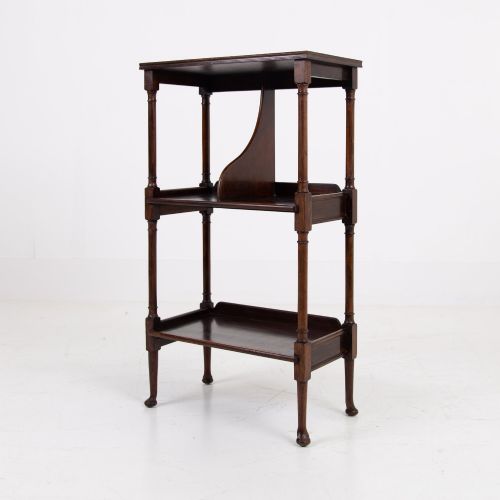
- A multi-tiered open shelving stand used for displaying books, ornaments, or household objects. The form evolved during the Georgian period and remained popular through the Victorian and Edwardian eras.
- Inlay
- A decorative technique where contrasting timbers or materials such as satinwood are fitted into recessed pockets within the mahogany surface. This method creates geometric or floral patterns across panels and friezes.
- Patent slide
- An adjustable mechanical book carrier fitted with expanding ends or folding brackets. Makers such as Betjemanns patented specific mechanisms to hold volumes securely.
Standing Mahogany Book Rack: Frequently Asked Questions
How do I tell an Edwardian bookstand from a Victorian one?
Edwardian pieces often display lighter proportions and delicate satinwood inlay work, reflecting the influence of Sheraton revival styles around nineteen hundred. Victorian examples tend to be heavier, sometimes incorporating Gothic revival motifs or robust brass mounts.
Examining the secondary timbers, construction joints, and overall weight helps clarify the likely period of manufacture.
Where were these pieces used in the home?
Standing book racks and troughs were placed beside reading chairs, on library tables, or in studies where reference volumes needed to be kept close at hand. Revolving models allowed readers to browse multiple encyclopaedias or novels from a single seated position.
Smaller variants also served in drawing rooms to display current magazines and music scores.
How do I care for mahogany book furniture?
Mahogany requires minimal maintenance beyond dusting with a soft, dry cloth to protect the polished surface. Keeping the timber away from direct heat sources and strong sunlight prevents the wood from drying out or fading over time.
Applying a light application of traditional wax polish occasionally helps preserve the natural lustre of the grain.