
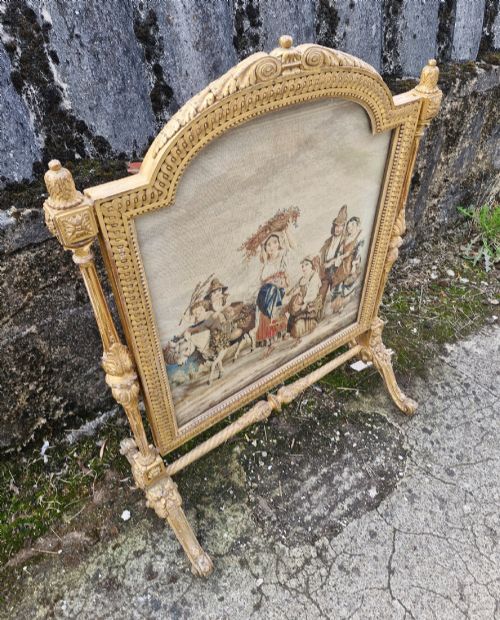
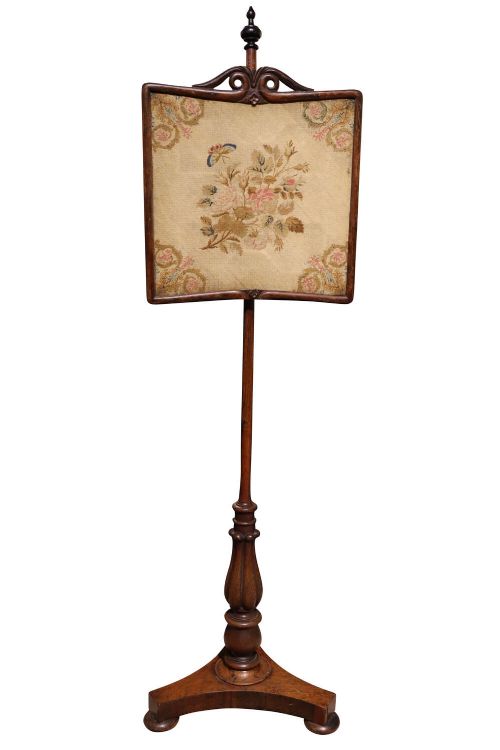
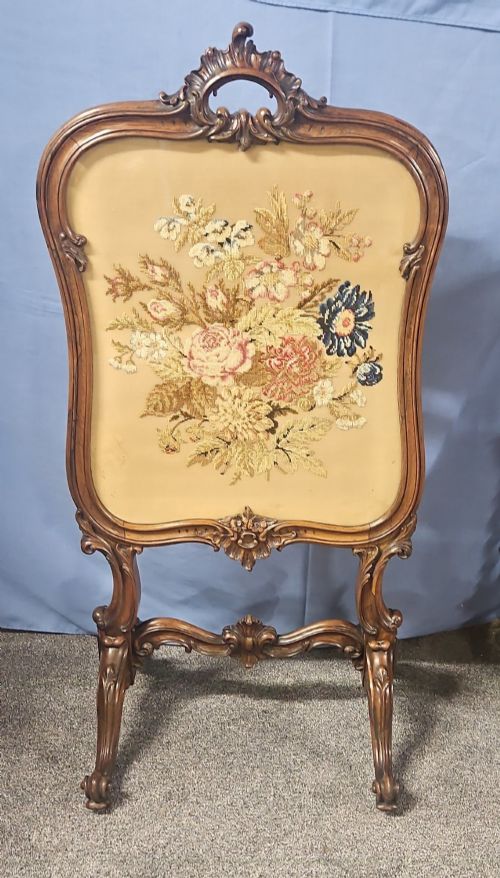


Standing Hearth Panel
These standing hearth panel pieces block winter drafts and protect complex needlework faces, offering warmth and adjustable defence against open fire heat.
Standing Hearth Panel
A standing hearth panel protects rooms from excessive open fire heat while doubling as a decorative needlework display. These objects appear mostly in Victorian and Regency guises, taking the form of pole screens or cheval frames.
Most examples found here utilise rosewood, mahogany, or oak to support delicate textile inserts. The vertical format allows the panel to slide up and down on a turned pole or pivot within a stable wooden frame.
Makers designed these screens to sit close to the fireplace mantel, moving easily on heavy pedestal bases. The textile or needlepoint face remains the visual centrepiece of the room, often depicting floral motifs or needlework scenes.
Materials and Construction
Carpenters turned dense timbers such as rosewood, mahogany, and walnut into slender support poles and heavy tripod bases. These wooden elements often feature carved details or gilded highlights that match period interior tastes.
Needlepoint, wool embroidery, and silk provide the decorative barrier held within the wooden frame. Skilled hands stitched these textile panels by framing stretched fabric before mounting them securely into adjustable grooves.
Textile inserts across these pieces range from wool needlepoint and silk embroidery to unusual poker work wooden panels.
Quality Variations
The sophistication of the needlework panel dictates the upper tier of quality. Original silk or wool embroidery showing dense, vibrant stitching elevates a piece far above simpler later replacements.
Timber selection and turning precision also divide ordinary examples from superior ones. Heavier rosewood bases with crisp, carved details demonstrate a higher grade of workshop production than plain pine or loosely fitted softwood joints.
The Standing Hearth Panel Glossary
- Pole screen
- A vertical standing hearth panel mounted on a central wooden shaft that allows the textile screen to slide vertically and rotate. This mechanism lets people adjust the screen height to block heat from the fireplace.
- Cheval screen
- A standing hearth panel supported by two upright side posts resting on floor feet rather than a central pole. The textile frame pivots freely between these vertical supports.
- Needlepoint
- A counted or stitched embroidery technique worked over an open-weave canvas ground using wool or silk yarn. This forms the decorative face of the fire screen.
- Chinoiserie
- A decorative style reflecting European interpretations of Chinese artistic traditions, often seen in painted or lacquered wooden frames. It enjoyed particular popularity during the Regency period.
- Poker work
- A decorative technique using heated metal tools to burn designs into wood surfaces. This appears on specialised adjustable panels.
Standing Hearth Panel: Frequently Asked Questions
What is a standing hearth panel?
A standing hearth panel is a decorative barrier placed near an open fireplace to shield occupants from radiant heat. These pieces typically feature an adjustable textile face mounted on a wooden frame or pole.
Historically, they also served to protect complex needlework and prevent facial cosmetics from melting under excessive heat. Today they function primarily as decorative period furniture.
How do you use a pole screen?
A pole screen is positioned near a fireplace so the textile panel faces the hearth. Users slide the screen up or down on its central shaft to block warmth.
The ability to rotate the panel allows people sitting nearby to direct the shade precisely where needed. This makes the object both practical and adaptable.
How do I identify Regency screens?
Regency standing hearth panels often display cleaner classical lines, rosewood or palisander timbers, and sometimes Chinoiserie decoration. The turning on the central poles tends to be crisp and restrained.
Victorian examples that follow often incorporate heavier carving, walnut frames, or more elaborate Rococo Revival details. Comparing the timber choice and decorative motifs helps clarify the period.
Are the needlework panels original?
Many standing hearth panels retain their period needlepoint, wool work, or silk embroidery. Close inspection of the fabric tension, yarn fading, and backing materials helps determine authenticity.
Because textiles wear out near fires, some panels receive later replacement stitching. Both original and period-appropriate replacement needlework have a place in historic interiors.