




Standing Glass Corner Cabinet
A standing glass corner cabinet turns wasted room angles into display space, housing collections safely behind paned doors.
Standing Glass Corner Cabinet
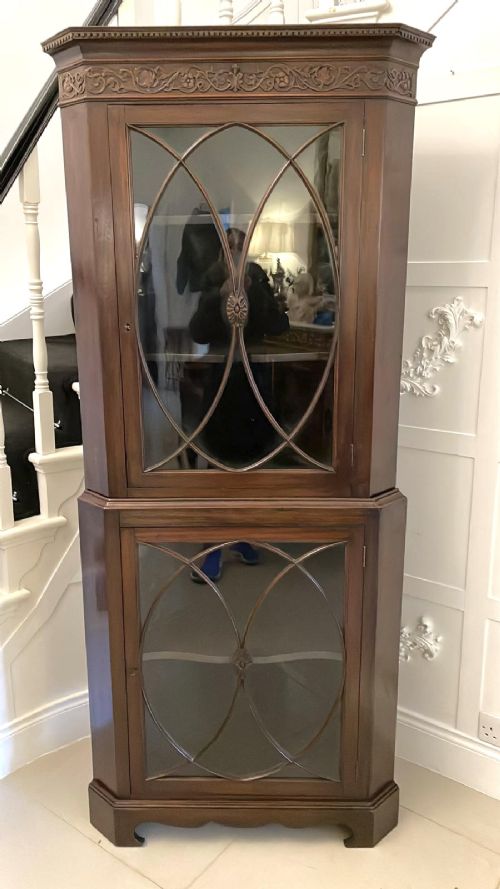
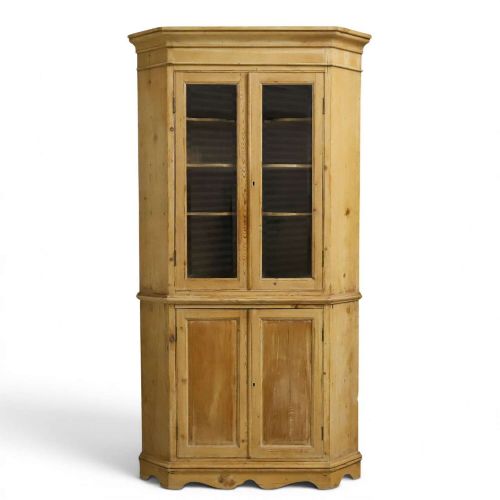
A standing glass corner cabinet fits snugly into room junctions, using vertical display space that standard cupboards leave empty. These freestanding pieces range from compact single-door cupboards to taller double-height and two-part variants.
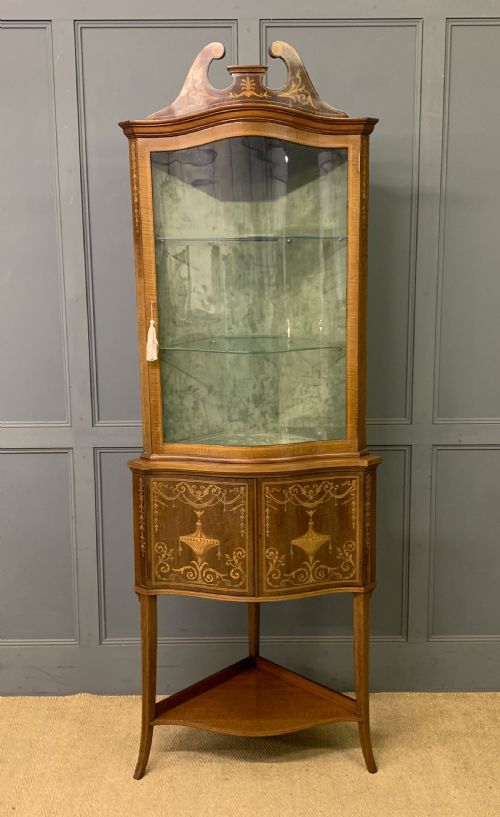
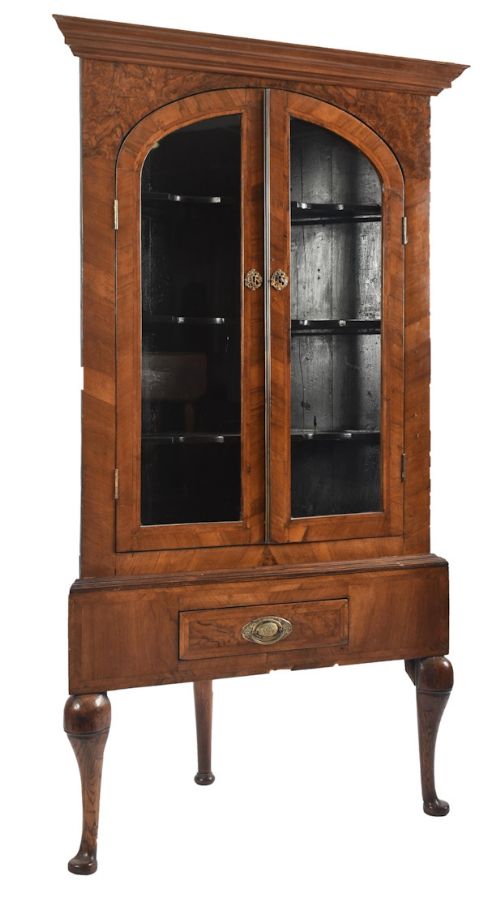
The selection here draws heavily from the Edwardian period and the nineteenth century, alongside earlier eighteenth-century Dutch examples. Common timber choices include mahogany, satinwood, and pine, frequently finished with delicate inlay work.
Forms vary from bow fronts and serpentine shapes to simpler rectilinear designs. Glazing styles include classic astragal bars that divide the glass into smaller panes for a traditional aesthetic.
How they were made
Cabinetmakers built these pieces using solid timbers and carefully selected veneers such as flame mahogany or burr walnut over secondary woods like pine. Frames incorporate structural joinery designed to support the weight of heavy glass doors and internal shelving.
Decoration relied on fine marquetry, satinwood inlay, and brass hardware, while glazing required precise woodwork to hold individual glass panes securely in place.
Listings span several periods, with Edwardian and nineteenth-century examples forming the majority alongside eighteenth-century pieces.
What varies in quality
Quality rests in the choice of timber and the precision of the cabinet work, particularly around the curved bow fronts and serpentine shapes. Finer examples display meticulous marquetry and well-fitted doors that hang true without sagging.
The sophistication of the glazing bars and the choice of secondary woods also separate standard workshop output from superior cabinet making.
Edwards And Roberts
The Standing Glass Corner Cabinet Glossary
- Astragal glazed
- A method where wooden bars divide a glass door into smaller geometric panes. This traditional technique provides structural rigidity while framing the contents.
- Bow front
- A convex curved cabinet facade that projects outward. It requires advanced woodworking skill to shape timber and fit glass to a consistent radius.
- Marquetry
- Decorative veneer patterns formed by fitting together contrasting pieces of wood or other materials. Craftsmen used this technique to create floral or geometric motifs on cabinet doors.
- Two-part form
- A piece constructed in two separate upper and lower sections stacked together. This construction method helped transport tall cabinets through narrow domestic doorways.
- Serpentine shaped
- A front contour featuring a convex centre flanked by concave curves. This undulating profile demands precise hand-shaping by the maker.
Standing Glass Corner Cabinet: Frequently Asked Questions
How do I place a corner cabinet?
These cabinets sit directly on the floor into any ninety-degree room junction, making use of awkward dead space. Ensure the floor is level so the doors hang properly and swing freely.
Position the cabinet away from direct sunlight to protect the timber finishes and any items displayed inside from fading.
What is a two-part corner cabinet?
A two-part corner cabinet consists of a separate upper display section that rests upon a lower cupboard base. This stacked construction allows for easier transport and installation of taller furniture.
The pieces are designed to lock together securely at the mid-section, creating the appearance of a single tall standing unit.
How do I date a mahogany cabinet?
Dating relies on observing the timber characteristics, construction methods, and decorative styles present in the piece. Pieces from the Edwardian era often feature lighter satinwood inlay on darker mahogany bodies, whereas earlier eighteenth-century examples show simpler, heavier joinery.
Examining the interior secondary woods and the type of glass used in the doors also helps narrow down the period of manufacture.
Are these cabinets stable on carpets?
Standing cabinets require a stable foundation to prevent tipping, especially when the heavy glass doors are opened wide. Placing them on thick carpets may require small adjustments to ensure the frame remains upright and plumb.
Many period cabinets include mounting brackets or can be secured to the wall stud for absolute safety in busy rooms.