

Standing Book Shelves
Standing book shelves are freestanding furniture designed to hold libraries upright in rooms without relying on wall fixtures.
Standing Book Shelves
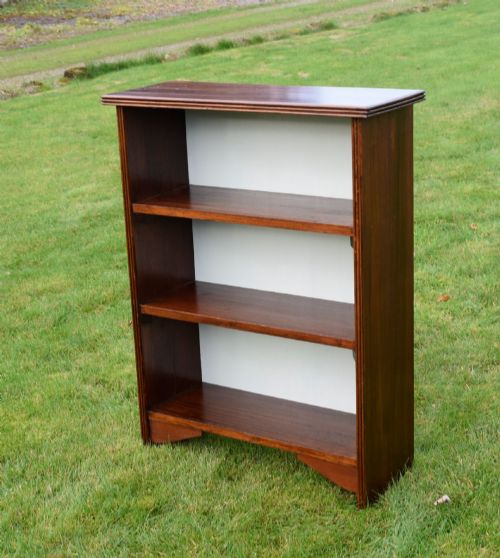
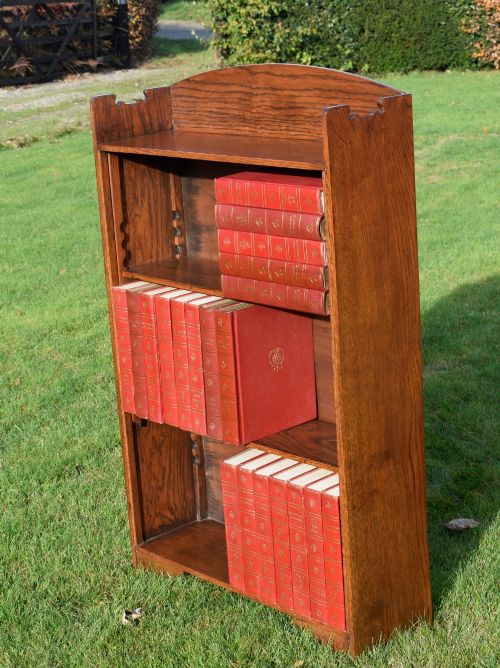
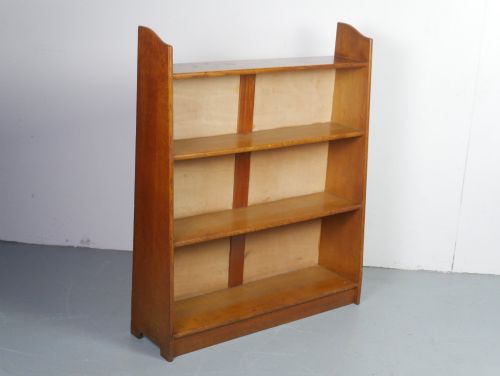
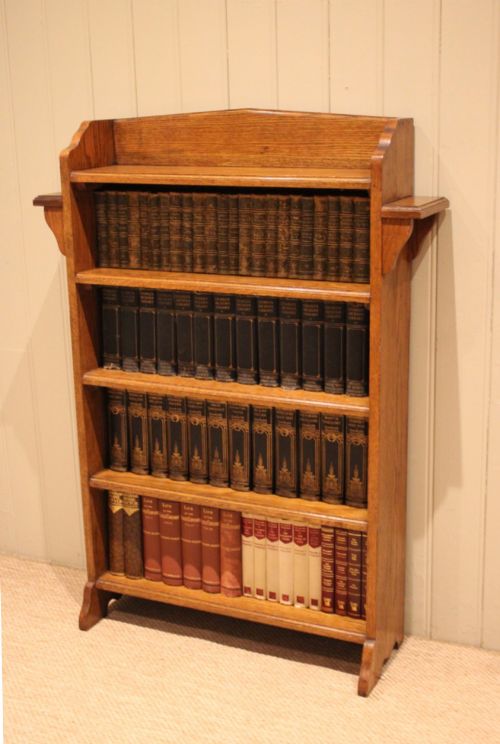
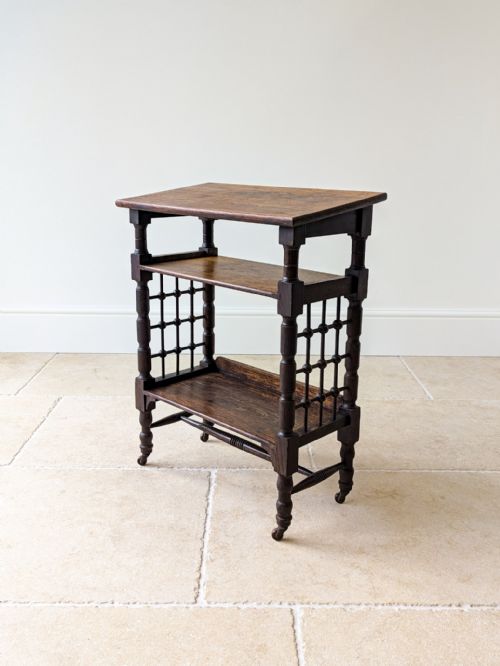
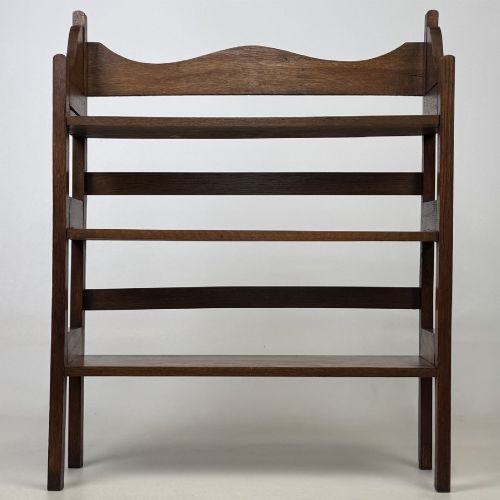
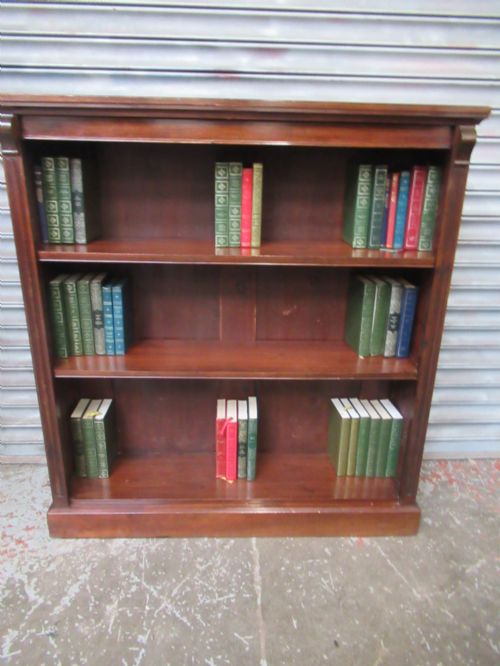
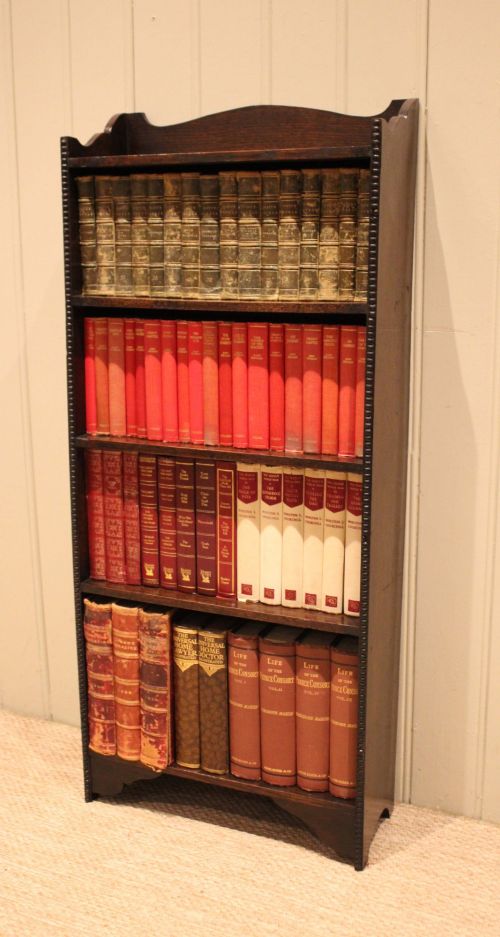
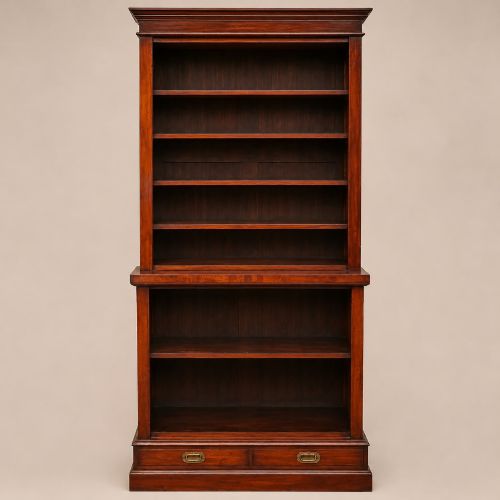
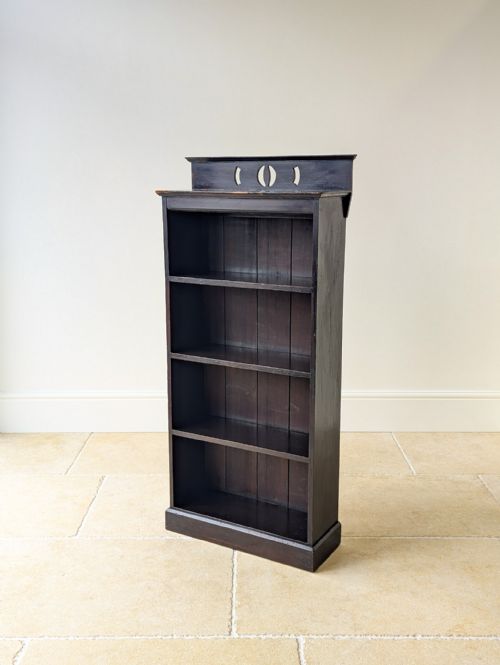
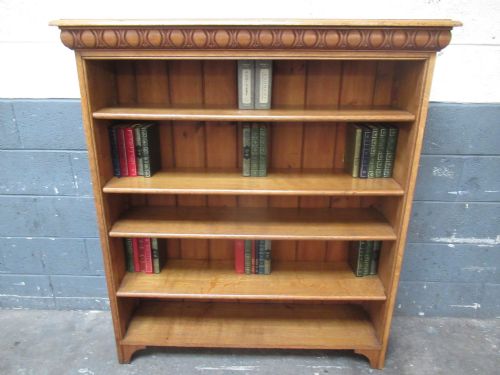
Standing book shelves span periods from the Georgian era through the Victorian and Edwardian periods into the early twentieth century. You will most frequently meet open oak or mahogany versions from the Edwardian years and the 1920s on this page. Pieces take the form of open bookcases, dwarf cases, tier stands, and whatnots designed to rest directly on the floor.
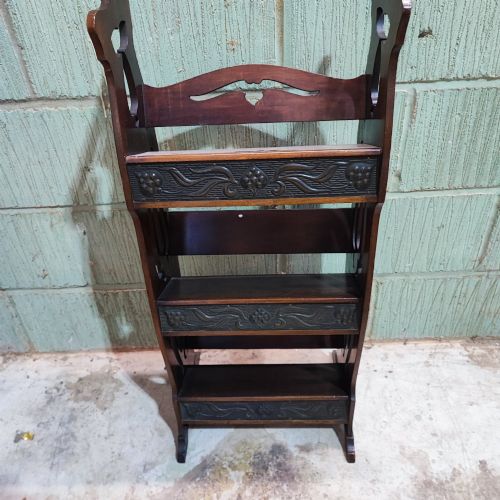
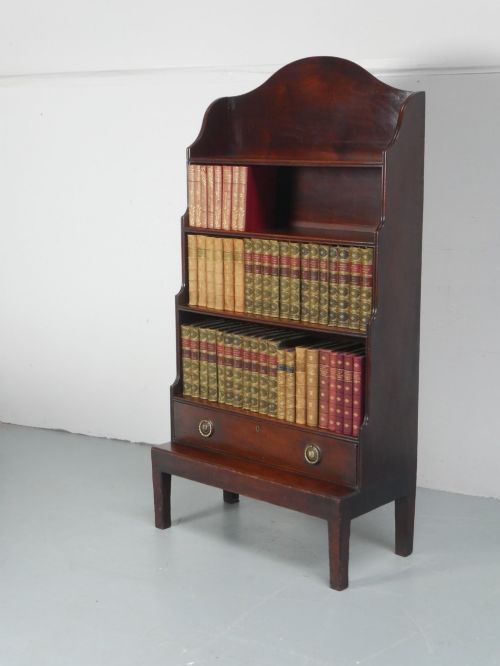
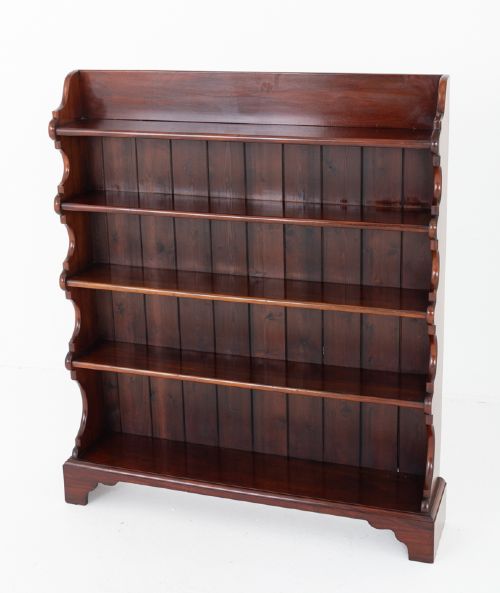
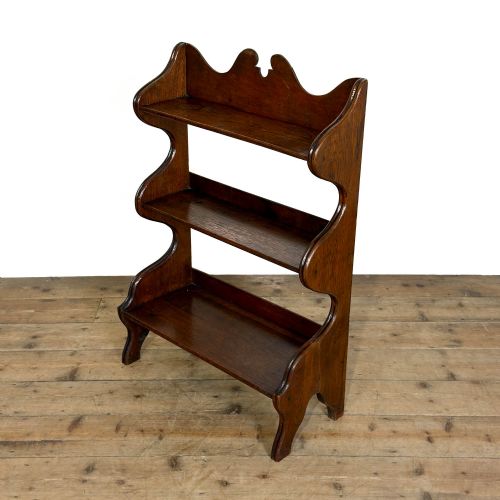
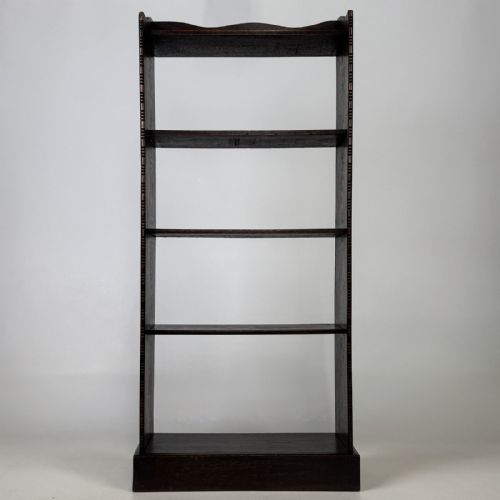
The materials reflect the timber preferences of each era, ranging from dark oak and rosewood to walnut, pine, and mahogany. Styles move between clean Arts and Crafts lines, carved Victorian motifs, and the tiered graduated drops of waterfall bookcases. These pieces served studies, libraries, and sitting rooms for housing working collections of volumes.
Makers and designers produced variations including revolving book tables, side tables with shelving, and library trolleys alongside standard upright cases. Proportions vary from tall narrow pillars to low dwarf shelves intended to sit beneath window lines. Each format addresses the practical storage of books in domestic interiors.
Construction and Materials
Cabinet makers utilised solid timbers such as oak, mahogany, walnut, and rosewood, often pairing denser woods with pine or beech for internal shelving and backs. Surfaces show polished finishes, bead-edged mouldings, and occasional inlay work in contrasting woods. Joinery relies on traditional pegged joints, fitted uprights, and adjustable shelf mechanisms.
Early examples employ hand-cut dovetails and turned supports, while later pieces incorporate pegged sides and simpler open frameworks. Waterfall designs graduate shelf depths from top to bottom, requiring precise angled joinery to maintain stability. Carved details on Victorian and Arts and Crafts pieces show hand chiselling directly into the solid timber.
Standing Book Shelves Retail Price Guide 2026
Typical asking prices for standing book shelves among the pieces listed under this phrase on Sellingantiques today, from the lower quarter to the upper quarter. They describe what is for sale here now, not the wider market.
Some Edwardian oak shelves come with magazine racks attached for the morning papers.
Assessing Quality
Quality rests on the selection of timber and the integrity of the structural joinery rather than ornamentation alone. Dense, well-figured mahogany or quarter-sawn oak with medullary rays denotes a higher grade of material choice. Adjustable shelving mechanisms that operate smoothly without binding demonstrate careful initial fitting.
Proportion and stability separate standard utility pieces from finer cabinet work. Pieces that stand square on the floor without wall support reveal balanced weight distribution and sound carcass construction. The crispness of carved mouldings and the tightness of joints indicate the standard of workshop execution.
Gillows·Heals
The Standing Book Shelves Glossary
- Waterfall bookcase
- A set of open shelves that steps outward in depth from top to bottom. Each tier mirrors the line of the one above it.
- Dwarf bookcase
- A low standing bookshelf designed to sit below window height. These pieces often feature adjustable shelving and open fronts.
- Étagère
- A French term for an open tiered piece of furniture. It serves a similar function to a whatnot for holding portable volumes.
- Peg sided
- A construction method where upright shelf supports are secured with visible wooden pegs. This technique appears frequently on nineteenth-century workshop pieces.
Standing Book Shelves: Frequently Asked Questions
What is a standing book shelf?
A standing book shelf is a piece of freestanding furniture that supports books on horizontal surfaces without needing wall attachment. These units sit directly on the floor in rooms of any layout.
Designs range from low dwarf cases to tall narrow pillars with multiple tiers. They provide accessible storage for reading material across domestic spaces.
How do I date an antique bookshelf?
Dating relies on observing the timber species, construction techniques, and stylistic ornament present on the frame. Victorian pieces often feature heavier carved details while Edwardian and 1920s items lean toward simpler oak configurations.
Hardware such as shelf adjustment pegs and backboard construction methods further clarify the period of manufacture. Comparing these elements with documented regional styles confirms the era.
Are these shelves sturdy enough for heavy books?
Period standing bookshelves were constructed from dense hardwoods like oak, mahogany, and walnut to support heavy libraries. Solid timber uprights and thick shelves handle standard volumes securely.
Adjustable shelf variants allow you to configure vertical spaces for oversized folios or smaller novels. Solid construction ensures stability under daily domestic use.
Where should I place a freestanding bookcase?
Freestanding bookcases function best against solid walls or serving as room dividers where their finished backs permit. Low dwarf shelves fit well beneath windows without blocking light.
Placing them away from direct heat sources protects the timber and bindings from drying out over time. Their mobility lets you rearrange study and living areas easily.