



Staffordshire Pottery Relief
Staffordshire pottery relief objects bring character and history into a room through their textured surfaces and traditional forms.
Staffordshire Pottery Relief
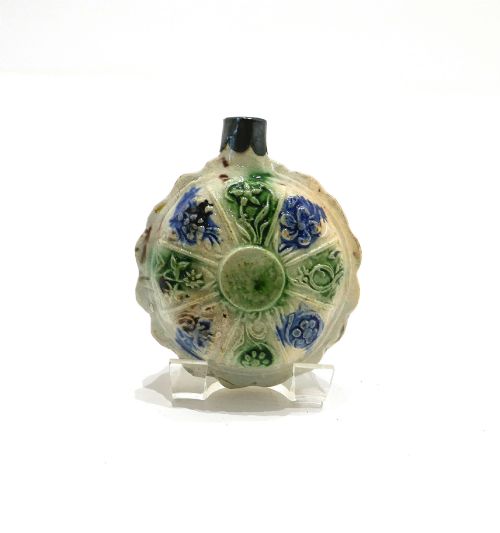
Staffordshire pottery relief pieces include jugs, mugs, tea caddies, cheese domes, and flasks produced across the eighteenth and nineteenth centuries. These items serve both functional and decorative purposes in domestic settings, showcasing moulded designs that stand proud of the body.
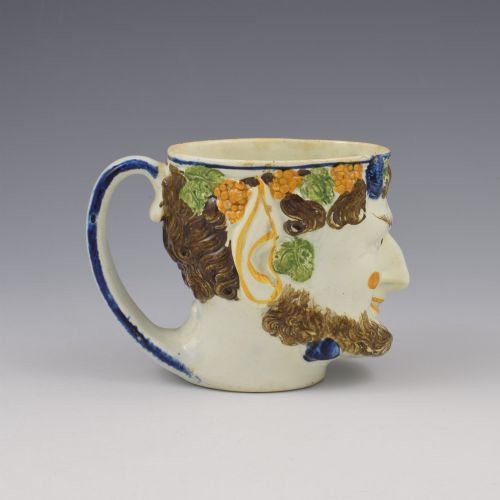
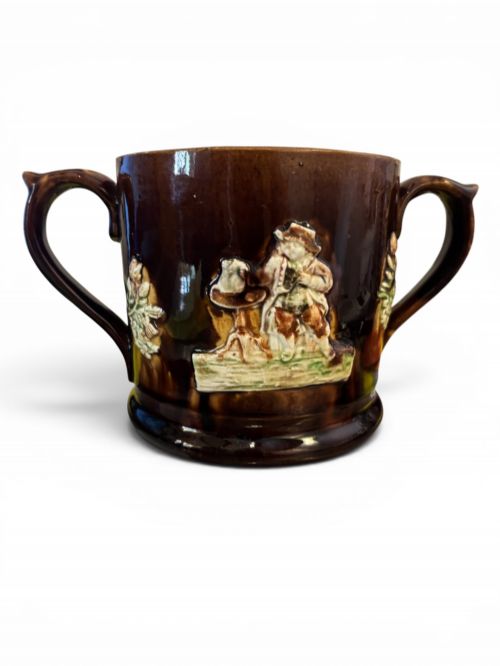
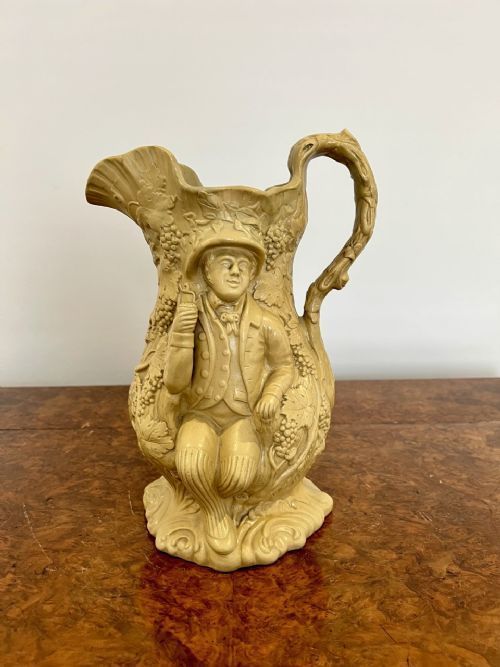
The most common examples encountered on this page are jugs and mugs featuring moulded motifs, often finished with coloured glazes or blue and white transfer printing. Makers from the Georgian and Victorian eras dominate the selection, offering everything from large ale tankards to delicate tea wares.
Collectors encounter various forms spanning English country pottery to refined factory productions like jasperware and majolica. Each piece reflects the daily life, tastes, and social habits of historical Britain through its distinct ornamentation.
How they were made
Potters utilised earthenware, pearlware, and stoneware as the primary bodies for these moulded objects. Earthenware and pearlware provided a pale, smooth ground suitable for receiving colourful underglaze oxides and lead glazes.
Moulding techniques allowed workshops to press clay into carved metal or plaster moulds, creating sharp, raised decorative reliefs of figures, foliage, and animals. Finished pieces then underwent kiln firing and glazing to secure the surface colours and ensure durability.
Staffordshire Pottery Relief Retail Price Guide 2026
Typical asking prices for staffordshire pottery relief among the pieces listed under this phrase on Sellingantiques today, from the lower quarter to the upper quarter. They describe what is for sale here now, not the wider market.
Surprise frog mugs ensure that even a quiet Tuesday evening drink comes with a wet chin and a historical amphibian.
What varies in quality
Quality in staffordshire pottery relief items rests upon the crispness of the moulded detail and the precision of the glaze application. Finer pieces maintain sharp, deep relief work where facial expressions and botanical veins remain distinct, whereas lesser examples show softened or blurred edges from worn moulds.
The sophistication of the colour palette also separates standard production from superior output. Hand-painted underglaze oxides or carefully controlled majolica and jasperware finishes demand greater skill than simple monochrome dipping, elevating the visual depth of the finished vessel.
James Dudson·Enoch Wood And Sons·Jones And Walley·Sherwin And Cotton·Copeland Spode·George Jones
The Staffordshire Pottery Relief Glossary
- Pearlware
- A refined earthenware developed in the late eighteenth century featuring a thin lead glaze with a slight bluish tinge that pooled in crevices. This innovation bridged the gap between creamware and later white earthenwares.
- Relief moulded
- A technique where designs are pressed outward from the body of the ceramic using a mould, creating a three-dimensional surface texture. This method allowed potters to achieve consistent ornamentation across tableware.
- Jasperware
- A fine-grained, unglazed stoneware developed with coloured bodies and contrasting applied white relief ornaments. It became especially popular for decorative pieces like cheese bells and cache pots.
- Majolica
- A colourful, lead-glazed earthenware characterised by rich, flowing polychrome enamel colours applied over an opaque tin or lead glaze. Victorian makers utilised this technique for vibrant botanical and figurative jugs.
- Frog mug
- A traditional drinking vessel featuring a small ceramic frog modelled inside the base, designed to surprise the drinker as the liquid drained. These mugs frequently recorded measure capacities and tavern scenes.
Staffordshire Pottery Relief: Frequently Asked Questions
What is a frog mug?
A frog mug is an ale tankard containing a small, three-dimensional ceramic frog positioned inside the bottom of the vessel. As the drinker finished their beverage, the hidden figure would appear as a playful surprise.
These mugs often feature substantial capacities, such as Winchester measures, and record tavern life or political sentiments from the nineteenth century.
How do I date staffordshire relief pottery?
Dating relies on observing the ceramic body, glaze characteristics, and stylistic markers recorded in the piece. Early examples from the eighteenth century typically utilise creamier pearlware bodies and Prattware colours, while Victorian pieces often display bolder majolica glazes or jasperware finishes.
Form and moulded motifs also provide clues, shifting from neoclassical George III designs to ornate floral and animal reliefs of the later nineteenth century.
Were these jugs used daily?
Many of these jugs and mugs served practical functions in domestic and tavern environments for pouring liquids like ale, water, or milk. Sturdy earthenware and stoneware bodies allowed them to withstand regular handling during meals and social gatherings.
Other forms, such as tea caddies and decorative cache pots, remained stationary in parlours and dining rooms for dry storage or house plants.
How should I clean my pottery?
Cleaning requires gentle washing with warm water and mild soap, using a soft cloth to protect the glazed surface and raised relief details. Avoid abrasive sponges or harsh chemicals that can damage historical lead glazes or soften earthenware bodies.
Allow the piece to dry thoroughly after washing, keeping it away from direct sunlight and extreme temperature fluctuations.