




Staffordshire Pottery Milk Jug
A staffordshire pottery milk jug brings practical earthenware into the daily routine with sturdy forms and hand-decorated charm.
Staffordshire Pottery Milk Jug
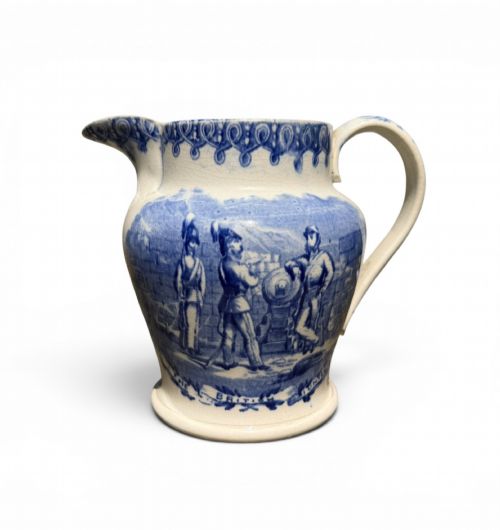
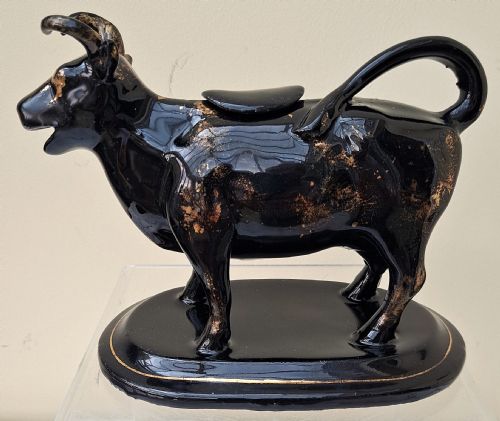
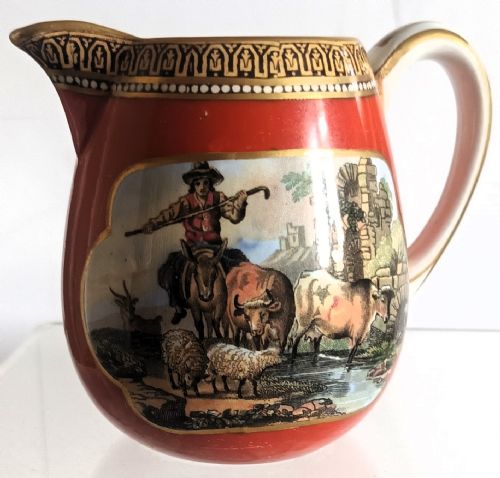
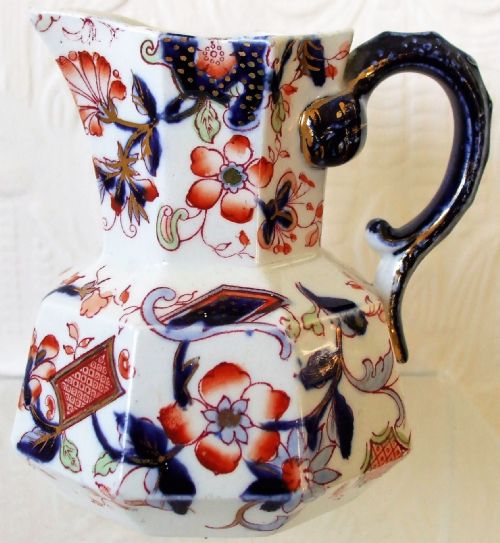
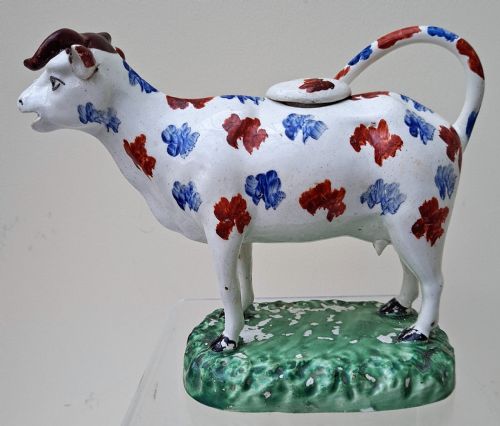
When you search for a staffordshire pottery milk jug, you enter a diverse field of earthenware vessels spanning the Georgian and Victorian eras. These range from functional cream jugs and creamers to decorative animal figures like cow creamers complete with milkmaid figures.
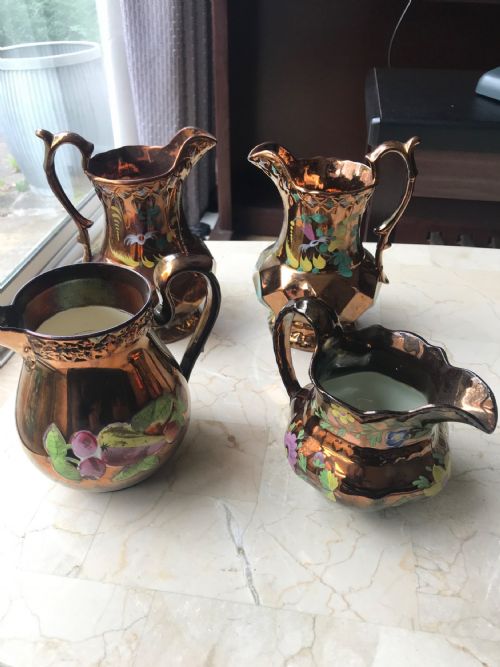
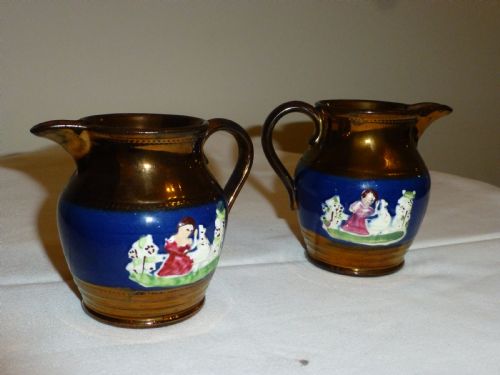
The versions you are most likely to meet on this page include copper lustre milk jugs hand decorated with fruit, transfer-decorated pearlware, and glazed ceramic creamers. Many items reflect distinct regional or folk art traditions from the nineteenth century.
How they were made
Potters shaped these vessels using earthenware and pearlware bodies, frequently applying glossy lead glazes to seal the porous clay. Surface decoration often relied on hand-painted enamel colours and copper lustre glazes to catch the light.
Transfer printing provided intricate purple or blue and white patterns, while specialist wares utilised rich black Jackfield glazes or delicate gilt detailing. Potters moulded whimsical forms such as cow creamers in sections before smoothing and firing the clay.
Listings span the nineteenth century, including Georgian, Regency, and Victorian periods, alongside specific dates from eighteen hundred to nineteen hundred.
What varies in quality
Heavier casting and muddy or misaligned glazes separate ordinary utility vessels from more ambitious decorative examples. The presence of well-preserved enamel colours and intact gilding also elevates the standing of a piece.
Keeling & Co.
The Staffordshire Pottery Milk Jug Glossary
- Pearlware
- A refined earthenware developed in the late eighteenth century featuring a subtle bluish glaze that pooled in recesses to mimic Chinese porcelain.
- Copper lustre
- A metallic glaze technique that imparts a reflective, coppery sheen to the ceramic surface, often paired with hand-painted polychrome fruit motifs.
- Cow creamer
- A whimsical ceramic container shaped as a cow, designed to be filled through a hole in the back and tipped to pour milk from the mouth.
- Pratt-ware
- An early type of English earthenware decorated under the glaze with specific muted oxide colours, commonly blues, ochres, and browns.
- Jackfield
- A glossy black-glazed earthenware originating in Shropshire and later adopted by Staffordshire potteries, frequently accented with gilt highlights.
Staffordshire Pottery Milk Jug: Frequently Asked Questions
What is a cow creamer?
A cow creamer is a novelty ceramic vessel shaped like a cow, often accompanied by a milkmaid figure, designed to serve cream or milk from the animal's mouth.
These pieces were popular items on Georgian and Victorian breakfast tables, combining functional utility with pastoral charm and playful design.
How do I date a lustre jug?
Dating relies on observing the weight of the ceramic, the intensity of the copper glaze, and the style of any painted or transfer-printed decoration.
Early nineteenth-century examples often feature pearlware bodies and softer transfer designs, while later Victorian versions tend toward heavier earthenware and brighter enamels.
Can I use these jugs daily?
While these are durable earthenware vessels, their age and historic glazes make gentle hand washing the safest approach for ongoing care.
Many collectors prefer to display them on open shelving or sideboards where the lustre finishes and folk art details can be enjoyed safely.
What is pearlware?
Pearlware is a refined white earthenware developed to bridge the gap between heavy creamware and expensive imported porcelain.
The distinct pale blue tint in the glaze helps distinguish it from later white earthenwares produced during the Victorian period.