



Staffordshire Porcelain Group
A Staffordshire porcelain group brings nineteenth-century domestic portraiture and pastoral whim to the mantelpiece with character.
Staffordshire Porcelain Group
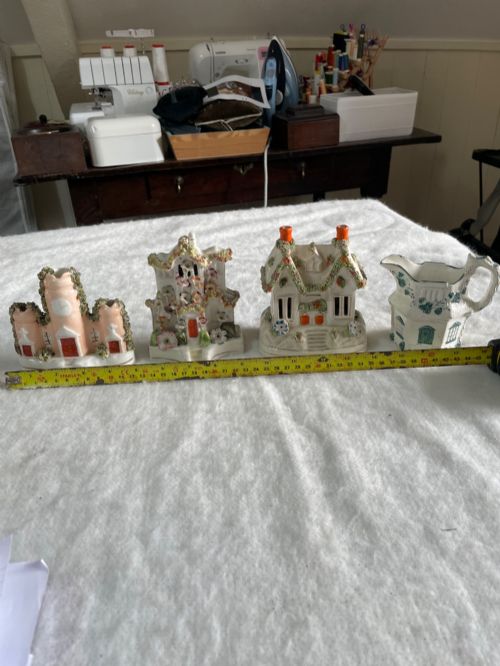
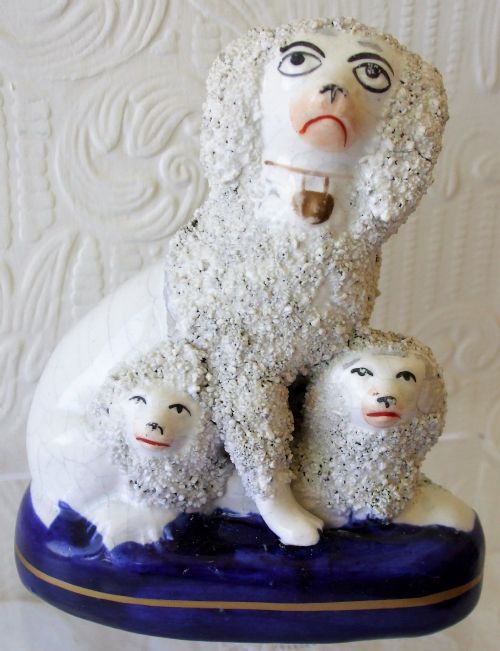
A Staffordshire porcelain group presents figurative ceramics from periods spanning the nineteenth century, including Victorian Staffordshire, Georgian, and Edwardian styles. Collectors find forms such as spill vases, flatback figures, and sculptural groups depicting poodles, deer, swans, and human subjects.
The most common examples on this page are nineteenth-century earthenware and pearlware figure groups. These range from early pastoral scenes to Victorian portrait pieces like the Tithe Pig and royal subjects.
Makers and makers' marks include regional potteries alongside works by Wedgwood and Co. Ltd. Pieces vary from simple animal studies to complex multi-figure historical groups designed for display.
How they were made
Potters shaped these figures from ceramic bodies such as earthenware and pearlware, applying lead glaze to seal the surface. Skilled hands then painted details using coloured enamels over or under the glaze.
Makers utilised moulds to form the figures and spill vases before firing them in kilns. Flatback figures were modelled primarily for display against a wall, leaving the reverse unadorned.
Staffordshire Porcelain Group Retail Price Guide 2026
Typical asking prices for staffordshire porcelain group among the pieces listed under this phrase on Sellingantiques today, from the lower quarter to the upper quarter. They describe what is for sale here now, not the wider market.
The listings span the nineteenth and early twentieth centuries, featuring earthenware, pearlware, and lead-glazed ceramic bodies.
What varies in quality
Early pearlware pieces often display finer potting and richer underglaze painting compared to later mass-produced Victorian flatbacks. The crispness of the mould impression dictates how well the original character survives beneath the glaze.
Wedgwood and Co. Ltd
The Staffordshire Porcelain Group Glossary
- Pearlware
- A refined earthenware developed in the late eighteenth century featuring a subtle bluish glaze that pools in crevices. It sits chronologically between salt-glazed stoneware and later Victorian bodies.
- Flatback
- A ceramic figure modelled with a finished front and a plain, unadorned reverse. These pieces were designed specifically to stand against a mantelpiece or wall.
- Spill vase
- A hollow cylindrical vase incorporated into a figure group to hold wooden spillers for lighting fires. They combine domestic utility with decorative ceramic sculpture.
- Earthenware
- A porous ceramic body fired at lower temperatures than porcelain and stoneware. It requires a glaze, such as lead glaze, to achieve an impermeable surface.
- Enamel
- Coloured glass fused to the surface of fired ceramics during a secondary low-temperature firing. It provides the vibrant reds, blues, and greens seen on nineteenth-century figures.
Staffordshire Porcelain Group: Frequently Asked Questions
What is a Staffordshire flatback figure?
A Staffordshire flatback is a ceramic sculpture designed to be viewed from the front only. The back is typically flat and unglazed or left plain because the piece stood against a wall.
Potters made them in large numbers during the Victorian era for domestic chimney-pieces. They often depicted royalty, theatrical scenes, or domestic animals.
How do I date a Staffordshire figure group?
Dating relies on stylistic clues, the type of ceramic body, and the character of the glaze. Early nineteenth-century pieces often utilise pearlware bodies with softer underglaze colouring.
Later Victorian examples typically feature denser earthenware and brighter enamel palettes. Makers' marks, where present, help narrow the period of manufacture.
What was the purpose of a spill vase?
A spill vase combines a decorative figurine with a small cylindrical holder. Households used them to store wooden spill sticks utilised for transferring flames from the hearth to candles or pipes.
They sit upright beside figures of animals or human subjects. This integration of ornament and utility characterises many nineteenth-century mantelpiece displays.
How should I care for antique ceramic figures?
Antique figures require gentle cleaning with a dry, soft brush to remove dust. Water and chemical cleaners can damage delicate enamel painted details and historical glazes.
Display them away from direct sunlight and areas subject to sudden temperature changes. Stable shelving protects these fragile earthenware bodies from accidental knocks.