



Staffordshire Pastorals
Staffordshire pastorals capture rural scenes on earthenware and enamel, offering tactile links to Georgian and Victorian country life.
Staffordshire Pastorals
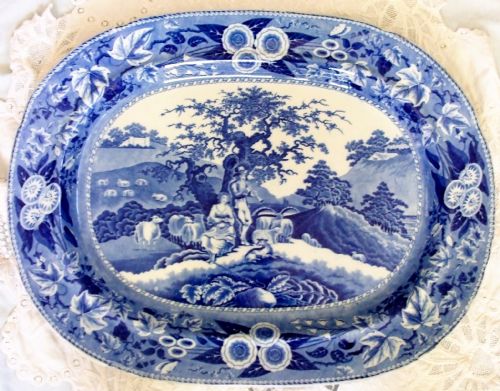
Staffordshire pastorals encompass earthenware pottery and enamel pieces depicting rural themes, such as the piping shepherd or the returning woodman. These items reflect the agrarian interests of the Georgian and Victorian eras through blue and white transfer printed tableware and moulded figures.
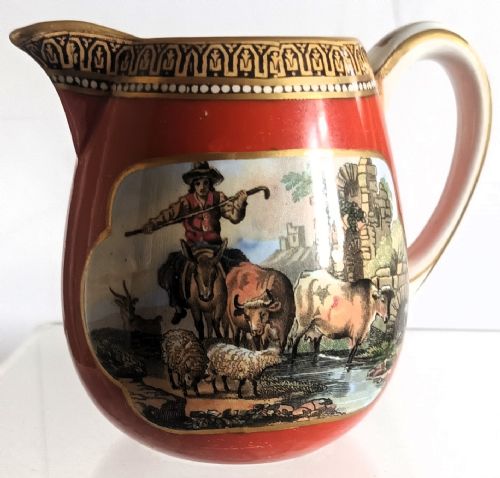
Buyers encounter transfer printed plates, platters, jugs, and figurines set against pastoral backdrops. The selection spans the eighteenth and nineteenth centuries, featuring subjects like milkmaids with cows and scenic country plaques.
Domestic service and display drove the creation of these objects, which range from large serving vessels to small decorative snuff boxes and flat-back spill holders. The form determines whether the piece functioned at the dining table or decorated a mantelpiece.
Materials and production methods
Earthenware and pearlware serve as the primary ceramic bodies, shaped into platters, jugs, and figures before receiving a glossy glaze. Potters utilised copperplate transfer printing to apply intricate blue and white pastoral scenes onto plates and footbaths.
Enamel works rely on copper bases coated with vitreous enamel, painted with detailed pastoral motifs and fired in kilns. Gilt accents and metal mounts frequently finish these smaller decorative boxes and wall plaques.
Staffordshire Pastorals Retail Price Guide 2026
Typical asking prices for staffordshire pastorals among the pieces listed under this phrase on Sellingantiques today, from the lower quarter to the upper quarter. They describe what is for sale here now, not the wider market.
Cows appear frequently on these pieces, enduring as steadfast companions to milkmaids and shepherds across centuries of ceramic design.
Assessing quality and craftsmanship
Clarity of the transfer print defines ceramic quality, with superior pieces showing sharp lines and deep cobalt blues without smudging. The crispness of moulding on figures and relief plaques indicates the skill applied during shaping.
Enamel pieces succeed through the fineness of hand-painted brushwork and the evenness of the vitreous surface. Smooth glazing and careful application of gilt highlights separate standard utilitarian vessels from finer cabinet examples.
Brameld & Co.·John Davenport
The Staffordshire Pastorals Glossary
- Transfer printing
- A method of applying an engraved design to pottery via paper from a copper plate. This technique enabled factories to produce uniform blue and white scenes efficiently.
- Pearlware
- A refined earthenware body perfected by Josiah Wedgwood that featured a pale bluish glaze to mimic Chinese porcelain. It dates predominantly from the late eighteenth and early nineteenth centuries.
- Pratt-ware
- Earthenware decorated with limited underglaze colours, typically blue, ochre, brown, and green. It is associated with early nineteenth-century Staffordshire production.
- Flat-back
- A term for Staffordshire figures designed to stand against a wall with an unglazed or minimal rear. This style became common during the Victorian period for mantelpiece display.
- Spill holder
- A hollow ceramic figure or vase designed to hold taper matches for lighting fires or pipes. They often incorporated rustic figures and animals.
Staffordshire Pastorals: Frequently Asked Questions
What are Staffordshire pastorals?
Staffordshire pastorals are ceramic and enamel items featuring rural and agrarian scenes. They include blue and white transfer printed plates and earthenware figures.
Potters in the Midlands produced these objects during the Georgian and Victorian periods for domestic use and display.
How were blue and white plates made?
Potters engraved copper plates with pastoral designs, inked them, and transferred the image onto paper. This paper was pressed onto the unfired earthenware before glazing and firing.
This technique allowed factories to mass-produce detailed scenes like the returning woodman consistently.
Where were these pieces displayed?
Large platters and footbaths served practical functions in dining rooms and service areas. Figures and spill holders stood on mantelpieces in domestic parlours.
Enamel snuff boxes and plaques were kept as personal pocket items or mounted on walls.
How do I date a Staffordshire figure?
Early figures from the Georgian period often feature hollow bases and simpler modelling. Victorian examples frequently utilise flat backs designed for mantel display.
Glaze appearance and the presence of underglaze colours also help distinguish between eighteenth and nineteenth-century production.