

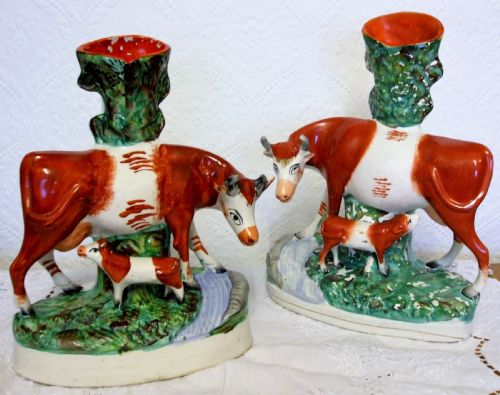


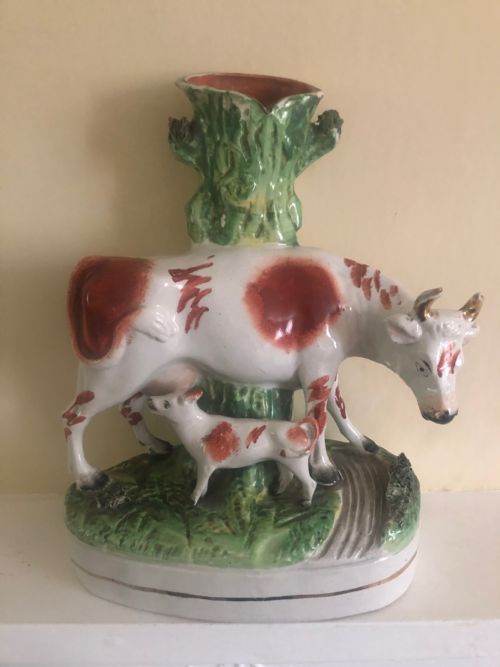


Staffordshire Figure Spill
These Staffordshire figure spill pieces combine functional matchholders with earthenware portraiture, offering a glimpse into Victorian parlour mantelpieces.
Staffordshire Figure Spill
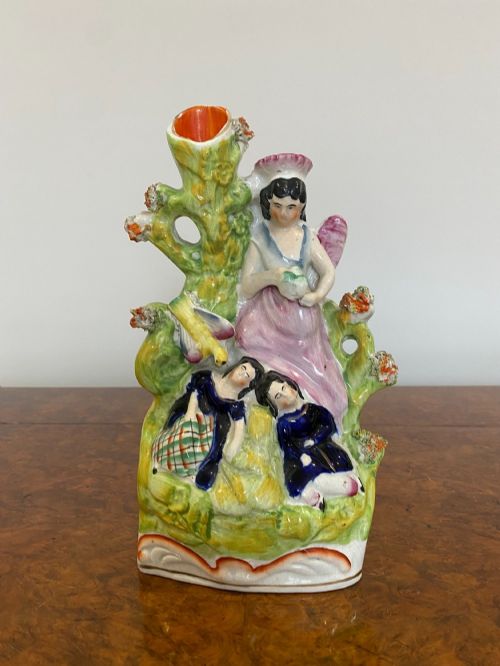
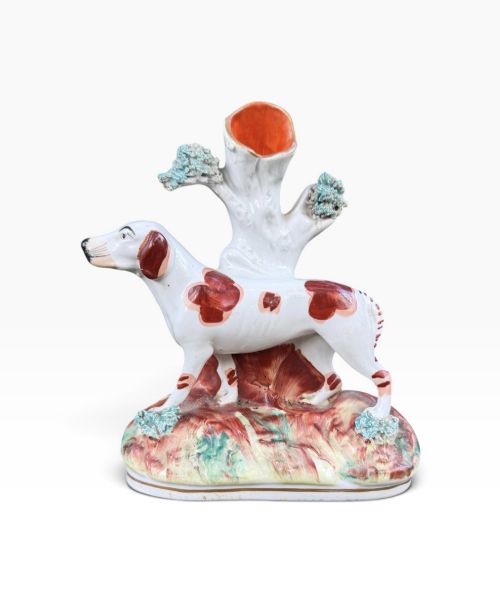
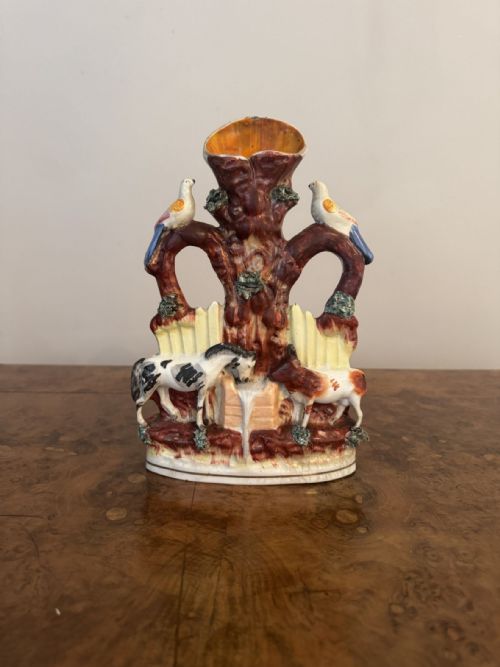
A Staffordshire figure spill serves as both a decorative ceramic figurine and a practical holder for wooden tapers used to light fires and pipes. These pieces take the form of animals, literary groups, and historical figures accompanied by a cylindrical tube designed to contain the spill.
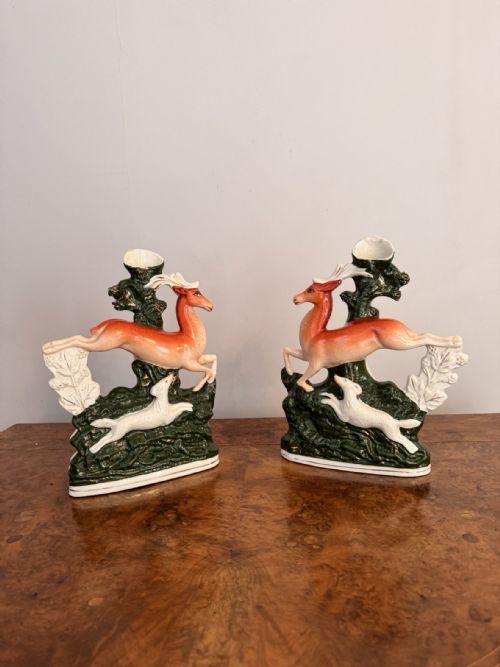
Most examples encountered date from the nineteenth century, spanning the Victorian era from eighteen fifty to nineteen hundred. Collectors frequently find pairs depicting animals such as deer, lions, dogs, and sheep, alongside human figure groups like Scots harvesters and the Band of Hope.
Materials and construction
Potters shaped these items from earthenware and pearlware, applying lead glaze to seal the porous ceramic body. Artisans then hand-painted the details using enamel colours and occasionally added gold leaf highlights to enhance the decorative surface.
The construction typically relies on press-moulding techniques common in Staffordshire potteries during the Victorian period. Most are flatback figures designed to stand against a wall, incorporating an integrated spill vase rising behind the main subject.
Staffordshire Figure Spill Retail Price Guide 2026
Typical asking prices for staffordshire figure spill among the pieces listed under this phrase on Sellingantiques today, from the lower quarter to the upper quarter. They describe what is for sale here now, not the wider market.
Listings show earthenware and pearlware forms predominantly from the Victorian period, spanning between eighteen fifty and nineteen hundred.
Judging quality in Staffordshire figures
Scale and completeness also separate standard pieces from superior specimens. Large pairs and well-preserved animal groups with minimal glaze crazing command greater attention from buyers.
Thomas Parr factory·Walton
The Staffordshire Figure Spill Glossary
- Spill holder
- A hollow cylindrical vessel attached to a figure, designed to hold wooden matches or tapers. These tubes form an integral part of the pottery composition.
- Flat back
- A moulding method where the rear of the ceramic piece is left unadorned and flat. This allowed nineteenth-century makers to save materials and place the figures flush against a mantelpiece.
- Earthenware
- A porous type of pottery fired at lower temperatures, commonly used for nineteenth-century Staffordshire figures. It requires glazing to become impermeable to liquids.
- Pearlware
- A refined form of earthenware developed in the late eighteenth century, featuring a clear lead glaze with a faint bluish tint in the recesses. This material appears on early pieces in this tradition.
Staffordshire Figure Spill: Frequently Asked Questions
What were spill vases used for?
These vessels held thin wooden splints known as spills, which people used to transfer a flame from the fireplace to candles, oil lamps, or tobacco pipes before safety matches became common.
The cylindrical holder sat behind or beside the ceramic figure, keeping the tapers upright and close to hand on the mantelpiece.
How do I date a Staffordshire figure?
Dating relies on stylistic clues, manufacturing techniques, and the type of ceramic body. Victorian pieces from the mid to late nineteenth century often feature bright enamel colours and flat backs.
Earlier examples from the pearlware period show a characteristic blue-tinted glaze in the crevices, reflecting the distinct output of potteries operating before eighteen fifty.
Are these figures always found in pairs?
Many animal subjects, such as deer, lions, and dogs, were produced as mirrored pairs to ornament either end of a mantelpiece. Figures of this sort often show the animals facing one another.
Human figure groups and literary scenes were more commonly made as single pieces, though matched pairs of harvesters or milkmaids do occur.
How should I clean my pottery spill vase?
Dust the glazed ceramic gently with a soft, dry brush to prevent dirt from settling into the crazing lines of the earthenware. Avoid using water or chemical cleaners, as nineteenth-century enamel colours and gold leaf can be delicate.
Keeping the piece away from direct sunlight and damp environments will help preserve the enamel and glaze over time.