







Staffordshire Ceramic Group
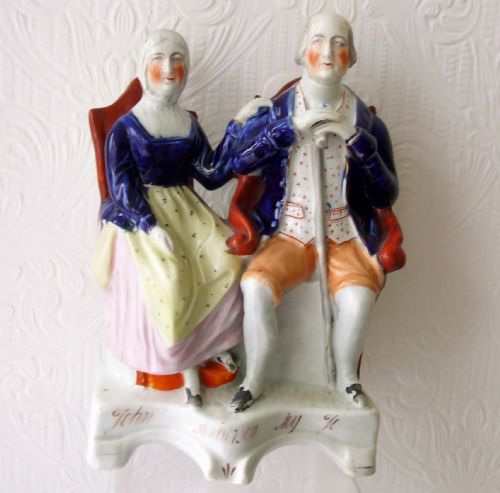
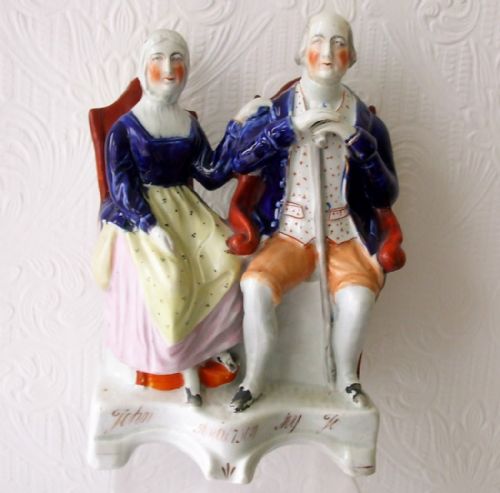
These Staffordshire ceramic group pieces are earthenware figures and spill vases from the eighteenth and nineteenth centuries that bring genuine folk character to a mantelpiece.
Staffordshire Ceramic Group
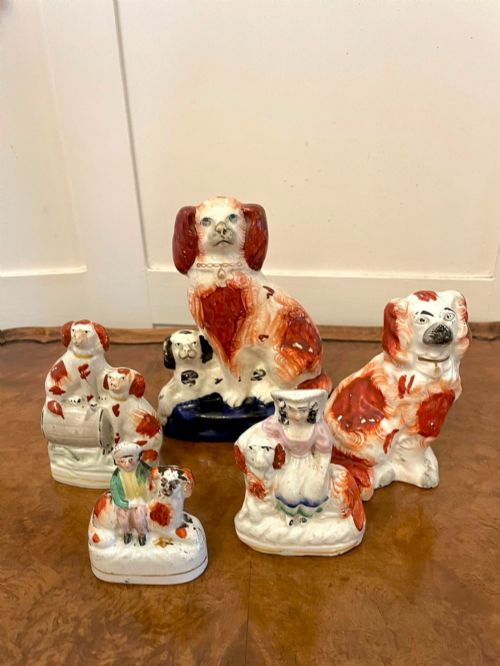
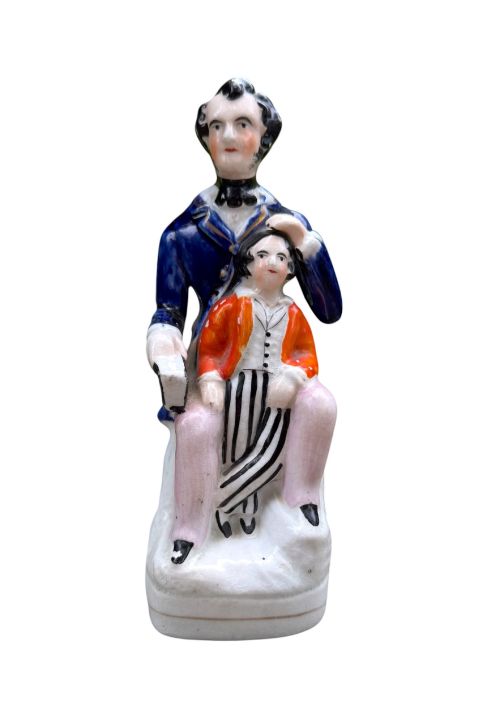
A staffordshire ceramic group comprises earthenware figures, spill vases, and flatbacks produced across the eighteenth and nineteenth centuries. Collectors encounter Victorian portrait groups, poodles, dogs, and theatrical subjects most frequently among these listings.
Makers ranged from early pearlware potters like Ralph Wood through to later Victorian factories and Edwardian makers. The forms include single figures, pairs of dogs, and elaborate historical or literary scenes.
Domestic display drove their manufacture, serving as mantelpiece ornaments for parlours across Britain. They capture subjects from royalty and military alliances to pastoral scenes and literary characters.
Materials and Manufacture
Potters shaped these figures from earthenware and pearlware, utilising moulds to achieve the rounded bodies and flat backs. Enamel paints added colour over or beneath the glaze before final kiln firing.
Lead glaze provides the characteristic surface shine found on these ceramic pieces. Artisans applied bright enamel details by hand, resulting in subtle variations across individual figures and groups.
Staffordshire Ceramic Group Retail Price Guide 2026
Typical asking prices for staffordshire ceramic group among the pieces listed under this phrase on Sellingantiques today, from the lower quarter to the upper quarter. They describe what is for sale here now, not the wider market.
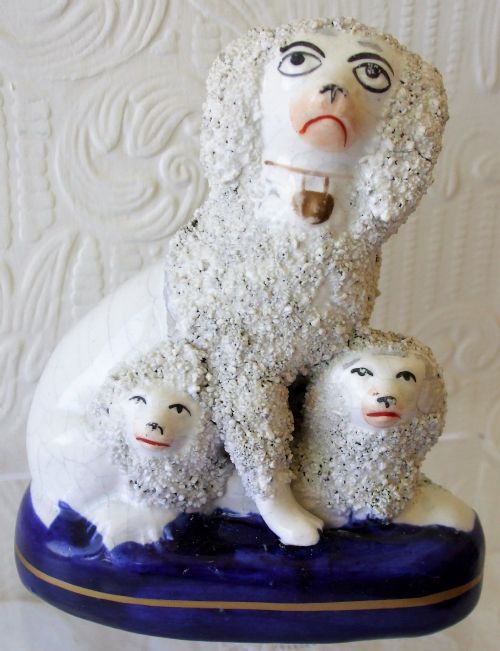
Poodles dominate the animal groups, often wearing textured clay curls made by applying tiny bits of wet paste by hand.
Evaluating Quality
Crispness of moulding separates finer figures from softer, later examples where details have worn away. Superior pieces retain vibrant, carefully applied enamel painting rather than hasty washes of colour.
The complexity of the subject influences the standing of a piece, with multi-figure groups and detailed portrait subjects demanding greater skill from the potter. Original matching pairs and well-preserved glaze finishes elevate individual examples.
Ralph Wood·Wedgwood and Co Ltd
The Staffordshire Ceramic Group Glossary
- Flatback
- A Staffordshire figure modelled with a finished front and a plain, unpainted flat rear designed to stand against a wall. This construction saved materials and allowed large figures to sit neatly on narrow mantelpieces.
- Pearlware
- A refined earthenware developed in the eighteenth century featuring a bluish-white glaze that pooled in recesses. It forms the base for early Staffordshire figures such as those by Ralph Wood.
- Spill vase
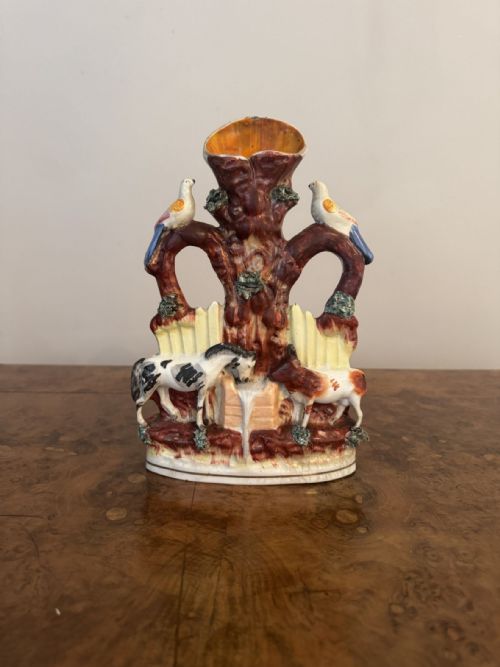
- A hollow ceramic tube incorporated into a figure group designed to hold wooden spills for lighting fires or pipes. They combine decorative sculpture with practical domestic utility.
- Enamel
- Vitreous colours applied over the fired glaze and fixed in a second, lower-temperature kiln firing. This technique allowed makers to achieve bright reds, blues, and yellows on nineteenth-century figures.
- Prattware
- Earthenware decorated with coloured underglaze oxides, typically blues, ochres, and browns, under a transparent lead glaze. These pieces predate the richer enamel palettes common on later Victorian figures.
Staffordshire Ceramic Group: Frequently Asked Questions
What are Staffordshire flatback figures?
Staffordshire flatback figures are earthenware ornaments made primarily during the Victorian era with finished fronts and flat backs intended to sit against cottage or parlour walls.
Potters moulded these pieces to depict royalty, literary characters, and animal groups for domestic display.
How were spill vases used?
Spill vases incorporated a hollow cylindrical holder alongside the main figure to store wooden splints used for transferring flames from the hearth to candles or pipes.
They served a practical everyday function while adding height and sculptural interest to the mantelpiece.
How do I identify nineteenth-century figures?
Nineteenth-century Staffordshire pieces typically feature earthenware bodies coated in lead glaze and finished with hand-painted enamel colours.
Subject matter such as Crimean War alliances, Victorian poodles, and literary groups helps anchor pieces to specific decades between 1830 and 1900.
Are all these figures from Staffordshire?
The listings consist of ceramic figures and groups associated with the Staffordshire pottery district, spanning pearlware productions of the eighteenth century through to Victorian and Edwardian works.
While named after the region, similar earthenware traditions developed across English potteries during the period.