

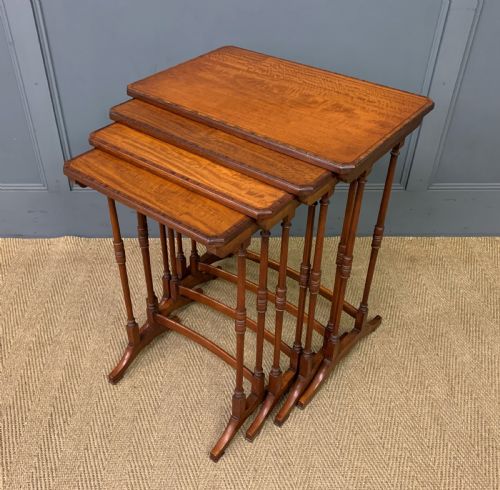


Stacking Tea Tables
Stacking tea tables offer clever surface space that slides neatly away, making them essential for period rooms needing flexibility.
Stacking Tea Tables
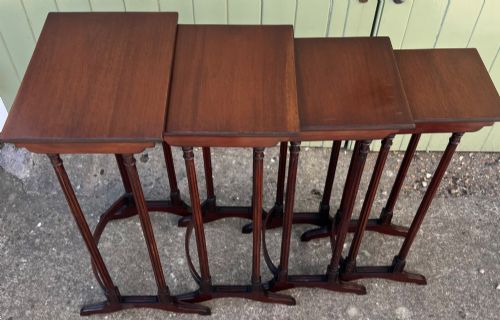
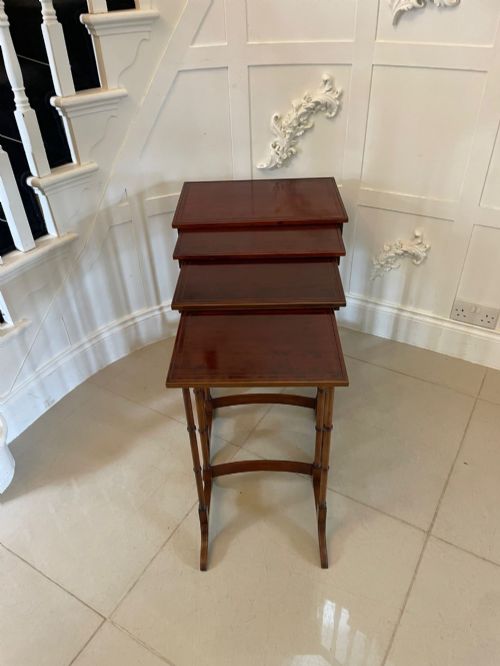
Stacking tea tables, also recorded as nests of tables or nesting tables, provide multiple surfaces that fit one inside another. Buyers searching for stacking tea tables find versatile sets designed to save floor space when not in use.
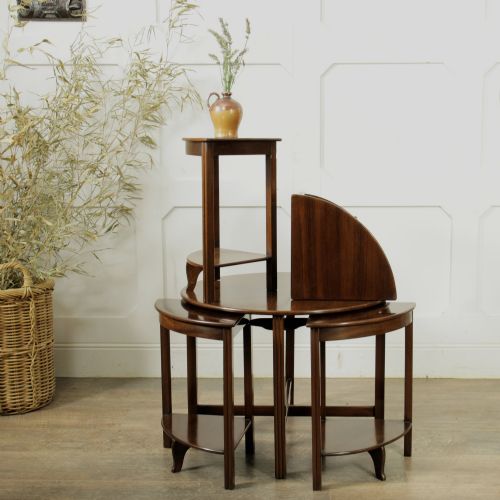
The pieces on this page span the Victorian and Edwardian eras, alongside the 1920s and nineteenth century, with specific examples including circular nests, quartetto sets of four, and larger sets of five tables. Origin styles range from English traditional and Georgian revival to Chinese Qing Dynasty and Anglo-Indian designs.
Most examples function as occasional tables, offering a handy ledge for afternoon tea or displaying ornaments before sliding back into a single compact footprint. The forms vary from rectangular quartetto sets to oval and circular top shapes.
What varies in quality
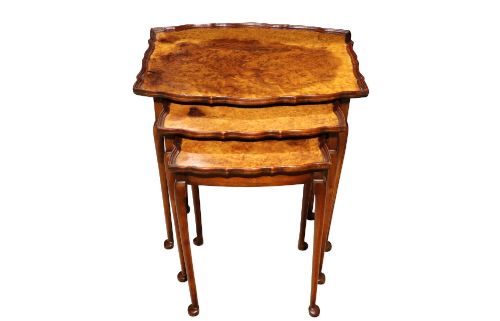
Quality in stacking tea tables rests on the choice of timber and the precision of the nested fit. Superior examples utilise rich veneers such as burr walnut or detailed satinwood alongside crisp inlay, whereas simpler versions rely on plain mahogany or oak.
The structural integrity of the joints determines longevity, particularly in sets where four or five tables must withstand frequent pulling and stacking. Finer execution shows in the crispness of Chinoiserie lacquer or the weight and density of the chosen oriental hardwood.
Stacking Tea Tables Retail Price Guide 2026
Typical asking prices for stacking tea tables among the pieces listed under this phrase on Sellingantiques today, from the lower quarter to the upper quarter. They describe what is for sale here now, not the wider market.
Some Edwardian sets scale up to five tables in a single circular nest, creating a satisfying puzzle of concentric timber rings.
The Stacking Tea Tables Glossary
- Quartetto
- A set of four matching tables designed to nest together. This term frequently appears in Edwardian and nineteenth-century furniture descriptions.
- Inlay
- A technique where contrasting woods or materials are set flush into the surface timber to form decorative patterns. Boxwood and satinwood are common choices for this work.
- Hongmu
- A dense oriental hardwood used in traditional Chinese furniture making. It provides a heavy, durable structure for nested table sets.
- Chinoiserie
- European decorative style reflecting Chinese artistic motifs, often executed in lacquer on furniture. This finish appears on selected nineteenth-century nesting tables.
- Burr walnut
- A highly figured wood grain obtained from walnut tree growths. It provides decorative patterning on table tops.
Stacking Tea Tables: Frequently Asked Questions
What is a quartetto nest?
A quartetto nest consists of four tables designed to slide neatly beneath one another into a single stack. The term originates from nineteenth-century trade descriptions.
These sets were popular for entertaining guests during afternoon tea, allowing hosts to deploy extra surfaces instantly.
How do I care for inlaid wooden tables?
Keep wooden nesting tables away from direct heat sources and strong sunlight to prevent the timber and delicate inlay from drying out. Regular dusting with a dry cloth maintains the finish.
Avoid placing damp cups directly on antique polished surfaces without coasters to protect the polish and underlying veneers.
Where were nesting tables placed?
Owners placed these sets beside armchairs or in drawing rooms where temporary surface space was needed for tea or books. Their compact stacked footprint suited smaller Victorian and Edwardian parlours.
When visitors arrived, the smaller tables could be distributed around the room before returning to their column stack afterwards.
How do I tell Edwardian from Victorian sets?
Edwardian stacking tables often display lighter satinwood inlay and simpler mahogany frames, reflecting the brighter interiors of the early twentieth century. Victorian pieces tend to be heavier in timber choice and deeper in tone.
Examining the secondary woods and construction marks helps confirm the manufacturing period when style details overlap.