



Stacked Glass Display Cabinet
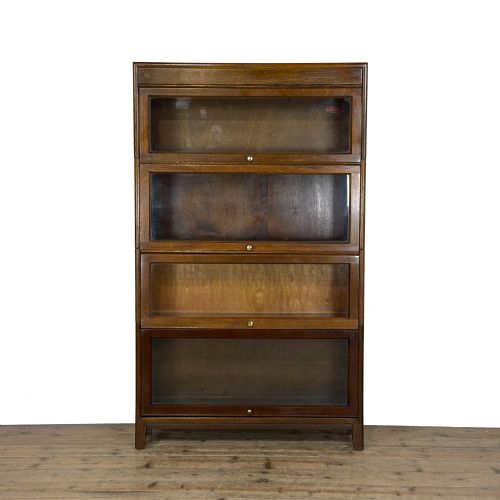
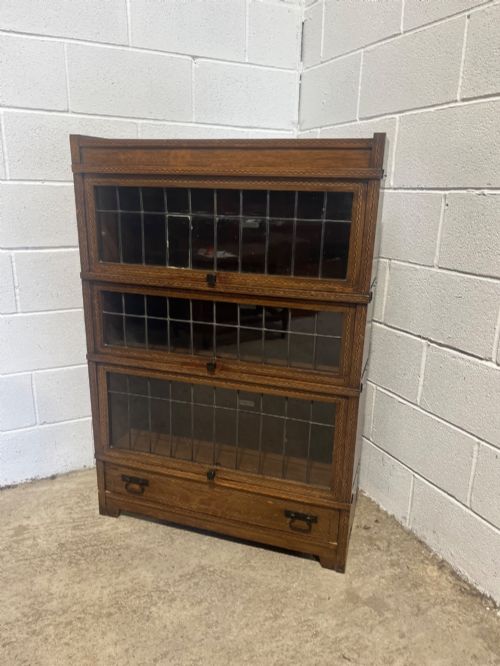
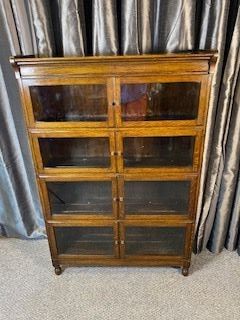
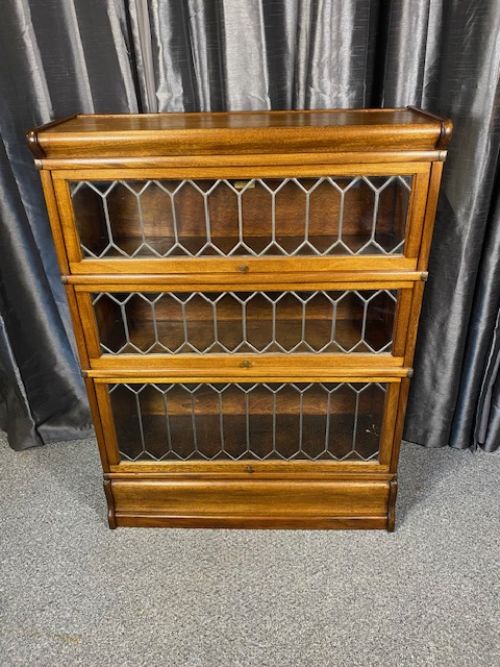
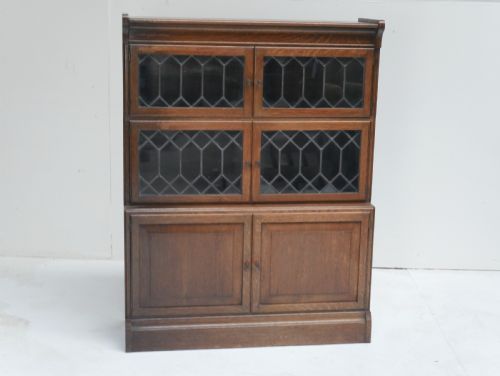
Stacked glass display cabinets are modular bookcases built from individual glazed tiers that lift and slide to protect books and objects.
Stacked Glass Display Cabinet
A stacked glass display cabinet offers modular shelving through independently opening tiers, usually found in forms such as barristers or sectional bookcases. These cabinets appear primarily across Edwardian, Art Deco, and Mid-Century Modern periods.
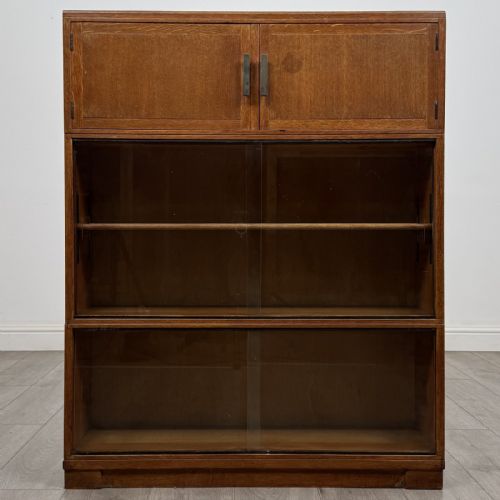
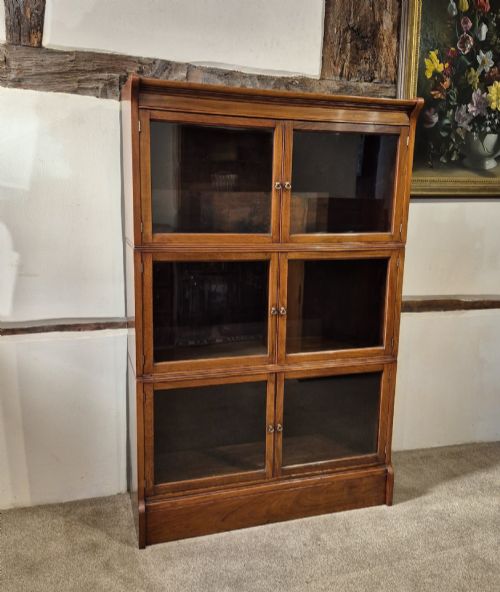
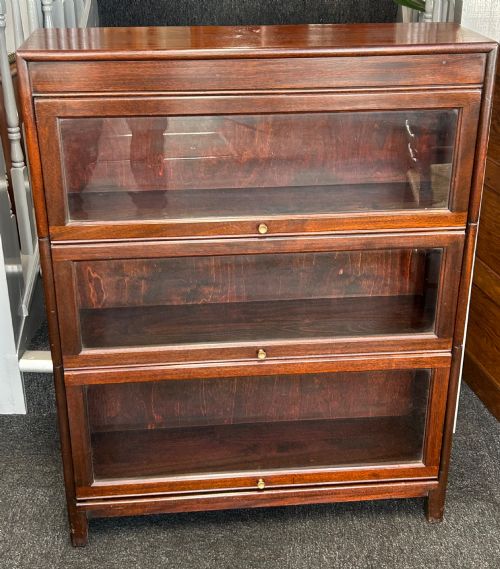
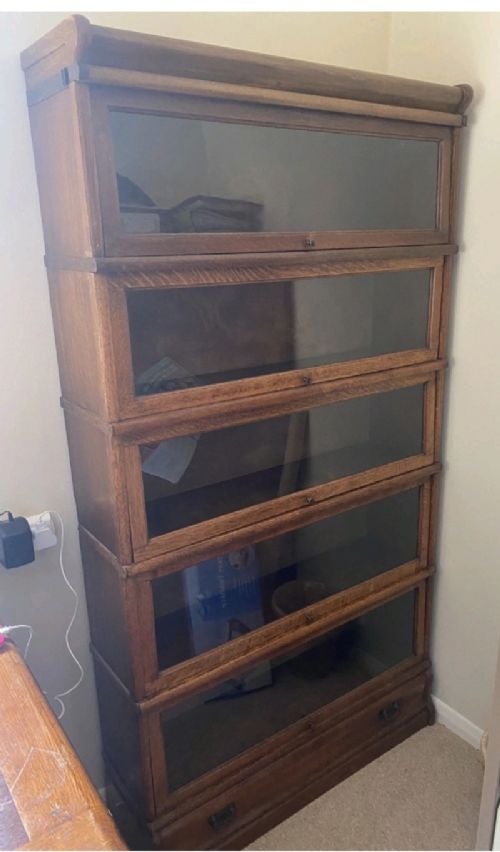
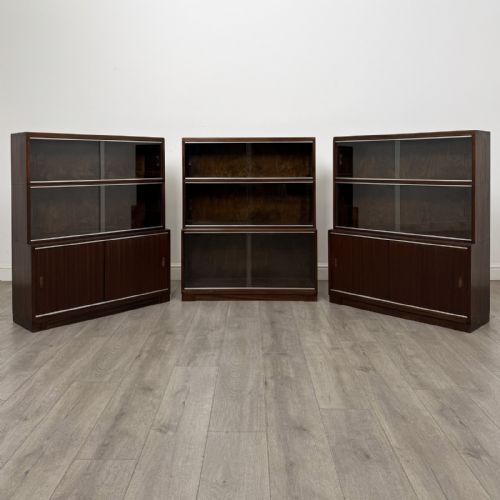
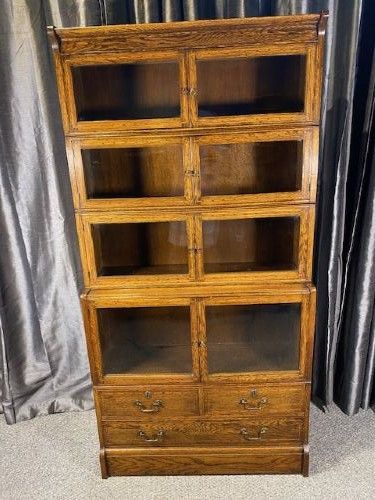
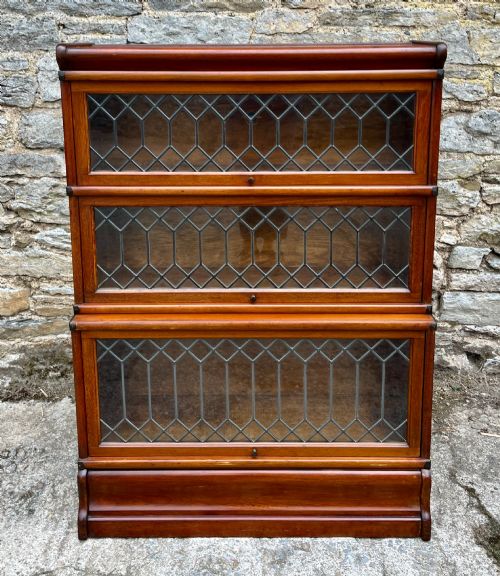
The most common versions on this page are oak and mahogany sectional bookcases comprising three to five tiers, often featuring a base drawer or sliding glass doors.
Makers such as Minty of Oxford, Globe Wernicke, and Lebus dominate these listings, providing the modular stacking mechanism that defines the type.
What varies in quality
Quality separates through the precision of the stacking mechanism and the integration of the glazed doors, where smoother gliding actions and tight box alignment denote superior manufacture. The choice of timber grain, such as figured mahogany or golden oak, further distinguishes the build.
Makers known for patent mechanisms and robust section dividers command attention for their durability, whereas simpler or later interpretations rely on lighter timber construction and straightforward sliding tracks.
Stacked Glass Display Cabinet Retail Price Guide 2026
Typical asking prices for stacked glass display cabinet among the pieces listed under this phrase on Sellingantiques today, from the lower quarter to the upper quarter. They describe what is for sale here now, not the wider market.
One set originated from the Phoenix Gallery on Charing Cross Road, adding a distinct London book trade provenance.
Gunn·Minty of Oxford·Globe Wernicke·Heal's·Lebus·AMYL·Phoenix Gallery
The Stacked Glass Display Cabinet Glossary
- Barrister bookcase
- A sectional cabinet with stacked glass doors that lift and slide inward above each shelf. This design kept law books clean and accessible in professional offices.
- Sectional bookcase
- A modular piece built from separate tiers placed one upon another. Users could add or remove sections as their library grew.
- Leaded glass
- Glass panes held together by narrow strips of lead came. This technique adds decorative geometric patterns to the cabinet doors.
- Wood inlay
- Pieces of contrasting timber fitted into the wood surface to form patterns. Edwardian examples frequently employ this decorative method.
Stacked Glass Display Cabinet: Frequently Asked Questions
How do the glass doors open?
Each tier has its own independent glass door suspended on scissor hinges or sliding tracks. You lift the glass upwards and push it back into the shelf cavity.
This mechanism allows single tiers to open while keeping the contents of other sections protected behind glass.
Can the sections be separated?
The tiers rest on one another using interlocking joints rather than permanent glue or screws. You can lift each box section off independently.
This modular construction made transport easier and allowed owners to expand their cabinet height over time.
What woods were commonly used?
Oak and mahogany are the predominant timbers found across these sectional cabinets. Golden oak appears frequently in Edwardian pieces, while darker mahogany suits formal office settings.
Later mid-century versions occasionally utilise limed oak finishes to achieve a lighter appearance.
Are these cabinets purely for books?
While originally designed for legal libraries and office books, the glazed tiers suit the display of ceramics, glassware, and collections. The dust-proof seal protects fragile items effectively.
Their narrow footprints allow them to fit into living spaces and hallways quite easily.