

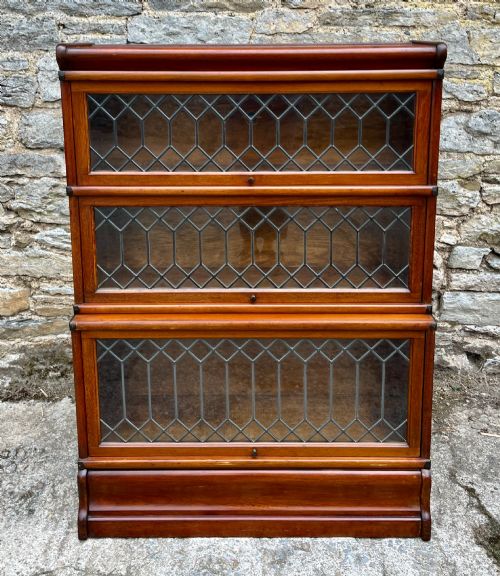
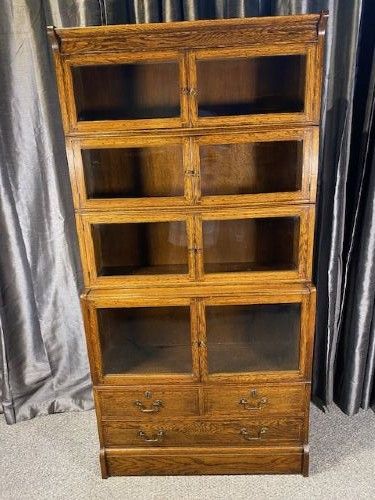
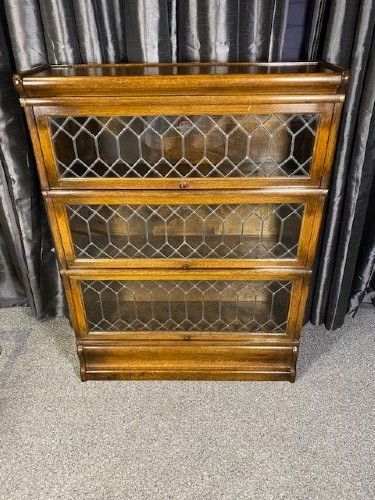
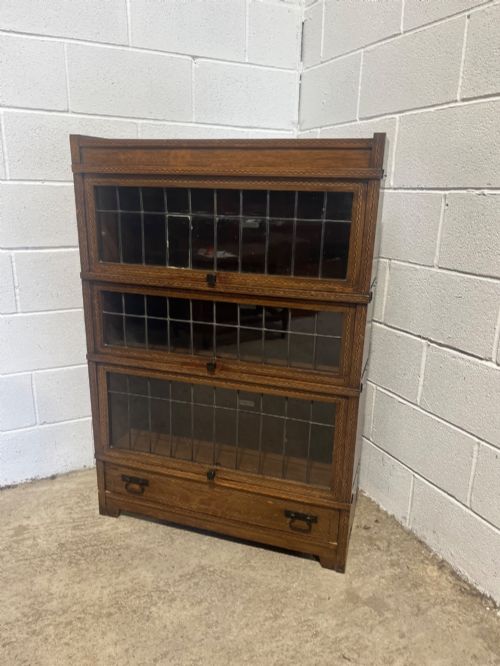

Stacked Glass Bookcase
A stacked glass bookcase brings modular flexibility and visible protection to a room, offering adaptable tiered storage for prized volumes.
Stacked Glass Bookcase
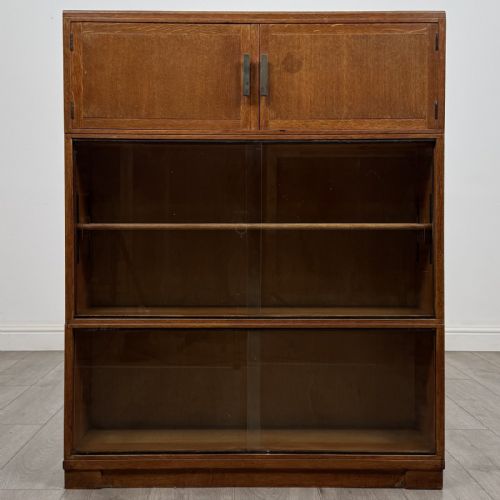
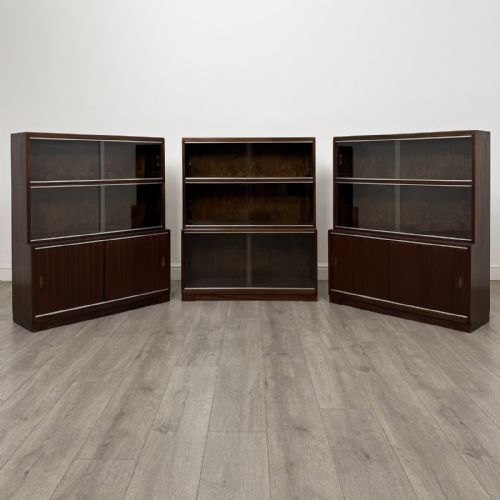
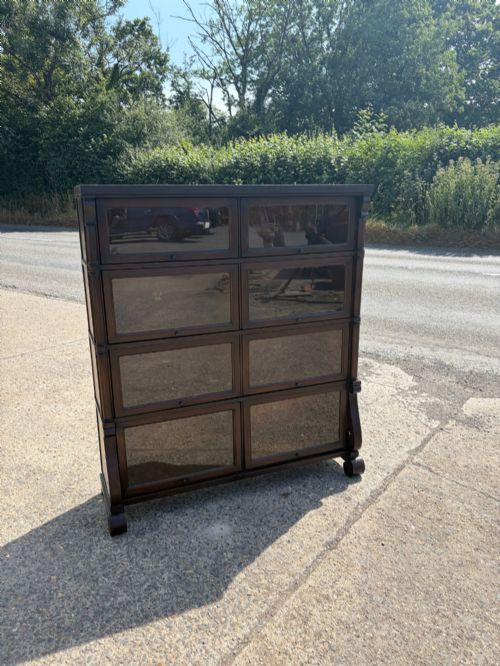
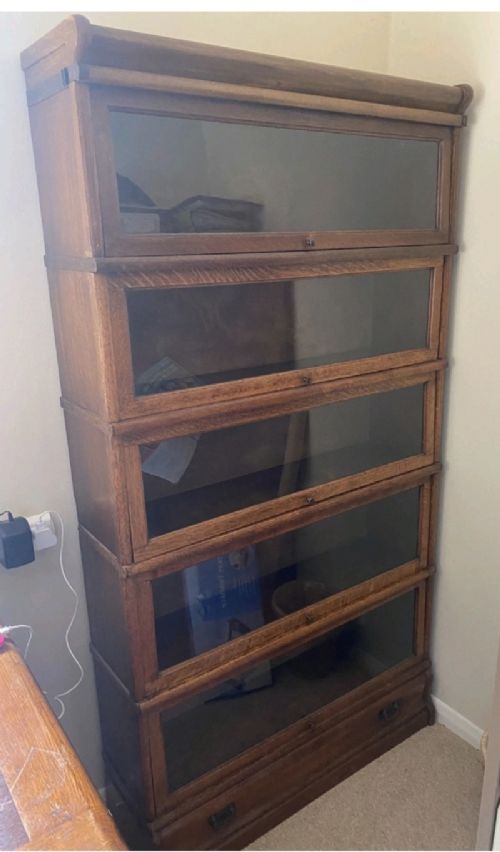
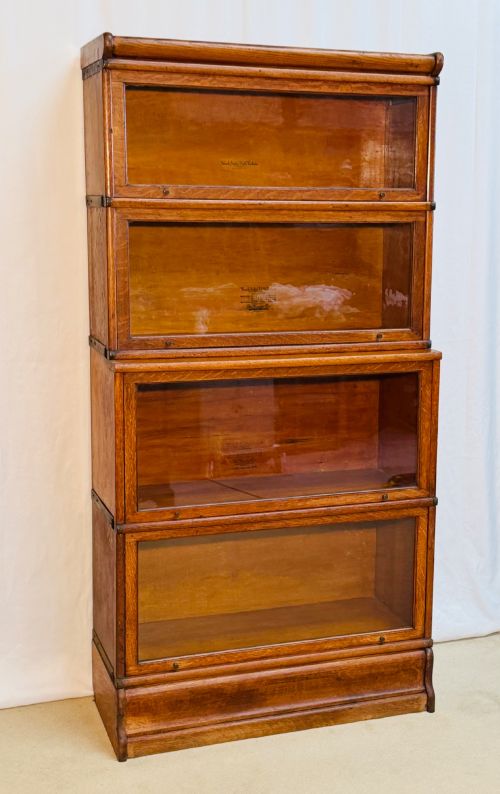
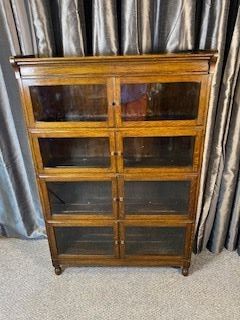
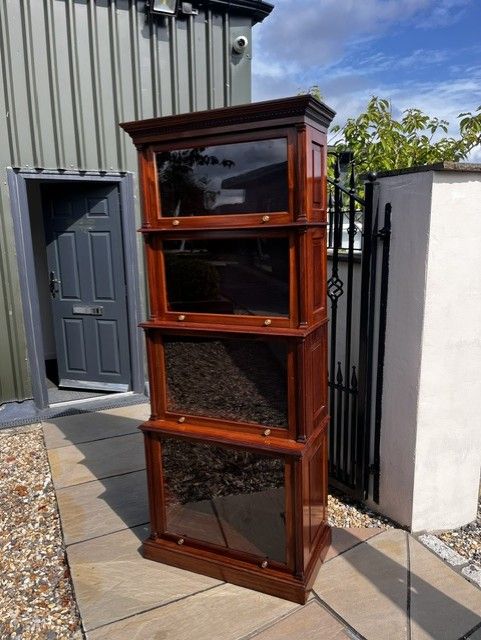
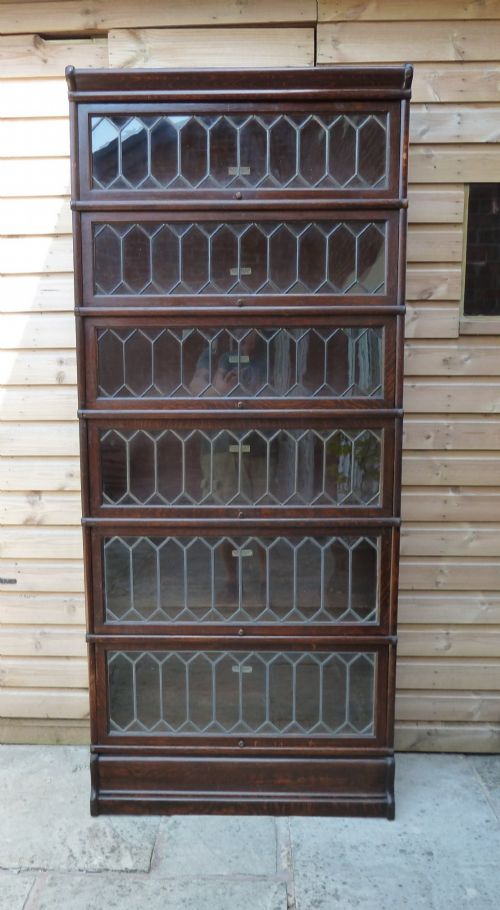
A stacked glass bookcase is a modular unit composed of separate tiers stacked vertically, allowing sections to be added or rearranged. These items appear primarily in oak and mahogany, structured to house collections behind protective glazed panes.
Most examples originate from the early twentieth century, spanning Edwardian, 1900, 1910, 1920, and 1930 periods. The forms range from simple three-tier office shelving to tall, multi-section lawyer or barrister cabinets with sliding or up-and-over doors.
Buyers encounter styles rooted in Arts and Crafts, Edwardian design, Art Deco, and Mid-Century Modern influences. The structural divisions give each piece a distinct horizontal rhythm while keeping dust away from books.
Quality distinctions in modular cabinetry
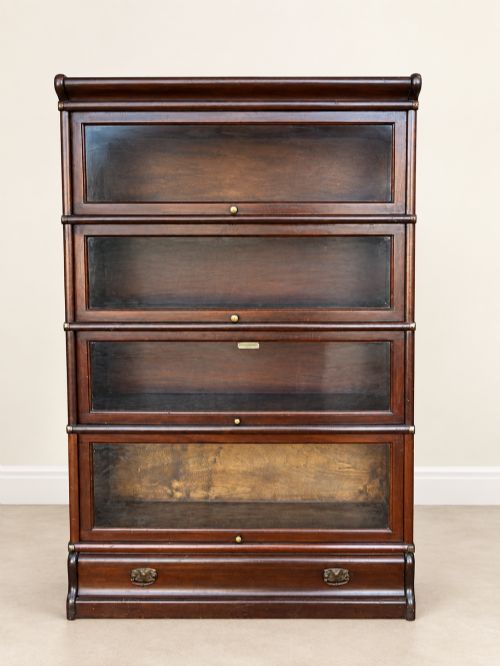
Superior execution shows in the precision of the stacking joints and the smooth operation of the lifting door mechanisms. Finer examples display carefully selected timber grain, integrated base drawers, and robust brass fittings rather than utilitarian replacements.
Lower tiers and mass-produced commercial variations rely on simpler hardware and plainer secondary woods. The presence of original makers' stamps and unaltered glass panels distinguishes well-preserved historical specimens from later adaptations.
Stacked Glass Bookcase Retail Price Guide 2026
Typical asking prices for stacked glass bookcase among the pieces listed under this phrase on Sellingantiques today, from the lower quarter to the upper quarter. They describe what is for sale here now, not the wider market.
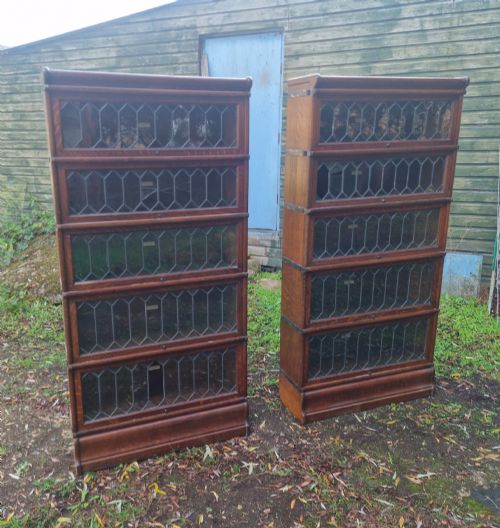
Some barristers insisted on leaded glass doors so opposing counsel could admire the sheer quantity of their legal precedents without reading the titles.
Gunn Furniture·Globe Wernicke·Macey·Lebus·Minty·Heal's·AMYL
The Stacked Glass Bookcase Glossary
- Sectional bookcase
- A shelving unit built from multiple independent modular tiers that stack together vertically. This design allows the entire assembly to be disassembled or expanded piece by piece.
- Barrister bookcase
- A specialised office or library cabinet with glazed doors designed to protect valuable law books. The doors typically lift and slide into the recess above each shelf.
- Up and over doors
- Glazed panels fitted with mechanical arms that allow the door to swing slightly outward and slide horizontally into the cabinet interior. This mechanism enables easy access to contents within confined spaces.
- Leaded glass
- Panes divided into smaller segments held together by narrow cames of lead. This technique provides structural support and introduces decorative patterns across the cabinet front.
- Tier
- An individual stackable box or section comprising a single shelf and its corresponding door. Multiple tiers combine to form the complete height of the cabinet.
Stacked Glass Bookcase: Frequently Asked Questions
What is a barrister bookcase?
A barrister bookcase is a specialised stacking cabinet originally designed for travelling lawyers who needed to transport their libraries safely. The modular tiers let owners pack and move their books without removing them from the shelves.
In domestic settings, these bookcases protect delicate volumes from dust and moisture behind individual glass panels. Each tier operates independently, meaning the unit can grow alongside a expanding book collection.
How do the stacking sections work?
Each tier is an enclosed box with its own glass door and a finished top and bottom that lock into the adjacent sections. They rely on gravity and interlocking lips rather than permanent screws or glue, allowing the entire stack to separate easily.
This modularity means you can reconfigure the height of the unit or move individual pieces down the stairs without straining. The top sits on a decorative cornice, while the bottom tier rests upon a matching plinth or base drawer.
How do I date an antique stacking bookcase?
Dating relies on identifying the timber selection, hardware construction, and maker marks stamped inside the frame or on the metal brackets. Early twentieth-century pieces often feature quarter-sawn oak with distinct medullary rays or rich solid mahogany.
Stylistic cues also help narrow the period, such as the sturdy vernacular of Edwardian craftsmanship or the clean geometric lines associated with 1920s and 1930s commercial offices. Patents stamped on the internal mechanism provide a reliable manufacturing terminus post quem.
Can I separate the tiers for moving?
Yes, the primary advantage of these bookcases is their ability to separate into individual modules for transport. You simply lift each glass tier off the one below it after removing the books inside.
When reassembling the unit, ensure the base sits level on the floor so the subsequent tiers align correctly. Proper alignment is essential for the sliding glass doors to glide smoothly without binding in their tracks.