








Stacked Accent Tables
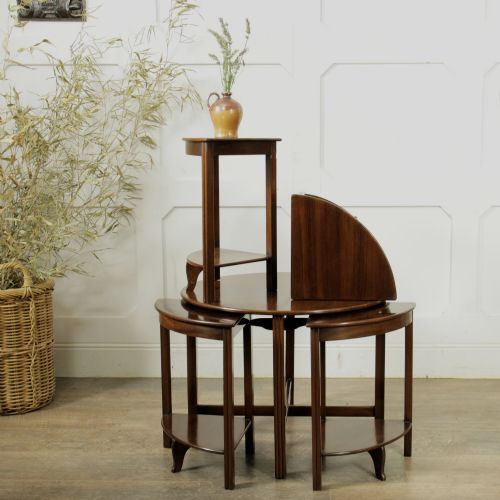
Stacked accent tables bring versatile surface space to a room, offering multiple tiers that slide away neatly when floor space matters.
Stacked Accent Tables
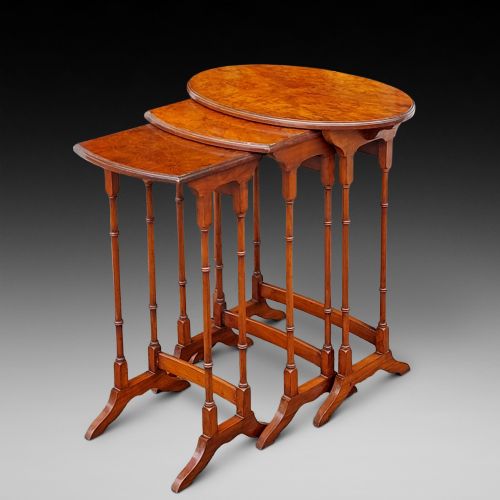
Stacked accent tables appear primarily as nests of tables across the nineteenth century, Edwardian era, and into the 1930s. These pieces function as flexible furniture, designed to separate into individual surfaces for tea or display before returning to a single compact footprint.
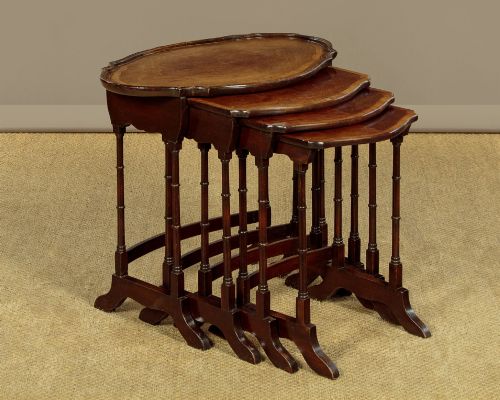
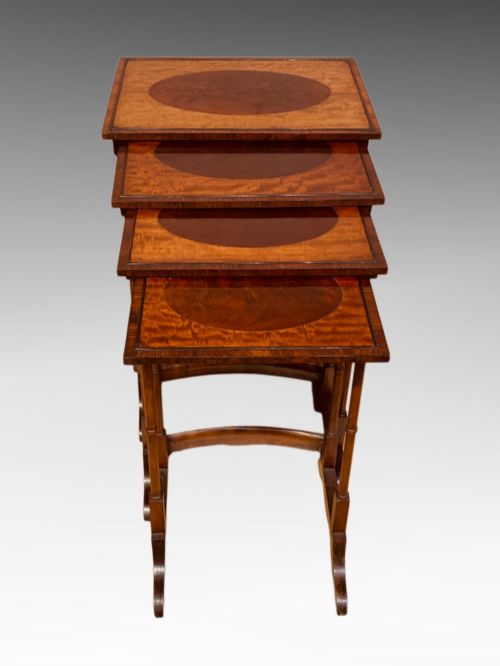
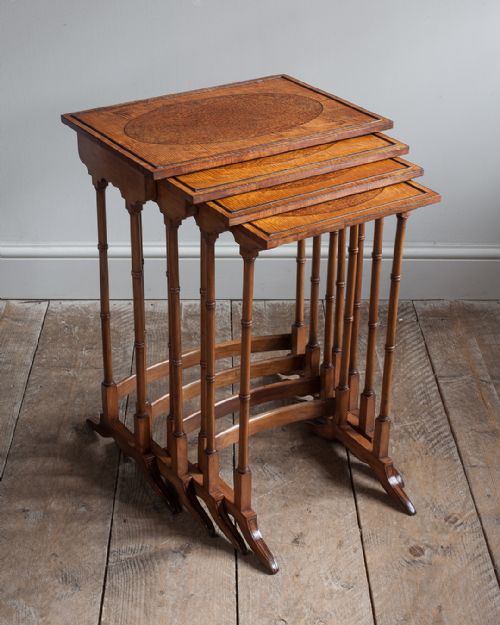
The versions most common on this page span Victorian quartetto sets, Edwardian mahogany and burr walnut designs, and Chinese hardwood imports. Formats range from circular and oval tops to kidney shapes and rectangular quartetto arrangements.
Materials and Construction
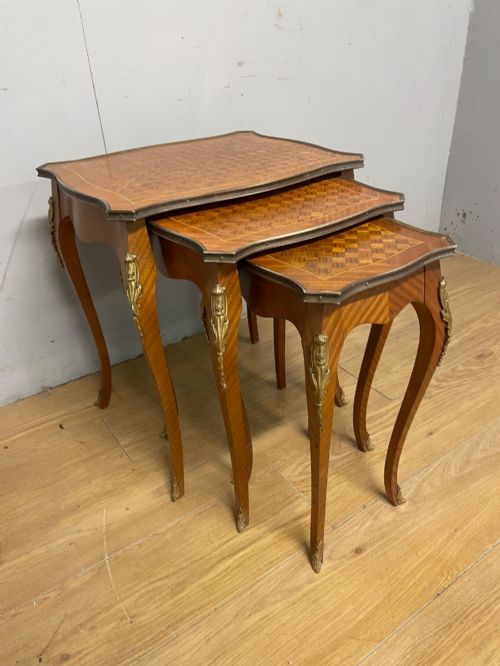
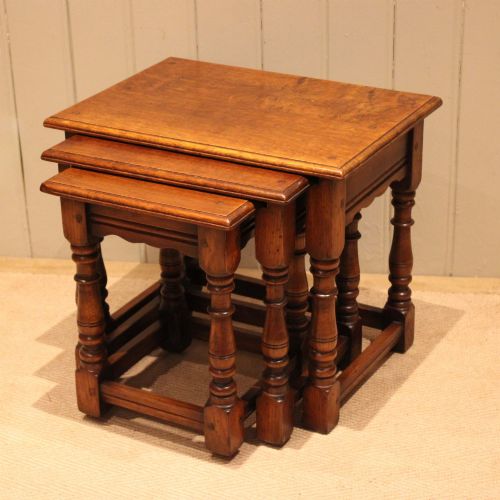
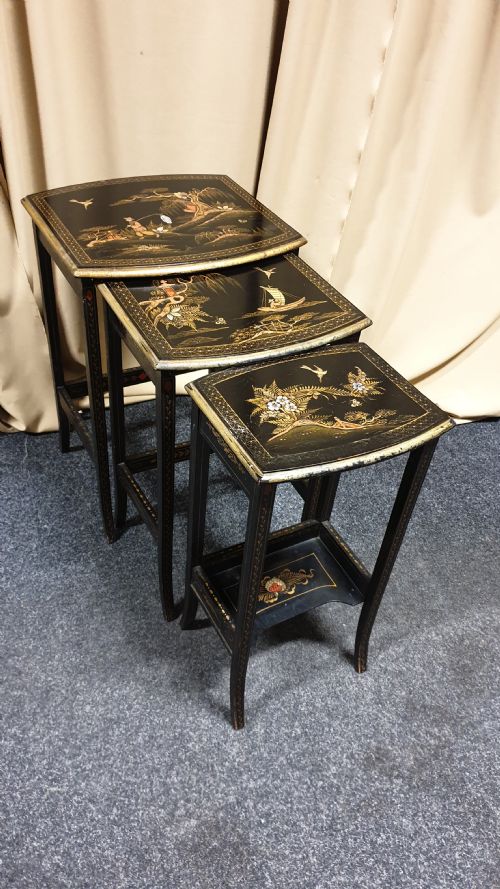
Timbers such as mahogany, oak, walnut, rosewood, teak, and satinwood form the structural foundation of these nested surfaces. Craftsmen frequently applied elaborate surface treatments, including yew veneer tops, floral parquetry, ormolu mounts, and Chinoiserie Boulle-work black lacquer.
Construction relies on precise sizing so each table clears the frame of the next. Inlaid stringing, cabinet-grade joints, and hand-polished finishes dictate the physical integrity of the tiered stack.
Stacked Accent Tables Retail Price Guide 2026
Typical asking prices for stacked accent tables among the pieces listed under this phrase on Sellingantiques today, from the lower quarter to the upper quarter. They describe what is for sale here now, not the wider market.
Several sets scale down so small that the fourth table is barely large enough to hold a teacup and a biscuit.
Distinctions in Quality
Quality rests in the crispness of the joinery and the selection of timber, particularly where figured burr walnut, satinwood, or kingwood veneers are utilised. Lesser pieces rely on plain hardwoods with simple edges, whereas superior examples exhibit deliberate grain matching across all tiers.
Decorative execution separates standard production from finer output. Hand-cut inlay, meticulous parquetry, and integrated brass or ormolu mounts indicate workshop standards above ordinary commercial output.
Émile Gallé
The Stacked Accent Tables Glossary
- Quartetto
- A matched set of four small tables designed to nest inside one another. This configuration is particularly common in nineteenth-century and Edwardian pieces.
- Parquetry
- Geometric mosaic woodwork formed by small pieces of veneer applied to a structure. It creates contrasting patterns on the main top surface.
- Ormolu
- Gilded bronze mounts applied for decorative effect on French pieces. This technique highlights the corners and legs of higher-end tables.
- Inlay
- Contrasting materials set into the surface of the timber to form patterns. Line stringing and floral motifs are typical examples.
- Chinoiserie
- European decorative style reflecting Chinese artistic traditions. These black lacquer surfaces often feature gilt detailing.
Stacked Accent Tables: Frequently Asked Questions
What is a quartetto nest?
A quartetto nest consists of four tables graduated in size so they slide smoothly beneath the largest one. This format was widely produced during the nineteenth and early twentieth centuries.
They provided extra surfaces for entertaining without demanding permanent floor space in a reception room.
How were nesting tables used?
These tables served as portable surfaces for serving afternoon tea, holding books, or displaying decorative objects. Servants or hosts could deploy them individually around a seating area as needed.
When the gathering ended, the tables slid back together into a single compact block against a wall.
How do I spot Edwardian pieces?
Edwardian examples often feature lighter timbers like mahogany and satinwood, frequently accented with subtle string inlay. The proportions tend to be slender and refined compared to heavier Victorian counterparts.
Craftsmen in this period also experimented with burr walnut and shaped tops like kidney outlines.
Are Chinese hardwood tables antique?
Chinese hardwood nesting sets found in historical markets often date from the nineteenth or early twentieth centuries. They utilise dense tropical hardwoods carved with traditional framing.
These pieces emphasise natural timber grain rather than applied surface veneers.