


Square Glass Spirit Decanter
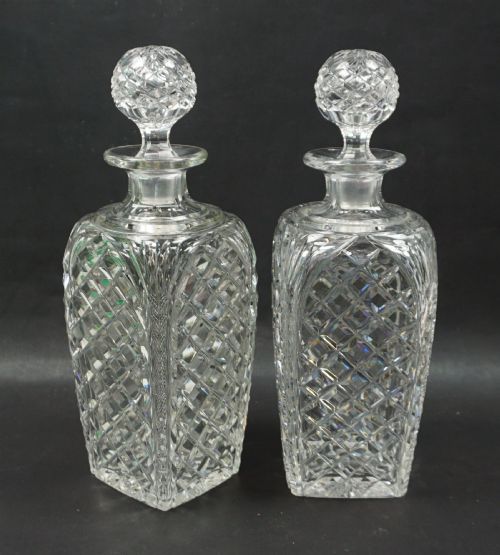
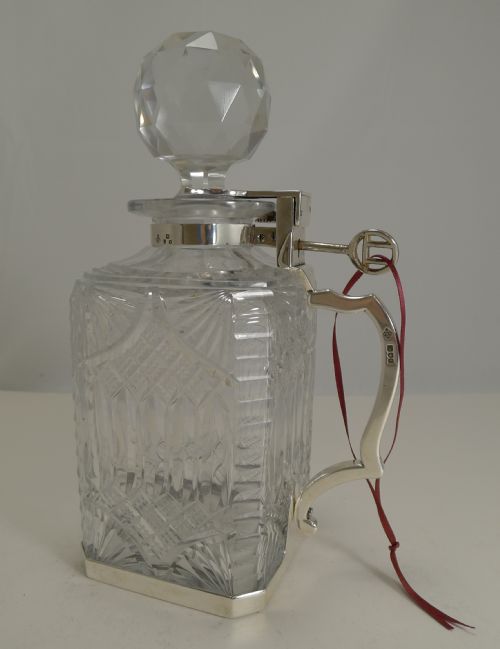
These square glass spirit decanters bring heavy crystal, silver collars and sharp cutting together on a side table.
Square Glass Spirit Decanter
A square glass spirit decanter is a heavy, geometric vessel designed for holding whisky, brandy and other spirits. The pieces seen here span the Victorian, Edwardian and mid-century periods, running from the 1860s through to the 1960s.
Most examples found on this page take the form of single bottles or matched pairs shaped with flat sides and sturdy square footprints. English and Scottish makers dominate the selection, often pairing thick lead crystal bodies with silver collars, mounts or stoppers.
Materials and construction
The bodies of these decanters are formed from heavy glass and cut crystal, shaped into square sections with tapered or straight profiles. Glassmakers utilised deep facet-cutting and polished flutes to catch the light through thick walls.
Metalwork forms a crucial part of the construction on many specimens, incorporating sterling silver collars, hallmarked mounts and silver gilt details. Some examples integrate locking mechanisms with fitted silver hardware to secure the contents.
The listings span the Victorian, Edwardian, and mid-century eras, featuring lead crystal, cut glass, and sterling silver mounts.
Judging quality
Quality in these decanters rests upon the crispness of the glass cutting and the weight of the crystal body. Superior pieces display deep, sharp facets and heavy bases that anchor the vessel securely on a sideboard.
The integration of metalwork also dictates standing, where hallmarked sterling silver mounts and named maker's pieces mark out the finer productions from standard commercial glassware.
Freeman & Son Ltd·Mappin & Webb
The Square Glass Spirit Decanter Glossary
- Cut crystal
- High-clarity glass containing lead oxide, carved with geometric patterns using rotating wheels. This material allows for deeper facets and greater brilliance than standard glass.
- Silver collar
- A metal band fitted around the neck of a decanter, often cast in sterling silver and bearing hallmarks. These collars frequently hold the hinge for locking mechanisms or provide a clean rim for pouring.
- Silver gilt
- Silver covered with a thin layer of gold applied through chemical or electrochemical processes. This finish adds a warm tone to the metal mounts of mid-century brandy decanters.
- Hallmark
- A series of official marks stamped into precious metal objects indicating the standard of purity, the assay office and the year of testing. These marks help date the silver mounts attached to the glass body.
Square Glass Spirit Decanter: Frequently Asked Questions
How do I clean a cloudy decanter?
Residue builds up inside spirit decanters over decades of holding whiskey and brandy. Gentle washing with warm water and specialised cleaning beads helps clear the interior without scratching the heavy crystal walls.
Harsh detergents and sudden temperature changes must be avoided to protect the aged glass and any fitted silver collars.
Were these decanters made in pairs?
Makers produced both single bottles and matched sets of two or four decanters to sit together on dining tables or serving trays. Pairs allowed hosts to serve different spirits simultaneously while maintaining a uniform appearance on the sideboard.
Single examples often survive from larger fitted sets or locking tantalus frames where individual bottles were removed.
How do I date an Edwardian decanter?
Edwardian examples from the early twentieth century typically feature crisp cut crystal patterns and occasionally bear silver hallmarks on their collars. Comparing the geometric cutting styles with Victorian and mid-century designs helps narrow down the production period.
Maker's marks and town hallmarks stamped into the silver mounts provide the most precise dating evidence for these pieces.
Can I use these for daily serving?
These robust vessels were built to hold spirits and withstand regular handling on dining tables and in drawing rooms. Their heavy lead crystal construction makes them practical for serving whiskey and brandy today.
Care should be taken when handling heavy square bases and matched stoppers to prevent chipping the thick glass rims.