
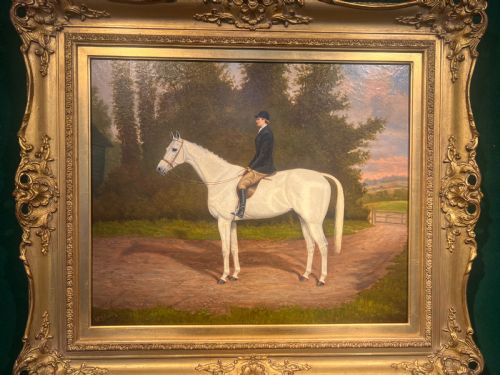
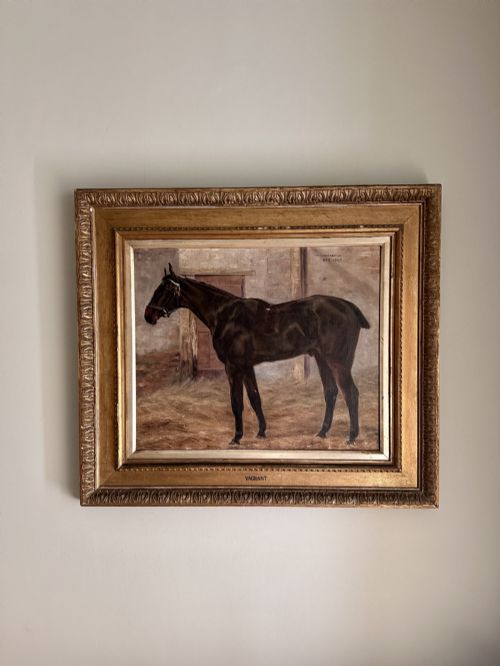
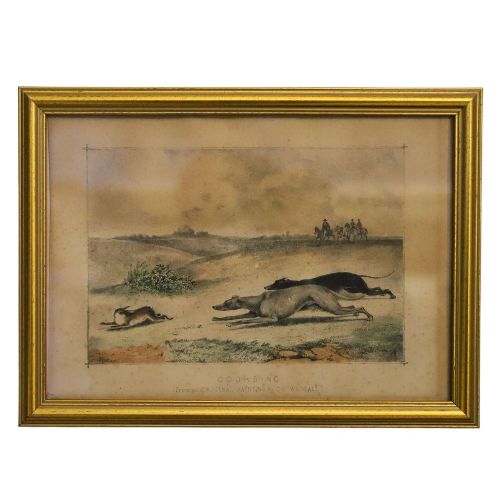
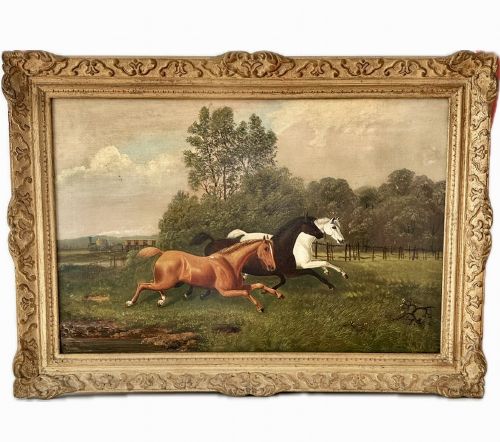
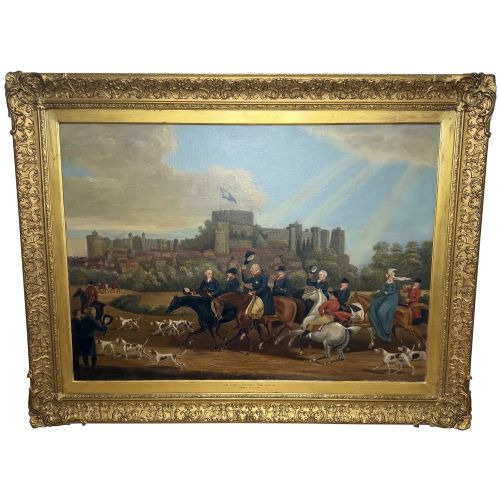

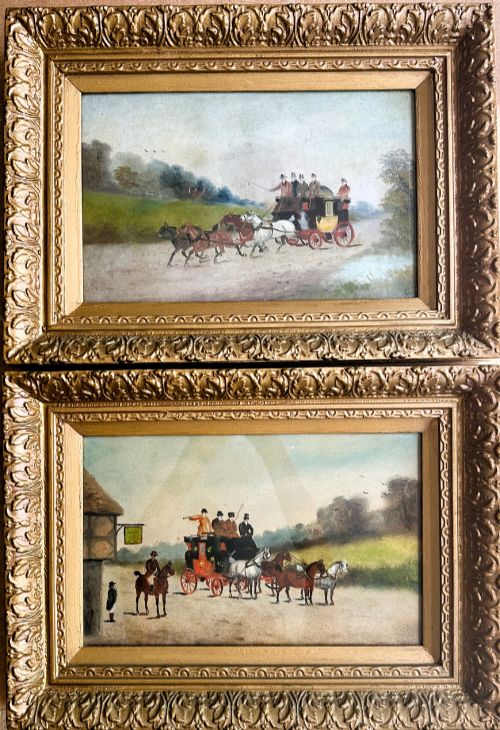
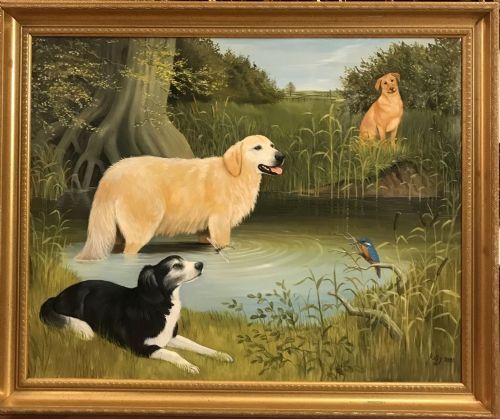
Sporting Artwork Gold Frame
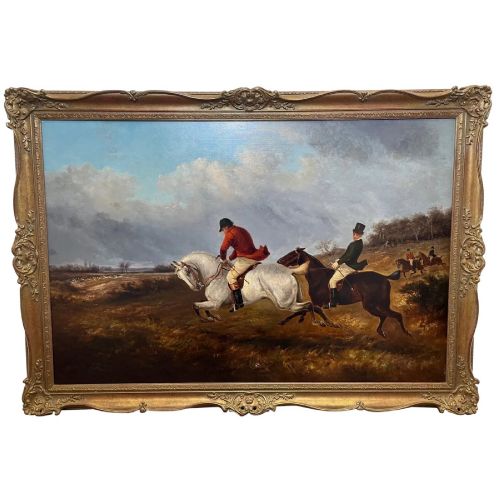
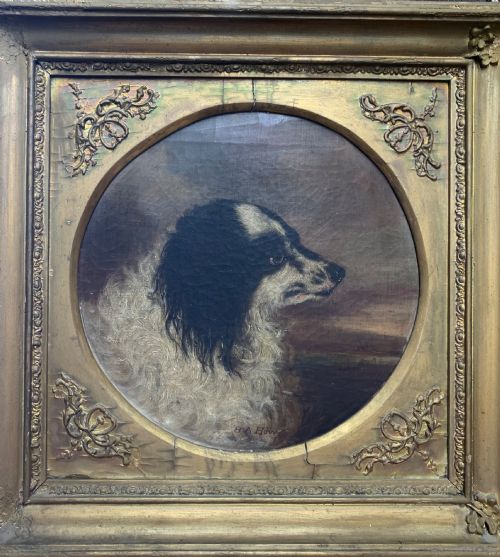
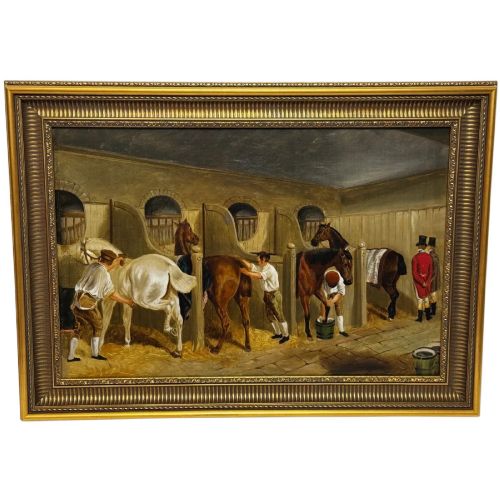
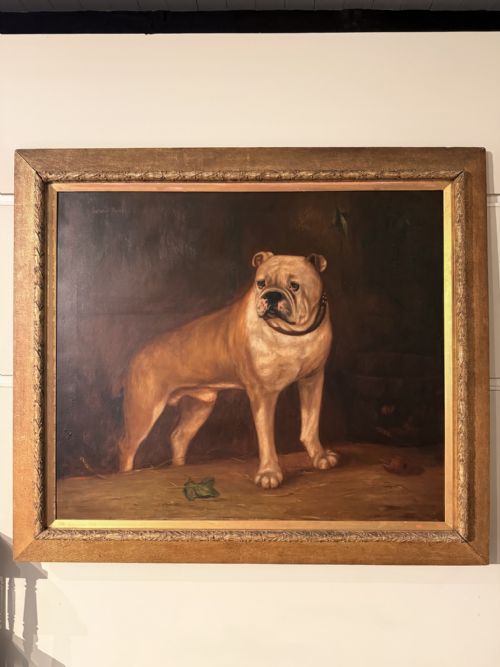
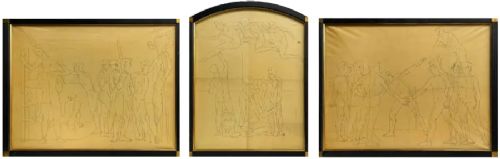
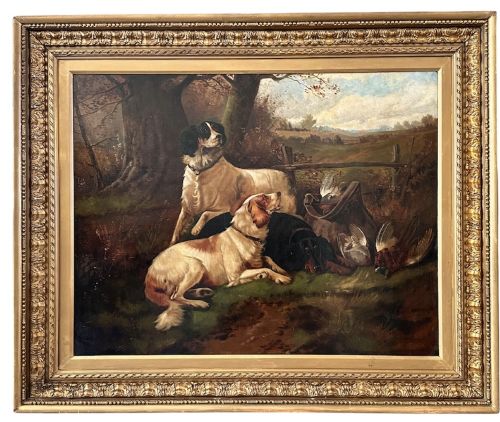
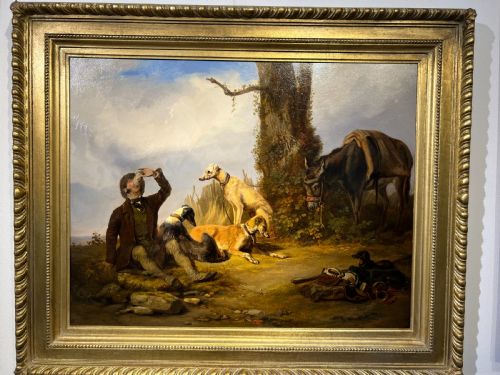
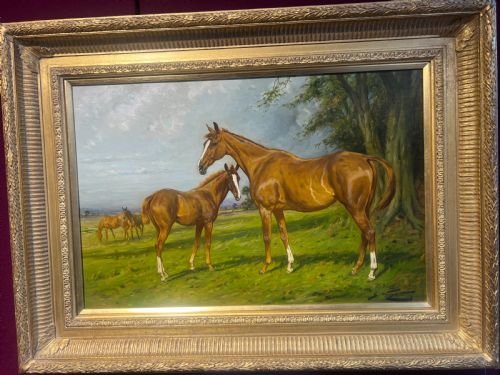
Sporting artwork gold frame selections unite Victorian equestrian scenes and canine oil paintings within heavily moulded surrounds.
Sporting Artwork Gold Frame
When searching for sporting artwork gold frame pieces, buyers encounter oil on canvas paintings, lithographs, and watercolours depicting hounds, racehorses, and hunting scenes. These works span the Georgian, Victorian, and Edwardian periods, recording British field sports and prized animal portraits.
The most common examples on this page are 19th-century oil paintings set in gilt wood or giltwood frames. Subjects range from individual spaniels and collies to grand fox hunting meets and racehorse portraits.
Framed prints and original watercolours also appear, accompanied by heavy gold leaf surrounds that reflect period framing traditions. The pairing of sporting subjects with ornate gold frames creates a distinct visual weight suited to traditional interiors.
Quality Factors
Distinctions in quality rest upon the skill of the painter in rendering animal anatomy, movement, and expression. Finer works display precise brushwork in the depiction of horse muscle structure and dog coats, whereas lesser examples rely on formulaic compositions.
The integrity and originality of the surrounding gilt frame also influence the overall character of the piece. Period frames with untouched gold leaf and matching mouldings elevate the complete artwork compared to later replacements.
Listings span the nineteenth and twentieth centuries, incorporating Victorian and Edwardian periods alongside Georgian examples.
Thomas Smythe·Sir Edwin Henry Landseer·George Wright·William Albert Clarke·Fred Fitzpatrick·C. H. Weigall·Edward Priestley·Philip Rideout·John Ferneley Senior·Benjamin Blake·Alfred Munnings·John Arthur Lomax·Arthur Wardle·Albert Clark·William Barraud·Samuel Raven·Valentine Thomas Garland·John Trivett Nettleship·Samuel Spode·Charles Faulkner·Edwin Frederic Holt·Colin Graeme Roe·Alfred Wheeler
The Sporting Artwork Gold Frame Glossary
- Giltwood
- Wood that has been coated with gold leaf or a gold-coloured finish. This material provides the bright, reflective border characteristic of traditional picture framing.
- Oil on Canvas
- Pigment mixed with drying oil applied to a woven fabric stretched across a wooden support. This combination forms the primary medium for the historical paintings listed here.
- Lithograph
- A print made from a flat stone or metal plate on which an image has been drawn with a greasy substance. The process allows multiple reproductions of original sporting scenes.
- Provenance
- The chronology of the ownership, custody, or location of a historical historical object. Documented history links individual paintings to specific estates or galleries.
Sporting Artwork Gold Frame: Frequently Asked Questions
What subjects appear in these paintings?
The subjects focus heavily on British field sports, including fox hunting, hare coursing, and coaching scenes. Equine portraits and depictions of gundogs, spaniels, and collies also feature prominently.
Artists frequently recorded prized racehorses alongside their jockeys or trainers. These works capture the sporting culture of the nineteenth and early twentieth centuries.
How do I care for an oil painting?
Oil paintings require stable indoor humidity levels and protection from direct sunlight to prevent the canvas from sagging and the paint from cracking. Gentle dusting with a soft, dry brush keeps the surface clear without harming the pigment.
Avoid using water or chemical cleaners on both the canvas and the gilt frame. The gold leaf on older mouldings can flake if rubbed too vigorously.
How do I date these artworks?
Dating relies on artist signatures, biographical records, and stylistic clues within the clothing and landscape details. Many listings provide active dates for the painters or specific creation years.
Frame construction and canvas stamps offer additional physical evidence. Comparing the subject matter to known historical events also aids in establishing a timeline.