




Spoonback Armchair
A spoonback armchair is a classic nineteenth-century seat defined by its curved backrest, offering deep comfort and graceful Victorian style for any interior.
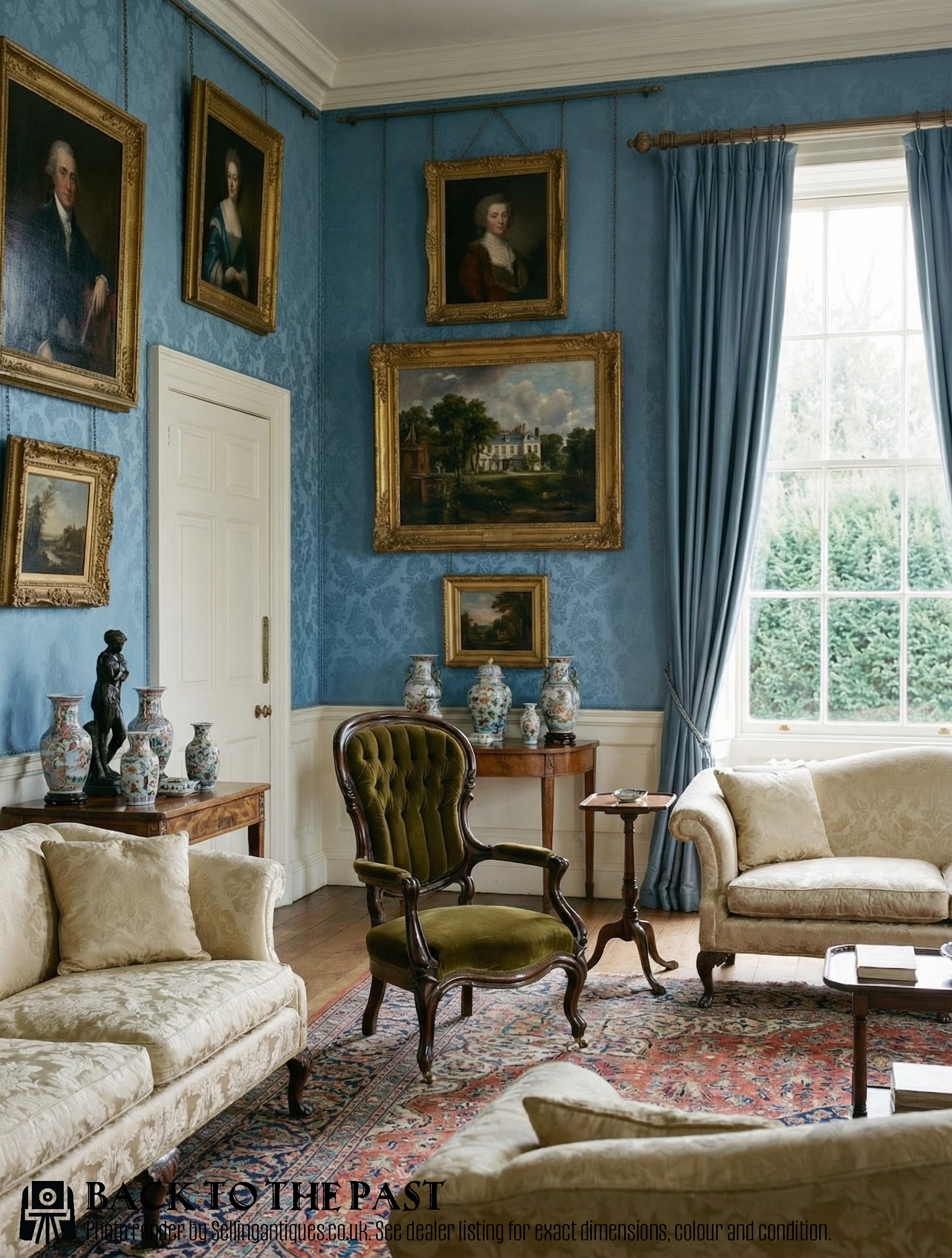
Spoonback Armchair
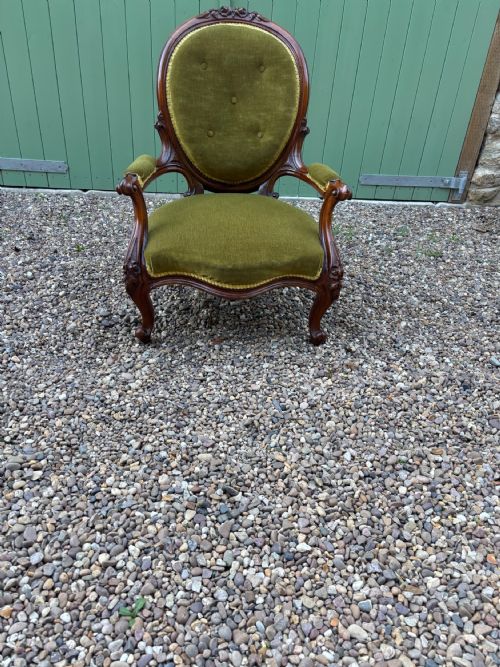
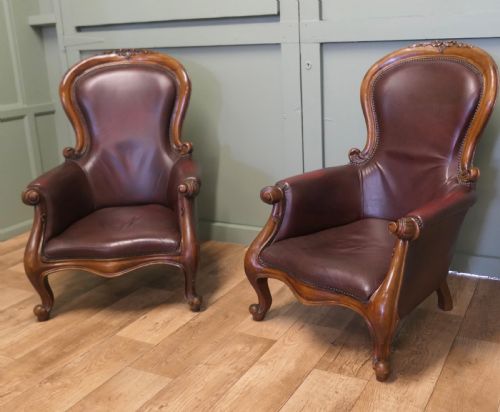
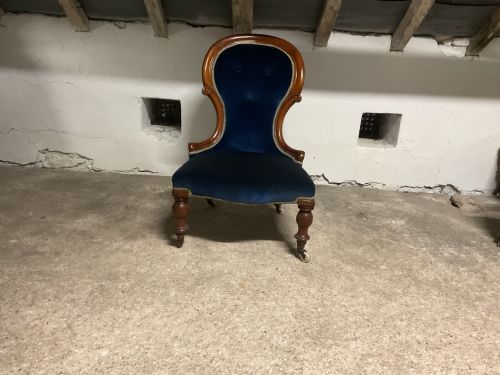
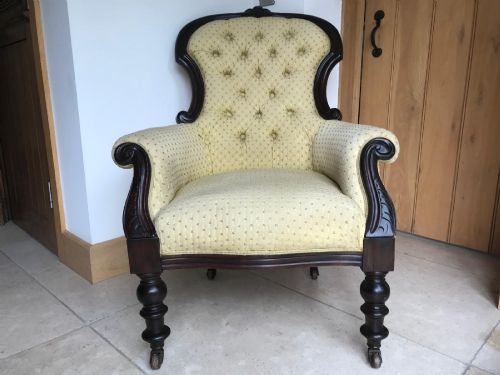
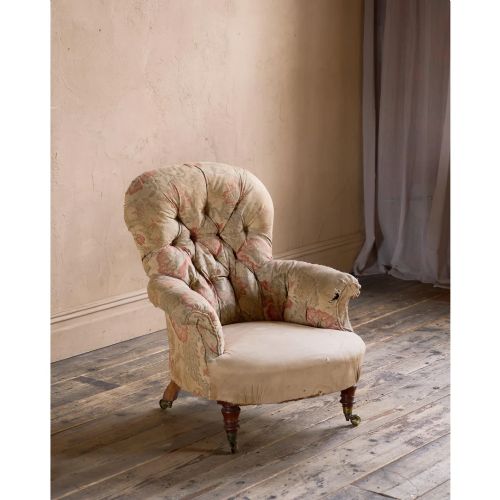
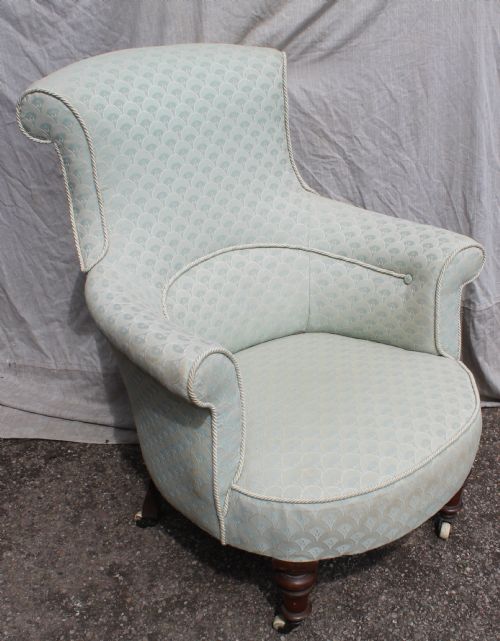
When you search for a spoonback armchair, you are looking at nineteenth-century seating predominantly originating from the Victorian era. These pieces range from compact fireside chairs and nursing seats to larger gentleman's open armchairs and parts of matching salon suites.
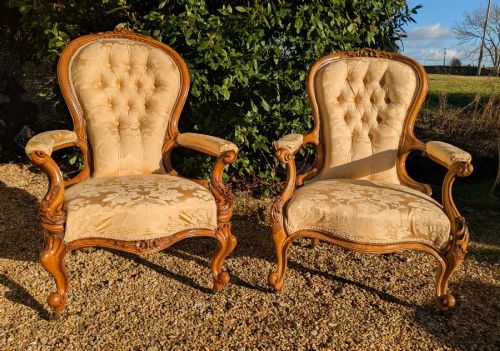
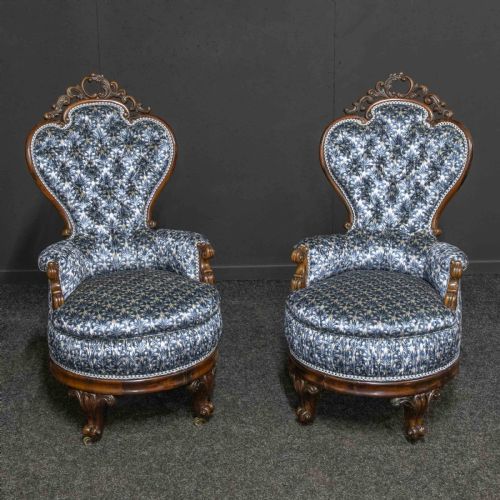
The version you are most likely to meet on this page is framed in rich mahogany or walnut, often featuring carved show wood and cabriole legs. They appear as individual library chairs, pairs, or within sets, reflecting the domestic comfort of the mid to late nineteenth century.
Materials and construction
Cabinet makers utilised dense hardwoods like mahogany, walnut, and rosewood to shape the distinctive curved backrest and structural frames. These timbers allowed for intricate hand-carved details and robust joinery that sustained the flowing silhouette.
Upholstery completed the piece, employing traditional textiles such as velvet, leather, and various fabrics stretched over internal padding. Brass castors frequently fitted to the legs provided mobility to these substantial chairs.
The documented pieces span the Victorian period, encompassing parlour chairs, nursing seats, salon suites, and gentleman's open armchairs.
Markers of quality
The standard of carving and timber selection dictates the distinction between standard production and superior craftsmanship. Crisp, deep relief work on the show wood frame points to a workshop of higher repute.
Proportion and the integration of maker attribution also separate ordinary examples from exceptional ones. Well-balanced frames attributed to notable London makers hold greater distinction than anonymous output.
Holland and Sons·C Hindley and Sons
The Spoonback Armchair Glossary
- Spoonback
- A chair back shaped in a concave oval resembling the bowl of a spoon, designed to fit the human spine. This ergonomic curve became a defining silhouette of mid-nineteenth-century seating.
- Show wood
- Exposed polished timber framing that surrounds the upholstered portions of a chair. It displays the grain and carved details of the mahogany, walnut, or rosewood structure.
- Cabriole leg
- A furniture leg that bends outward in a convex curve and tapers inward in a concave arc, ending in a pad or scroll foot. This form appeared frequently on Victorian walnut and mahogany chairs.
- Salon suite
- A matched set of seating furniture intended for a formal reception room, often comprising a sofa alongside several armchairs and parlour chairs.
- Fireside armchair
- A low-slung, comfortable seat designed for domestic warmth and reading near a hearth, frequently constructed with supportive upholstered arms.
Spoonback Armchair: Frequently Asked Questions
How were spoonback armchairs used?
They served as comfortable seating in parlours, bedrooms, and libraries throughout Victorian homes.
Gentleman's chairs and fireside variants provided relaxed support for reading and resting near the hearth.
How do I date a spoonback armchair?
Dating relies on identifying timber choices, leg styles, and cabinet-making techniques recorded across the nineteenth century.
Earlier examples often feature rosewood or early Victorian carved rosewood frames, while later pieces utilise walnut and mahogany alongside cabriole supports.
How do I live with a spoonback armchair?
These armchairs integrate easily into traditional and contemporary interiors as statement reading chairs or fireside seating.
Their compact proportions and rich wood tones allow them to complement diverse room schemes without dominating the floor space.