


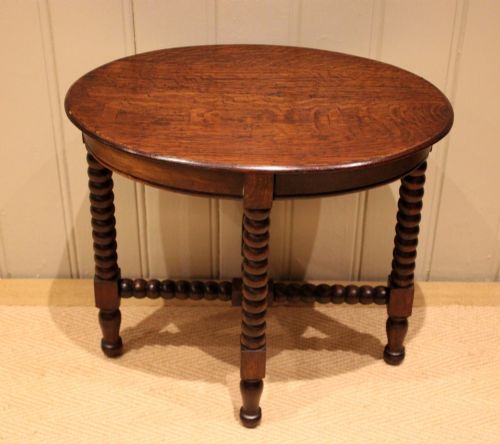

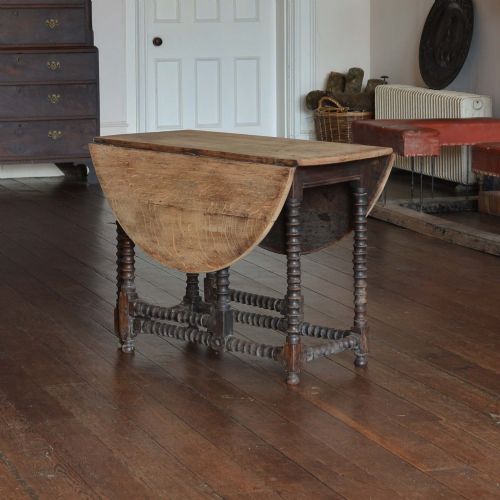


Spool Turned Occasional Table
These spool turned occasional table pieces bring tactile character and centuries of timber turning straight into a room.
Spool Turned Occasional Table
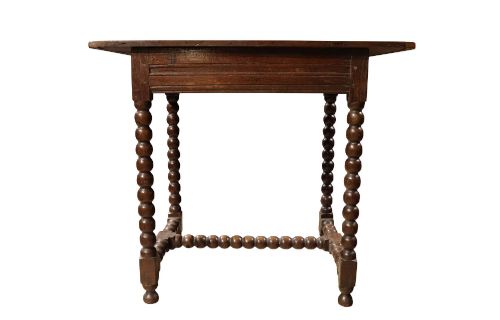
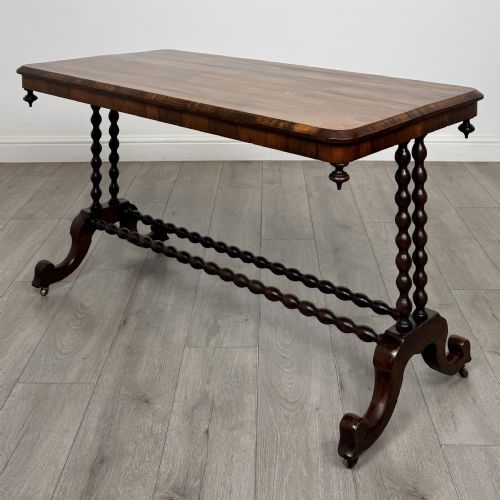
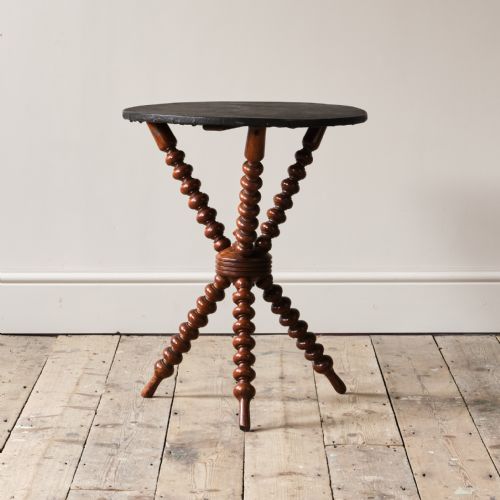
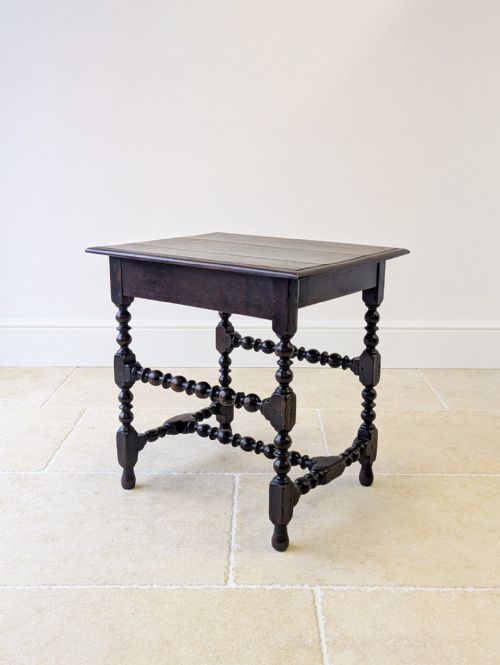
A spool turned occasional table is a compact surface defined by its distinctive lathe-turned legs and stretchers, appearing across periods from the seventeenth century through to the early twentieth century. Buyers seeking this phrase encounter formats ranging from seventeenth century oak designs to Victorian revivals and later iterations.
The construction typically takes the shape of a side table or a gate leg table, frequently featuring structural turned supports known also as bobbin turning. These pieces serve as functional surface furniture while displaying the sculptural woodwork that defines the style.
How they were made
Cabinet makers constructed these tables primarily from dense timbers such as oak, mahogany, walnut, and yew wood, shaping the cylindrical motifs on a lathe. Surfaces occasionally incorporate additional materials like textile, velvet, leather, and giltwood to top the wooden frames.
Joinery methods rely on traditional pegged or jointed construction suited to heavy hardwoods. The characteristic spool or bobbin profiles are achieved by cutting repetitive rounded sections along the length of the legs and stretchers.
Spool Turned Occasional Table Retail Price Guide 2026
Typical asking prices for spool turned occasional table among the pieces listed under this phrase on Sellingantiques today, from the lower quarter to the upper quarter. They describe what is for sale here now, not the wider market.
The listings show periods ranging from the 17th century through the Victorian era up to the early 20th century.
What varies in quality
Quality rests in the crispness and uniformity of the lathe work along the turned supports, where sharper definition commands greater visual impact. The choice of primary timber also distinguishes examples, with richly figured walnut or well-patinated early oak sitting above simpler later woods.
Proportion and structural integrity dictate the standing of a piece within its period. Tables that retain balanced dimensions alongside original surface treatments and integrated additions like castors or specific top inserts demonstrate superior craftsmanship.
The Spool Turned Occasional Table Glossary
- Spool turning
- A form of lathe turning that produces a series of rounded, spool-like shapes along a length of wood. This technique is frequently interchangeable with bobbin turning.
- Bobbin-turned
- A decorative woodworking style featuring closely spaced rounded collars resembling bobbins of thread. It defines the structural supports of seventeenth-century and revival furniture.
- Gate leg table
- A table with hinged drop leaves supported by legs that swing outward like a gate. This form allows the surface area to expand or fold down.
- Jacobean Revival
- A nineteenth-century style imitating the heavy, dark oak furniture of the early seventeenth century. It often incorporates deep turning and panel motifs.
Spool Turned Occasional Table: Frequently Asked Questions
What is a spool turned occasional table?
A spool turned occasional table is a small functional surface distinguished by legs and stretchers shaped on a lathe into rounded spool or bobbin profiles.
These pieces emerge across several centuries, spanning authentic seventeenth-century origins and later Victorian revivals.
How were spool turned tables used originally?
These tables functioned as versatile movable surfaces for holding writing materials, lighting, or decorative objects within a domestic interior.
Their compact scale allowed them to be placed beside seating or against walls where larger furniture would not fit.
What woods are used in these tables?
Cabinet makers utilised durable hardwoods including oak, walnut, mahogany, and yew wood for the primary frames and turned components.
Some examples incorporate contrasting surface materials such as leather, velvet, or giltwood across the table top.
How do I distinguish older tables from revivals?
Dating relies on assessing timber patination, tool marks, and the specific construction joints hidden beneath the frame.
Earlier pieces from the seventeenth century display distinct hand-turned irregularities compared to the more uniform machine production of later periods.