




Spool Turn Armchairs
Spool turn armchairs bring tactile warmth and distinctive turned framing into a room, offering both robust seating and historical character.
Spool Turn Armchairs
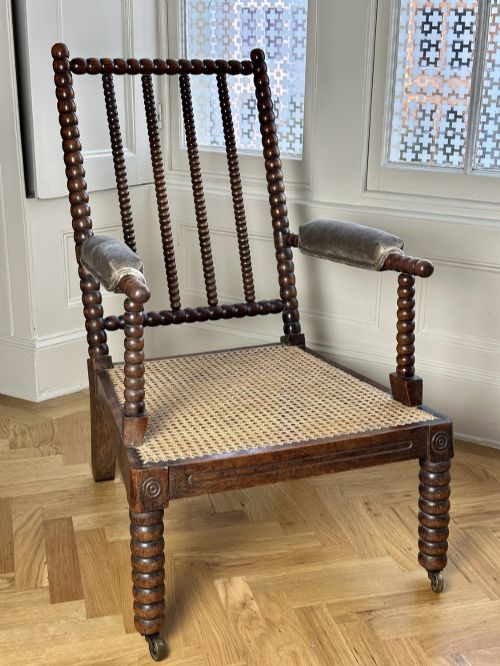
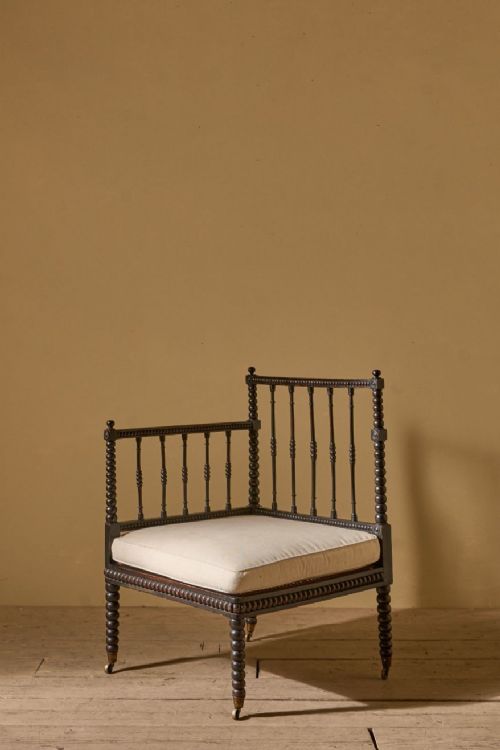
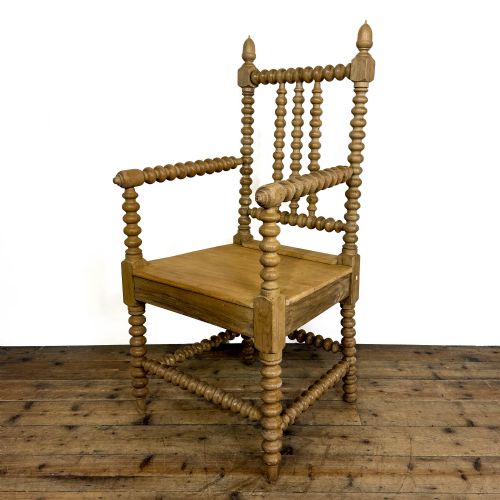
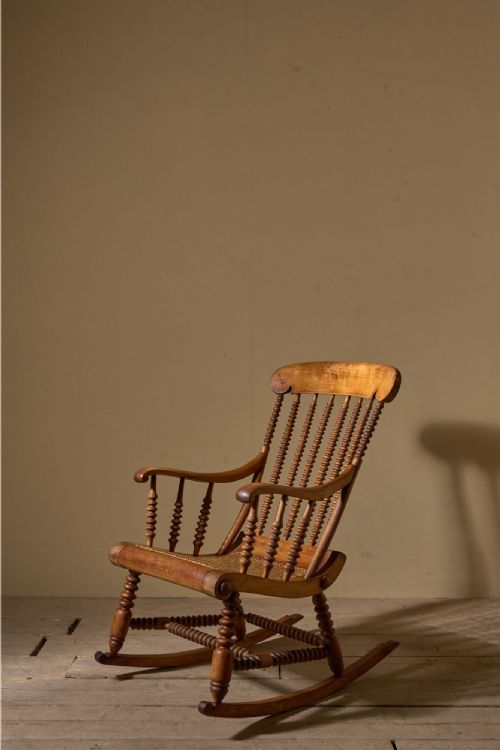
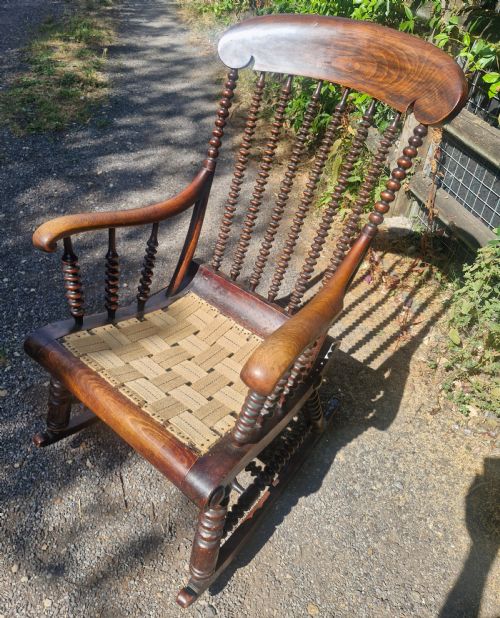
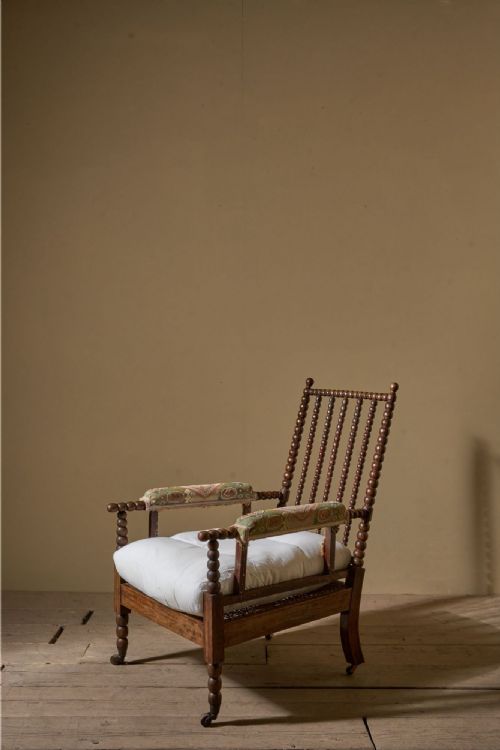
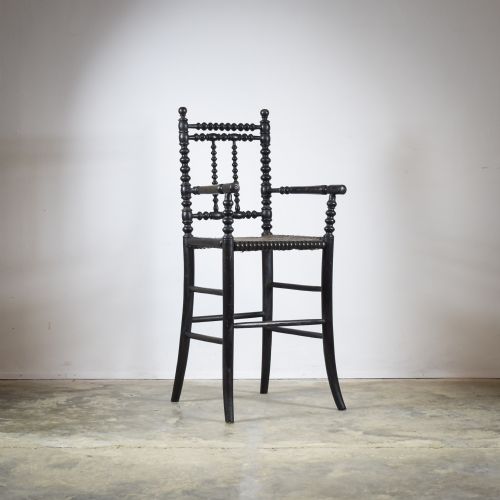
Spool turn armchairs are timber seating pieces defined by repetitive rounded or cylindrical turnings along the uprights, stretchers, and arms that resemble spools of thread. When buyers search for spool turn armchairs, they encounter robust examples spanning the eighteenth and nineteenth centuries, including Victorian interpretations and rustic country vernacular forms. The listings feature standard armchairs alongside rocking chairs, corner chairs, and child variants.
The dominant material found across these examples is oak, alongside walnut, ebonised timber, and simulated rosewood. Regional varieties range from English and Scottish country seating to Swedish country folk art and Italian baroque revival pieces. Many retain utilitarian or decorative seats formed from cane, fabric, or velvet upholstery.
How they were made
Woodturners shaped the characteristic spool motifs using a lathe, producing uniform cylindrical segments along the structural members of the chair. Cabinetmakers then joined these turned components using traditional mortise and tenon joints to build a rigid wooden frame.
Makers integrated various secondary materials for the seats and backs, weaving cane directly into wooden rails or securing textile pads, velvet cushions, and brass accents. Some pieces received an ebonised finish or paint layer to mimic more costly exotic hardwoods.
Spool Turn Armchairs Retail Price Guide 2026
Typical asking prices for spool turn armchairs among the pieces listed under this phrase on Sellingantiques today, from the lower quarter to the upper quarter. They describe what is for sale here now, not the wider market.
Form variations include standard armchairs, rocking chairs, corner chairs, high chairs, and child's chairs.
What varies in quality
The precision and depth of the lathe work dictate the visual rhythm of the frame, where sharply defined turnings display greater craftsmanship than shallow or uniform machine cuts. The choice of primary timber also influences the character of the piece, with dense native oak and walnut outlasting softer woods.
Structural integrity depends on the tightness of the joints and the survival of the original turned members without replacement. The preservation of early surfaces, whether polished wood, historic ebonisation, or period canework, distinguishes refined examples from heavily altered ones.
The Spool Turn Armchairs Glossary
- Bobbin turning
- A form of woodturning consisting of small cylindrical shapes resembling spools or bobbins threaded onto a stick. This technique defines the primary aesthetic of these chairs.
- Cane
- Plant material woven into an open mesh pattern to form lightweight seats and backrests. It provides a flexible yet supportive surface.
- Ebonised
- Timber treated with a dark finish to imitate expensive ebony wood. Makers frequently applied this technique during the nineteenth century.
- Vernacular
- Objects designed by regional craftsmen to practical local traditions rather than high-style academic rules. These pieces often utilise native woods.
Spool Turn Armchairs: Frequently Asked Questions
What is a spool turn armchair?
A spool turn armchair is a wooden seat built with framing components shaped on a lathe into repeated cylindrical sections resembling spools. These chairs draw on seventeenth-century motifs that experienced major revivals during the Victorian period.
The inventory shows numerous nineteenth-century interpretations alongside earlier eighteenth-century oak examples, often featuring open arms and low profiles.
Where were spool turn chairs made?
Makers produced these chairs across various British regions, Scandinavian countries, and parts of continental Europe like Italy. Local workshops adapted the turned style using native timbers available to them.
English and Scottish country makers favoured oak and vernacular forms, while Swedish and Italian makers created distinct regional throne and revival seating.
How do I care for cane seats?
Cane seats require gentle cleaning with a damp cloth and occasional light moisture applied to the underside to keep the plant fibres pliable. Avoid placing them near direct heat sources that can dry out and snap the material.
Many examples also incorporate separate cushions to reduce direct wear on the woven cane surface during everyday use.