


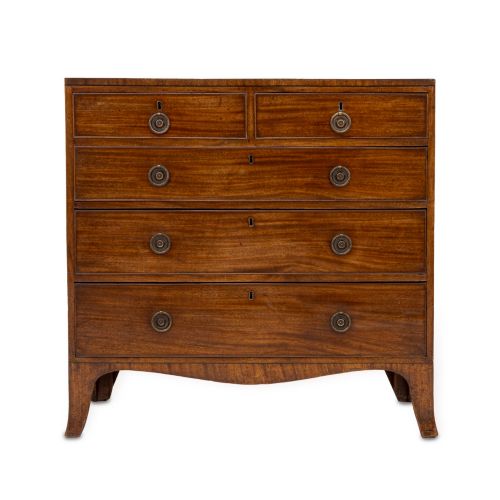


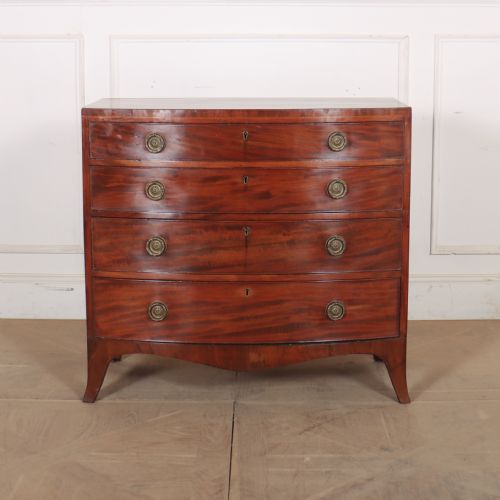


Splayed Leg Commode
These splayed leg antique commode examples are chests of drawers shaped with distinctive curved fronts and upright timber frames, offering practical storage with historic character.
Splayed Leg Commode
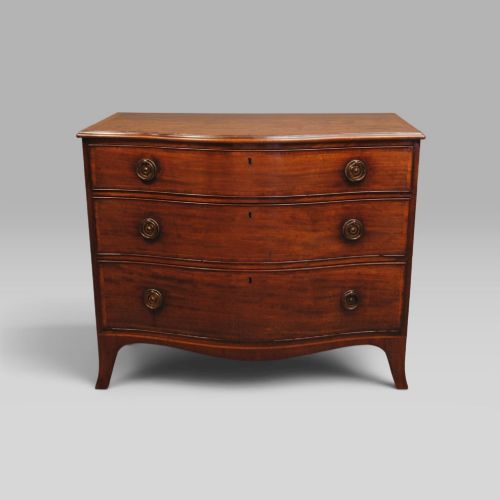
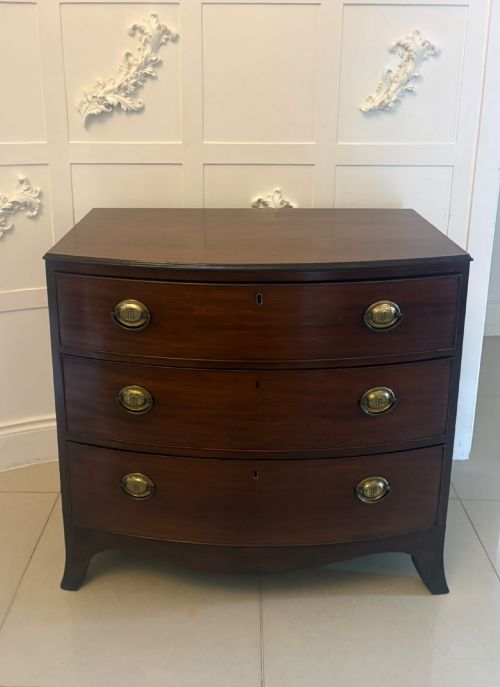
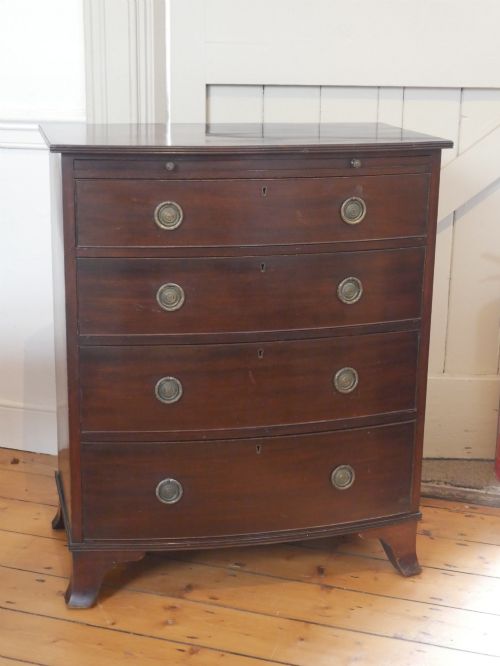
A splayed leg antique commode search brings up chests of drawers primarily from the Georgian, Regency, and eighteenth-century periods. These items take the form of bow-fronted and serpentine chests constructed to provide substantial drawer storage in domestic spaces.
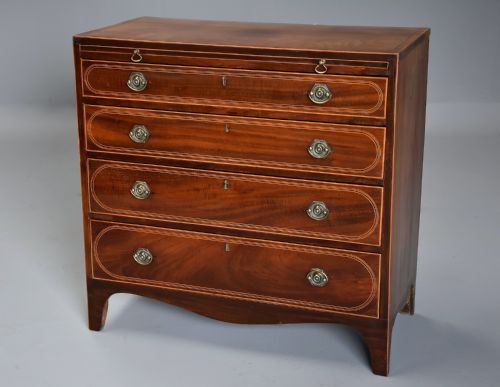
You will frequently encounter mahogany timber construction, often highlighted with satinwood inlay or boxwood stringing. Pieces range from small neat proportions to larger Georgian and Regency formats produced across English workshops.
Materials and construction methods
Cabinet makers relied heavily on solid mahogany and rich veneers, shaping timber to create sweeping bow-front and serpentine drawer configurations. Brass hardware and fine boxwood or satinwood inlay work were utilised to accent the primary wood grains.
Structural integrity was achieved through traditional joinery techniques suited to the period, accommodating bracket feet and flared leg supports. Polishing techniques enhanced the natural patina of the wood surfaces over centuries of use.
Splayed Leg Commode Retail Price Guide 2026
Typical asking prices for splayed leg commode among the pieces listed under this phrase on Sellingantiques today, from the lower quarter to the upper quarter. They describe what is for sale here now, not the wider market.
Some chests hide secret fitted compartments inside, reminding us that past owners needed safe hiding spots for midnight snacks or letters.
Variations in quality and finish
Quality differences appear in the precision of the timber matching and the subtlety of the inlay work across the drawer fronts. Finer examples display superior wood selection and a deeper, more uniform natural patina accumulated on the mahogany surfaces.
Construction standards are evident in the neatness of the proportions, particularly in smaller Scottish bow chests and Hepplewhite style pieces. The refinement of the bracket feet and the crispness of the brass fittings further distinguish top-tier items from simpler formats.
Druce & Co
The Splayed Leg Commode Glossary
- Bow front
- A convex curved front profile typical of many Georgian and Regency chests of drawers. This shaping softens the rectangular silhouette of the furniture.
- Serpentine
- A gently undulating front edge featuring a central convex curve flanked by concave sections. This contour requires advanced cabinet making skill.
- Caddy top
- A tabletop style with a raised, moulded edge that sits above the uppermost drawer. It is frequently seen on eighteenth-century and Regency pieces.
- Patina
- The deep gloss and surface character developed by aged timber over many decades of polishing and handling. A good patina indicates genuine age and care.
- Bracket foot
- A simple structural foot shape supporting the corners of the chest base. These feet can be plain, ogee moulded, or splayed depending on the period style.
Splayed Leg Commode: Frequently Asked Questions
What is a splayed leg antique commode?
This category comprises antique chests of drawers, predominantly featuring bow-front or serpentine mahogany designs from the Georgian and Regency eras. They served as primary bedroom and parlour storage units.
Craftsmen built these pieces to combine utility with decorative veneering and inlay work, creating focal points for historic interiors.
How do I date a Georgian chest?
Dating relies on examining the timber species, carcass construction, handle styles, and foot formats relative to known period characteristics. Eighteenth-century pieces often show specific dovetailing and secondary woods.
Stylistic shifts from strict George III designs to Regency and Hepplewhite revivals provide further chronological clues for each piece.
Where should I place a bow front chest?
These chests suit entryways, living rooms, and bedrooms where their curved fronts can be appreciated without obstructing household traffic. Their shallow profile makes them adaptable for narrow hallways.
Keep them away from direct heat sources and strong sunlight to protect the mahogany veneer and traditional polish finish.
How do I care for mahogany furniture?
Maintain the timber by dusting regularly with a soft, dry cloth and avoiding silicone-based sprays or harsh chemical cleaners. Consistent indoor humidity prevents wood shrinkage and veneer cracking.
Applying a traditional beeswax polish periodically helps nourish the grain and preserve the natural surface patina.