
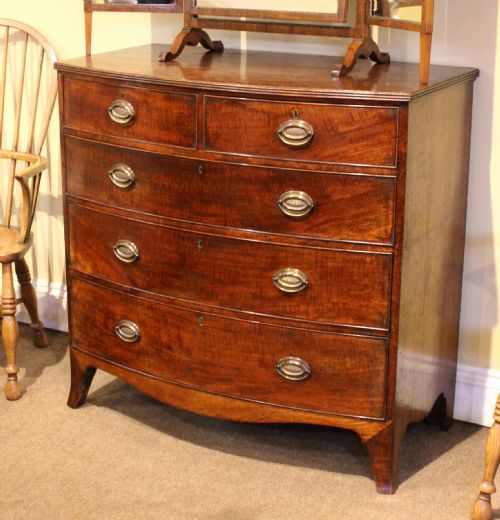


Splayed Foot Mahogany Chest
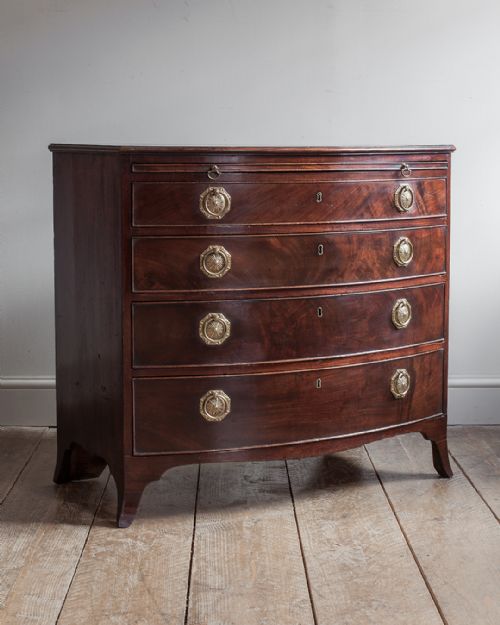
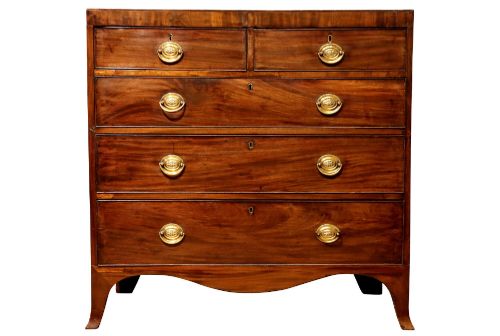
A splayed foot mahogany chest offers elegant storage, combining rich timbers and characteristic outward-flaring supports.
Splayed Foot Mahogany Chest
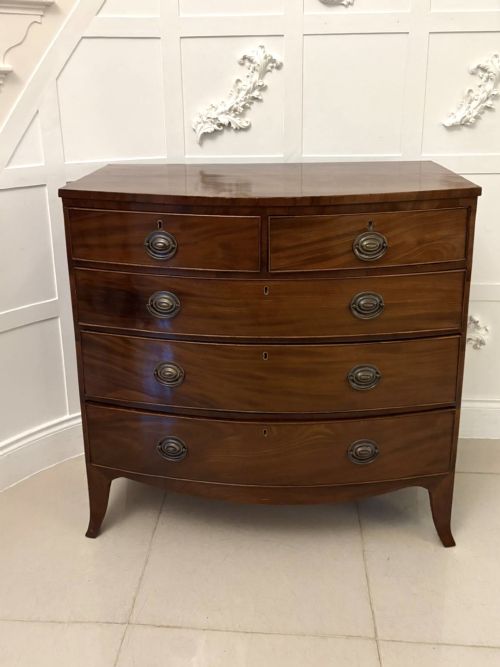
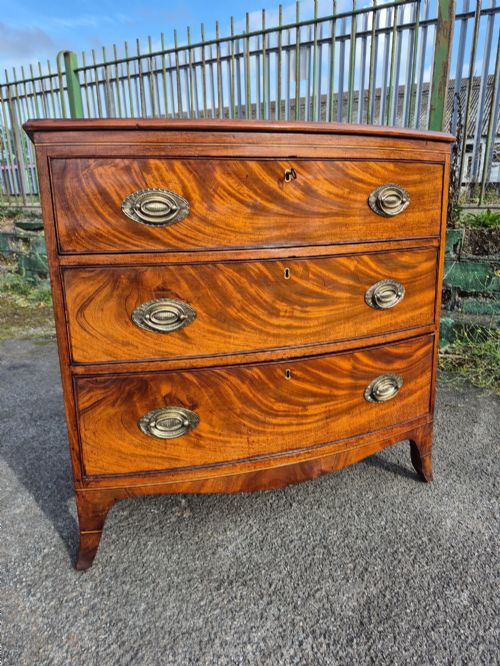
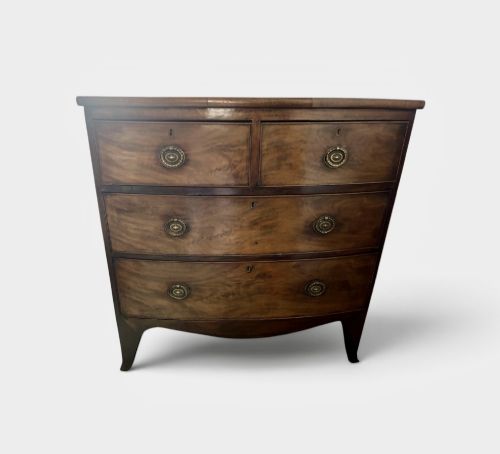
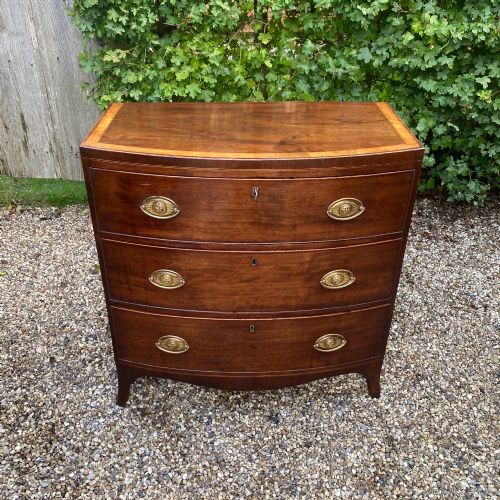
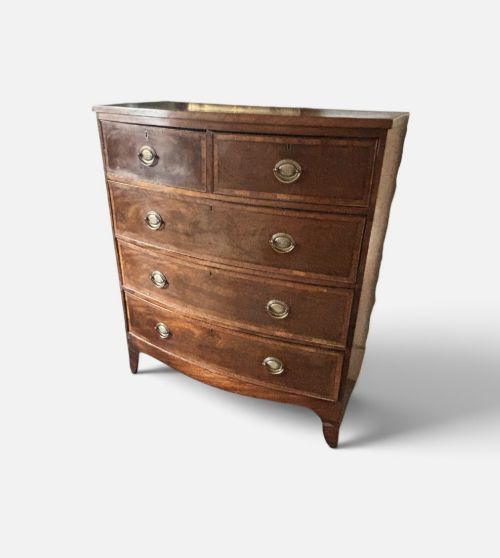
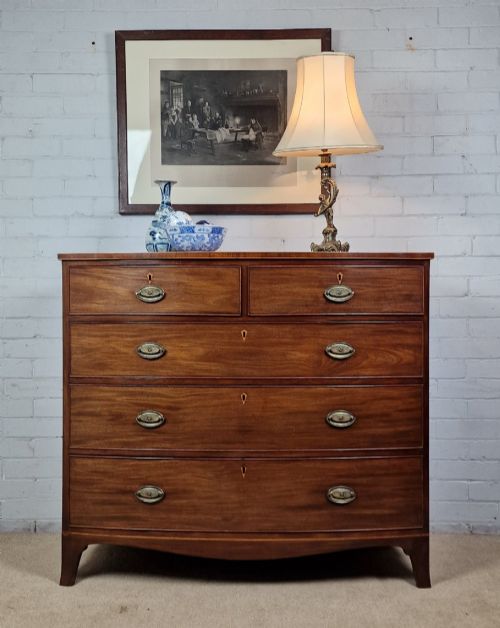
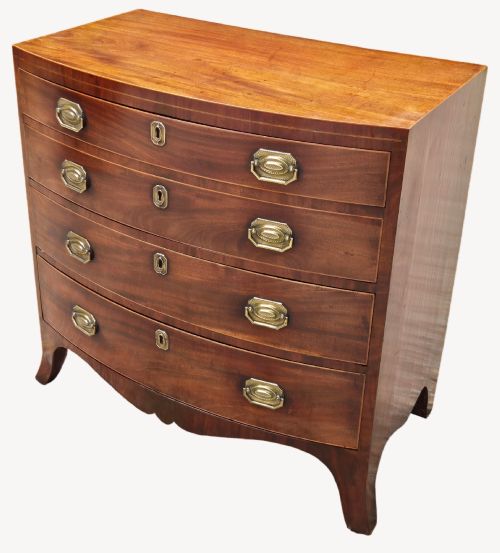
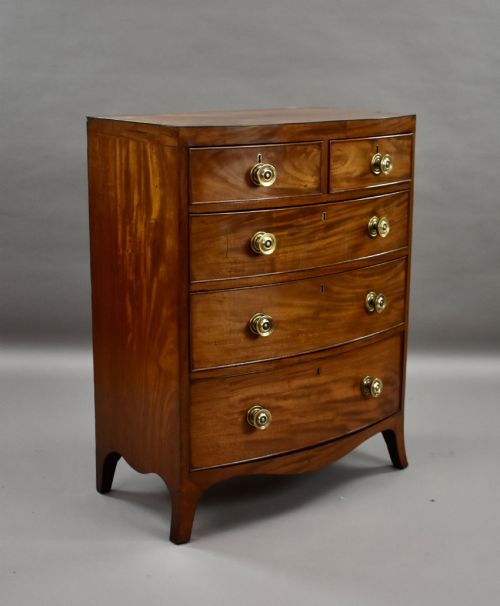
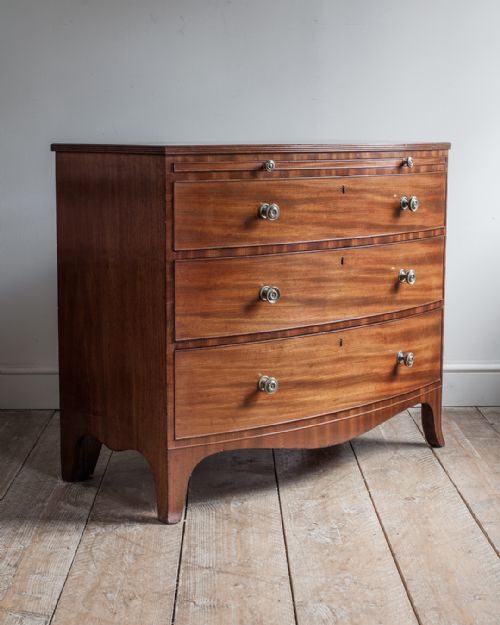
A splayed foot mahogany chest is a storage piece defined by outward-angled feet and constructed from deep tropical timber. Buyers searching this phrase meet storage units primarily shaped as bow fronts, tallboys, and standard drawer configurations originating from the Georgian, Regency, and Edwardian eras.
The material record shows a dominance of mahogany, often enriched with satinwood, boxwood inlay, and brass hardware. These pieces served domestic bedchambers and dressing rooms, providing generous drawer space while maintaining a graceful floor presence through their distinctive bracket or splayed supports.
How they were made
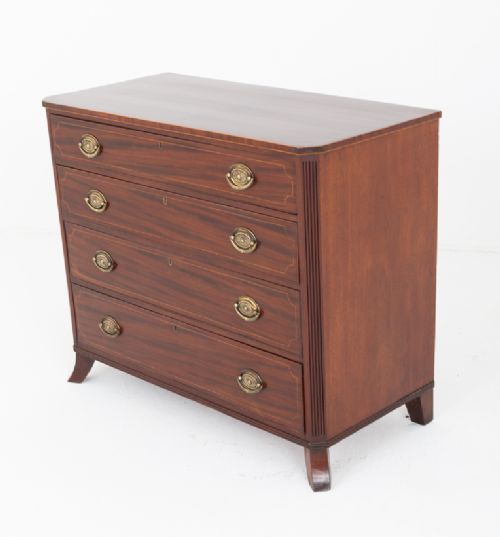
Cabinet makers utilised solid mahogany and flame mahogany veneers applied to secondary woods like oak. Surfaces frequently incorporate delicate stringing and crossbanding in satinwood and boxwood to define the drawer edges and top surfaces.
Structural integrity relied on dovetailed drawer construction and stable bracket or splayed foot assemblies. Brass handles and escutcheons were cast and fitted by hand to complement the polished timber grain.
Listings span the Georgian, Regency, and Edwardian periods, constructed predominantly in mahogany with satinwood, boxwood, and oak.
What varies in quality
The standard of timber selection largely dictates the visual depth of the piece, with figured and flame mahogany displaying superior grain movement compared to plain stock. Precision in the marquetry work, such as fine boxwood and satinwood inlay, separates standard utilitarian furniture from finer cabinet making.
Proportion and the execution of the splayed foot influence the overall harmony of the design. Subtle details in the edge moulding and the crispness of the drawer dovetailing reflect the skill of the original workshop.
The Splayed Foot Mahogany Chest Glossary
- Bow front
- A convex curved cabinet front that projects outward at the centre. This curved profile is a common feature among nineteenth century drawer units.
- Splayed foot
- A support that angles outward from the base of the piece. This form provides a lighter visual stance than a straight block foot.
- Crossbanding
- A strip of veneer applied across the grain of the primary surface, often framed by thin stringing lines. It creates a decorative border around drawer fronts.
- Flame mahogany
- A veneer cut from the branch junction of the tree, revealing a fiery, undulating grain pattern. Cabinet makers used this timber on prominent surfaces for visual impact.
Splayed Foot Mahogany Chest: Frequently Asked Questions
Where did these chests stand?
These chests were typically placed in bedrooms, dressing rooms, and private chambers to store garments and linens. Their refined appearance also suited formal landings and hallways.
The finished backs and polished timber surfaces allowed them to sit prominently against walls where domestic storage was required.
How do I date a chest?
Dating relies on observing the combination of primary woods, foot styles, and drawer construction methods. Georgian and Regency pieces show distinct changes in hardware, inlay patterns, and overall proportions.
Secondary woods like oak inside the drawers and the presence of hand-cut dovetails help confirm the period of manufacture alongside the exterior styling.
How do I care for mahogany?
Mahogany surfaces benefit from regular dusting with a soft, dry cloth to prevent particulate build-up. Keeping the timber away from direct sunlight and extreme heat sources protects the polished finish and veneer.
Occasional application of traditional wax helps nourish the wood and maintain its natural lustre without sealing the pores.
What is a bow front?
A bow front is a cabinet profile that curves outward in a convex arc across the front of the drawers. This design softens the rectangular geometry of traditional storage furniture.
Many examples from the Georgian and Regency periods utilise this curved shape to catch the light and display figured wood grain.